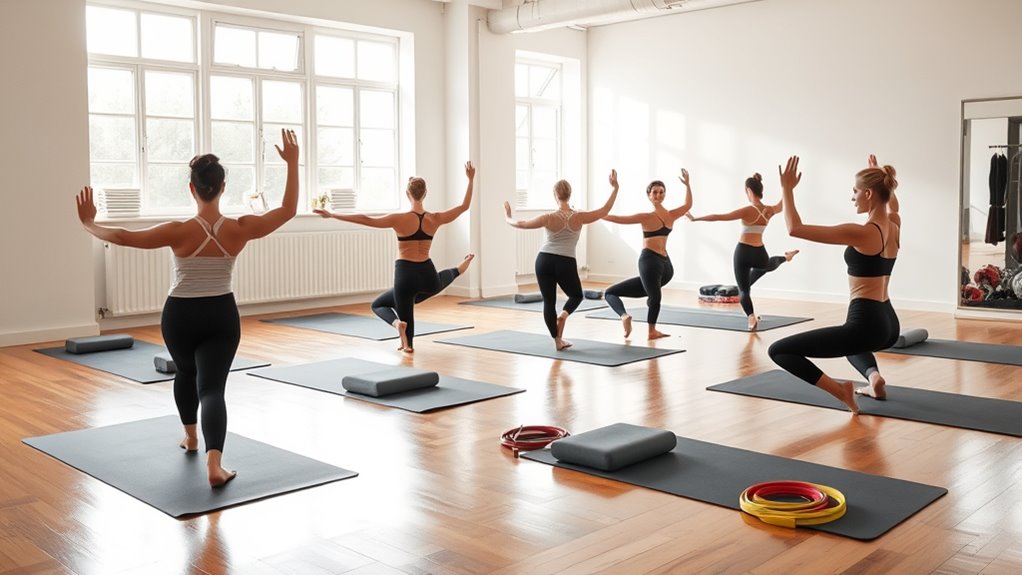
A beginner’s guide to Pilates shows you how mind-body workouts combine controlled movements, breathing, and mental focus to improve posture, build core strength, and reduce stress. You’ll learn to become more aware of your body’s alignment, helping to prevent discomfort and promote natural movement. These workouts are adaptable for all fitness levels and offer long-term benefits like increased relaxation and confidence. Keep exploring to discover how Pilates can transform your overall well-being.
Key Takeaways
- Pilates combines controlled movements with mental focus to improve posture, core strength, and overall body awareness.
- It emphasizes proper alignment and breathing techniques that promote relaxation and reduce stress.
- Suitable for beginners, Pilates enhances flexibility, balance, and body mechanics with consistent practice.
- The method encourages mindfulness, helping divert attention from worries and fostering mental clarity.
- Regular Pilates practice supports long-term physical and mental health by promoting a healthier relationship with the body and mind.
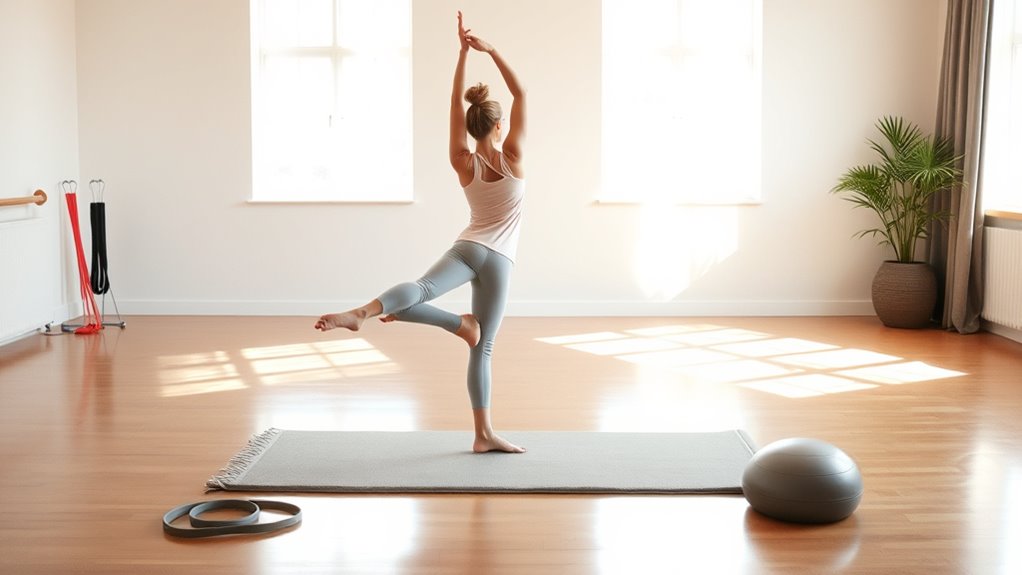
A mind-body workout combines physical movement with mental focus, helping you achieve greater balance, flexibility, and stress relief. When you start exploring Pilates, you’ll notice how it emphasizes proper posture correction. This focus on alignment isn’t just about looking good; it’s about creating a healthier, more efficient body. As you practice, you’ll learn to identify and correct poor postural habits that may cause discomfort or even pain over time. Pilates encourages controlled movements, so you become more aware of how your body holds itself throughout the day. This heightened awareness helps you develop better posture naturally, reducing strain on your neck, shoulders, and back. Developing this awareness is a key aspect of creative practice, which can be cultivated through mindful exercises like Pilates.
Pilates promotes proper posture and body awareness for a healthier, more efficient movement.
As you incorporate Pilates into your routine, you’ll also find that it offers powerful stress relief benefits. The mindful nature of the exercises requires your full concentration, pulling your attention away from daily worries and external stressors. By focusing on your breath, movement, and body sensations, you create a calming rhythm that soothes your nervous system. This mental engagement not only helps you relax but also enhances your ability to cope with stress outside of your workouts. Over time, you’ll notice a reduction in tension held in your muscles, especially in areas prone to stress-related tightness like your shoulders and jaw.
Posture correction in Pilates isn’t just about standing tall; it’s about cultivating strength in your core muscles—those deep abdominals and back muscles that support your spine. When your core is strong, your body naturally aligns itself better, reducing the likelihood of slouching or hunching. This improved posture not only makes you look more confident but also alleviates chronic aches and pains. Plus, as your posture improves, you’ll find yourself breathing more easily and deeply, which further enhances your stress relief. Proper breathing techniques, often integrated into Pilates, activate your parasympathetic nervous system, helping you feel calmer and more centered.
Ultimately, Pilates offers a balanced approach that nurtures both your body and mind. It’s accessible for beginners and adaptable to various fitness levels. By consistently practicing, you’ll notice your posture becoming more upright and your stress levels decreasing. The combination of mindful movement, core strength, and breath control creates a positive feedback loop that promotes overall well-being. So, as you start your Pilates journey, remember that it’s not just about physical fitness; it’s about cultivating a healthier relationship with your body and mind, one mindful movement at a time.
Frequently Asked Questions
Can Pilates Help With Chronic Back Pain?
Yes, Pilates can help with chronic back pain by improving your core stability and posture. As you practice, you’ll strengthen the muscles supporting your spine, reducing strain and discomfort. Better posture from Pilates also alleviates pressure on your back. Consistent workouts gradually build resilience and flexibility, making it easier to manage or even prevent chronic back pain. Just guarantee you follow proper techniques and consult a professional if needed.
What Equipment Is Necessary for Beginner Pilates?
For beginner Pilates, you don’t need much equipment. The essentials include a good-quality mat for cushioning and stability, comfortable workout clothes, and perhaps a small Pilates ball or resistance band for added resistance. These equipment essentials are perfect for starting out and help you stay focused on your form. As you progress, you might explore other beginner gear, but initially, your mat and minimal gear are all you need to get started.
How Often Should I Do Pilates for Best Results?
You should aim for consistency in your Pilates routine to see the best results. Usually, practicing 2 to 3 times a week is ideal for beginners, allowing your body enough time to recover and adapt. Maintaining a steady frequency helps build strength, flexibility, and mindfulness. Remember, consistency is key—sticking to a regular schedule will maximize your progress and keep you motivated on your fitness journey.
Is Pilates Suitable for Pregnant Women?
You might wonder if Pilates suits pregnant women. It’s generally safe with prenatal modifications tailored to your pregnancy stage. Pilates offers pregnancy benefits like improved posture, reduced back pain, and better core strength. Always consult your healthcare provider before starting or continuing Pilates during pregnancy. When done with proper modifications, Pilates can be a gentle, effective way to stay active and support your body through pregnancy.
Are There Any Safety Concerns for Seniors Practicing Pilates?
You should be aware that practicing Pilates as a senior can offer benefits like fall prevention and improved joint safety. However, it’s important to consult your healthcare provider before starting. Make certain your instructor is experienced with senior clients and focuses on gentle, controlled movements. Avoid exercises that put too much strain on your joints or risk falls, and always listen to your body to stay safe and reap the benefits.
Conclusion
Now that you’ve started your Pilates journey, remember it’s like tending to a delicate garden—you need patience and consistency to see it flourish. Keep listening to your body, and don’t be discouraged by small setbacks. With each session, you’re weaving strength and flexibility together like a beautiful tapestry. Stay committed, and watch your mind and body bloom in harmony, transforming your wellness routine into a journey of growth and self-discovery.