
TL;DR

Turn quiet afternoons into listening time
- Thousands of audiobooks, podcasts and originals
- Listen on your phone, tablet or Echo — also offline
- Cancel anytime
Sixty and Me has published a beginner’s guide to functional fitness for women over 60, featuring five low-equipment exercises focused on movements used in everyday life. The article cites research on functional training and older adults, while advising readers to start gradually and seek professional guidance when health concerns or mobility limitations apply.
Sixty and Me has published a beginner’s guide to functional fitness for women over 60, outlining five simple exercises intended to support movements such as standing from a chair, reaching and stepping sideways. The guide recommends starting with short sessions at home and says adults should adapt activity to their abilities and consult a health professional when health conditions, pain, dizziness or mobility concerns are involved.
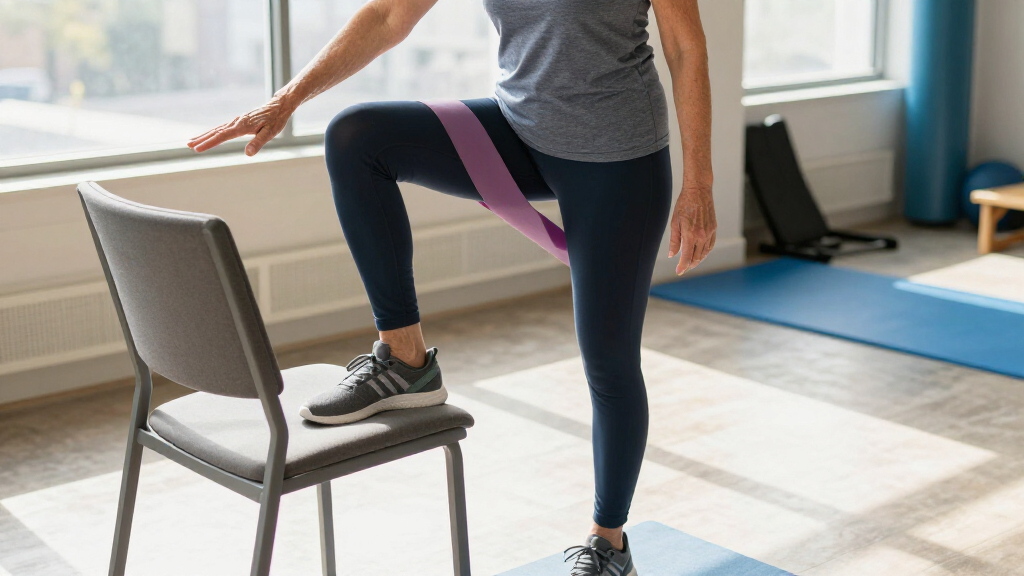
The exercises in the guide use little or no equipment: sit-to-stands, wall push-ups, supported heel raises, supported side steps and balance practice. The first three are presented as ways to work the legs, glutes or upper body; side steps and supported weight shifts focus on movement and balance. The guide gives a starting range of five to 12 repetitions for sit-to-stands, wall push-ups and heel raises.
For balance practice, the article advises standing beside a counter or sturdy chair and holding it as needed while shifting weight from one leg to the other. It recommends beginning with 10 to 15 minutes on two or three days in the first week, then gradually adding time, repetitions or resistance as the exercises become easier. Readers are told to stop if an activity does not feel right.
The guide cites a 2025 meta-analysis that it says found functional task training improved balance, mobility and walking ability among adults aged 60 and older. It also refers to a review of studies linking combined balance and functional training with fall prevention and physical well-being. The supplied material does not identify the studies’ authors, journals, participant numbers or effect sizes.
Training for Everyday Movement
Functional fitness is framed around practical tasks rather than exercise performance alone. Training movements related to standing up, carrying items, reaching and changing direction may help older adults practise skills they use in daily routines. The guide’s focus on home exercises and minimal equipment may make it easier for readers to try those movements without joining a gym, although access and suitability will vary from person to person.
The article also connects strength and balance work with independence and daily living. Those are meaningful goals for people who find routine activities increasingly effortful. The cited research supports interest in task-based exercise, but the guide does not establish that these specific five exercises will prevent falls or produce the same results for every participant.
low impact resistance bands for seniors
As an affiliate, we earn on qualifying purchases.
As an affiliate, we earn on qualifying purchases.
Activity Guidance for Older Adults
The source summarizes recommendations from the U.S. Centers for Disease Control and Prevention for adults aged 65 and older, including muscle-strengthening activity at least twice weekly alongside activity for cardiovascular and pulmonary fitness and balance. It also cites the World Health Organization, saying adults 65 and older should do muscle-strengthening activities on two days a week. For people with mobility difficulties, the guide says WHO recommends balance and fall-prevention activities on three or more days weekly.
These recommendations are broader public-health guidance, not a personalized exercise prescription. The guide’s sample routine is a suggested starting point; it does not claim that every reader should perform every movement or use the same repetitions. It emphasizes gradual increases and adapting activity to individual capacity.
“The goal of functional fitness is to help you maintain your quality of life and your independence.”
— Sixty and Me guide
balance exercise equipment for women over 60
As an affiliate, we earn on qualifying purchases.
As an affiliate, we earn on qualifying purchases.
Evidence and Individual Suitability
The source material does not provide full citations or methodological details for the 2025 meta-analysis or the review it references. It is therefore not possible from the supplied information to assess the size of the reported benefits, how the studies defined functional training, or how directly their findings apply to the five exercises in this guide.
The article also does not establish which movements are appropriate for a particular reader, or how to modify them for specific conditions. It advises people with health limitations, pain, dizziness or mobility concerns to consult a qualified health professional. No publication date for the guide was provided in the source material.
As an affiliate, we earn on qualifying purchases.
A Gradual Start at Home
The guide’s immediate suggestion is to choose a manageable routine and try 10 to 15 minutes of activity on two or three days, using a stable support for balance exercises. Readers can build gradually if the movements feel comfortable, and the article suggests adding repetitions, time or a resistance band rather than increasing effort all at once.
For anyone unsure how to begin, the next step is to discuss suitable activity with a health professional, particularly where symptoms or medical limitations are present. The source provides no announced follow-up, new research release or formal program; the exercises and advice are presented as an introductory guide.
home fitness equipment for older adults
As an affiliate, we earn on qualifying purchases.
As an affiliate, we earn on qualifying purchases.
Key Questions
What is functional fitness?
In the Sixty and Me guide, functional fitness means training strength, balance and movement used in everyday activities, such as rising from a chair, reaching for an item or stepping sideways.
Which exercises does the guide recommend?
It describes sit-to-stands, wall push-ups, supported heel raises, supported side steps and supported balance practice. Readers may use a chair or counter for stability when needed.
How often should a beginner start?
The article suggests trying 10 to 15 minutes on two or three days during the first week and increasing activity gradually if it feels manageable. This is a general starting suggestion, not an individualized prescription.
When should someone seek professional advice?
The guide advises consulting a health professional when a person has a health condition affecting mobility, pain, dizziness or other concerns about exercising. It also says to stop an activity if something does not feel right.
Source: rss
Halloween Picks
halloween
As an affiliate, we earn on qualifying purchases.