Virtual reality fitness turns your workouts into immersive, game-like adventures that keep you motivated and engaged. By using VR headsets, you can interact with virtual environments, compete with friends, and earn rewards, making exercise feel exciting rather than tedious. These technologies also offer personalized options and real-time feedback to improve your technique. If you want to discover how VR transforms exercise into fun, dynamic experiences, keep exploring how these innovations can work for you.
Key Takeaways
- VR fitness transforms workouts into immersive, game-like experiences that boost engagement and motivation.
- Gamified exercises include challenges and rewards, making physical activity feel like an exciting adventure.
- Augmented reality guides proper form and personalizes routines, preventing monotony and enhancing effectiveness.
- Virtual social features enable competitive and community interactions, increasing accountability and enjoyment.
- Overall, VR fitness makes working out fun, interactive, and less monotonous by blending gaming elements with exercise.
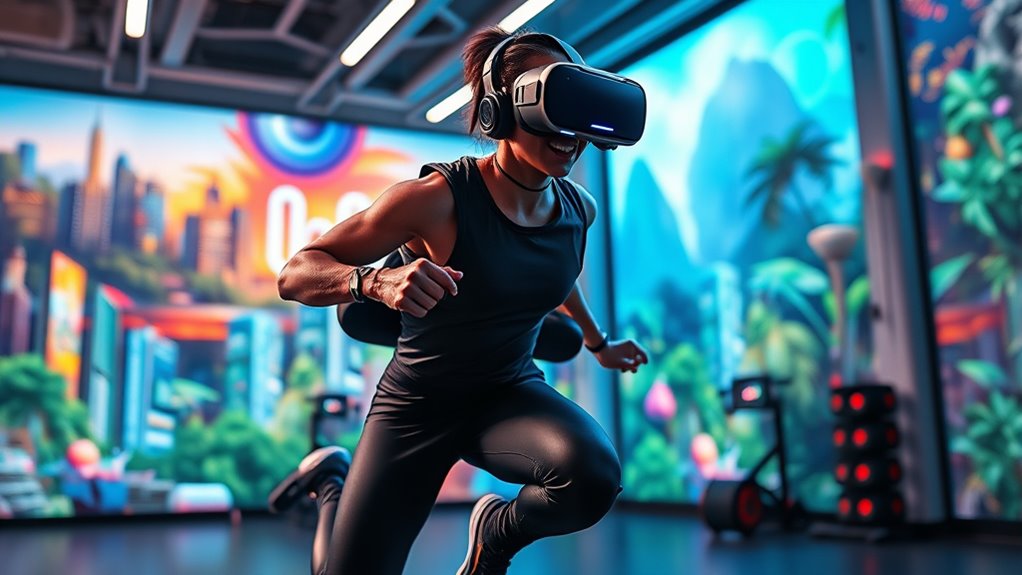
Have you ever wondered how virtual reality is transforming fitness routines? It’s not just about putting on a headset and feeling like you’re somewhere else; it’s about creating engaging, immersive experiences that make exercising feel less like a chore and more like an adventure. One of the key innovations driving this shift is augmented reality, which overlays digital elements onto your real-world environment. This technology allows you to interact with virtual objects in your actual space, making workouts more interactive and dynamic. Instead of staring at a boring screen, you’re actively engaged, moving around your living room or gym, as if the virtual world is part of your reality. These experiences are designed to keep your emotional energy high and motivated. Gamified workouts are a major part of this evolution. They turn exercise into a game, complete with levels, challenges, and rewards. You might find yourself climbing virtual mountains to burn calories or dodging obstacles to improve agility, all while feeling like you’re part of an exciting story. These gamified workouts motivate you to push harder because they tap into your competitive spirit and desire for achievement. Plus, they make routine exercises more enjoyable, helping you stay consistent in your fitness routine. When workouts are fun, you’re more likely to stick with them long-term. Virtual reality fitness platforms often incorporate augmented reality features to enhance this experience. Imagine wearing your VR headset and seeing virtual trainers guiding you through exercises, or having digital avatars that demonstrate proper form right in your physical space. These tools provide instant feedback, helping you improve technique and avoid injuries. Augmented reality also makes it possible to customize workouts on the fly, adjusting difficulty levels or adding new challenges to keep things fresh and exciting. This adaptability is vital for maintaining motivation, especially when traditional workouts start to feel monotonous. Furthermore, these gamified workouts often include social elements. You can compete against friends or join virtual fitness communities, turning solitary exercise into a shared experience. This social aspect adds accountability and makes workouts more engaging. As you progress through different levels or earn virtual rewards, you gain a sense of accomplishment that keeps you coming back for more. The combination of augmented reality, gamification, and social features creates a compelling environment where fitness becomes less of a task and more of an immersive game. These technologies also promote the importance of emotional alignment in staying motivated and consistent. In essence, virtual reality and augmented reality are reshaping how you approach fitness. They make workouts more interactive, motivating, and tailored to your preferences. Whether you’re climbing digital mountains, battling virtual enemies, or simply exploring new environments, these technologies guarantee that your exercise routine is anything but boring. Instead, they turn working out into an exciting adventure you’ll want to set out on every day.
Frequently Asked Questions
How Safe Is VR Fitness Compared to Traditional Workouts?
VR fitness can be quite safe if you take precautions, but you should be aware of motion sickness and injury risk. You might experience motion sickness if you’re sensitive to virtual environments, so start with short sessions. Always clear your play area to avoid injuries, and listen to your body. Unlike traditional workouts, VR fitness requires extra attention to your surroundings, but with care, it can be a safe, engaging exercise option.
Can VR Fitness Help With Specific Health Conditions?
VR fitness can help with specific health conditions like mental health issues and chronic pain by providing engaging, low-impact exercises tailored to your needs. It reduces stress and boosts mood through immersive environments, making workouts feel less like chores. For chronic pain, VR can offer gentle movement options, helping improve flexibility and strength safely. Always consult your healthcare provider to make sure VR fitness suits your condition.
What Equipment Is Needed for VR Fitness at Home?
Imagine stepping into a different world where your body is the hero’s tool. To start VR fitness at home, you’ll need a VR headset to transport you and motion controllers to bring your movements to life. These are the main gear, acting like your virtual gym’s keys. With just these, you open a universe of immersive workouts, making exercise feel like play rather than work.
How Long Should VR Workouts Last for Optimal Results?
For ideal results, aim for VR workout sessions lasting about 30 to 45 minutes. Keep your session duration manageable to avoid fatigue and maintain motivation. Incorporate this into your routine with at least three to five workouts per week, ensuring consistent workout frequency. Listen to your body, and adjust the session length as needed to prevent overexertion while maximizing benefits.
Is VR Fitness Suitable for All Age Groups?
VR fitness can be suitable for many age groups, but you should consider age appropriateness and accessibility features. Younger users benefit from engaging, interactive workouts, while older adults might need modified exercises and accessible controls. Always check if the VR system offers customizable settings and safety options. Consulting with a healthcare professional guarantees the activities align with individual health conditions. With proper adjustments, VR fitness can be safe and enjoyable for a broad age range.
Conclusion
As you strap on your VR headset, feel the rush of adrenaline and the thrill of immersive worlds. Each movement becomes a dance, each challenge a conquest, all while your body burns calories and builds strength. You’re no longer just working out; you’re stepping into a vibrant universe where fitness and fun collide. So, put on your gear, embrace the adventure, and let virtual reality transform your exercise routine into an exhilarating journey. Your future self will thank you.