
TL;DR

Turn quiet afternoons into listening time
- Thousands of audiobooks, podcasts and originals
- Listen on your phone, tablet or Echo — also offline
- Cancel anytime
A first-person essay published by Sixty and Me argues that older adults should set their own terms for music, travel and activity rather than follow cultural expectations about aging. Its author draws on a career in senior entertainment and Billy Joel’s “It’s Still Rock and Roll to Me”; the piece is commentary, not a new research finding or policy announcement.
Sixty and Me has published a first-person essay arguing that older adults can reject expectations to slow down, favor quiet activities or give up interests associated with younger people. The author, a musician and senior entertainer, uses Billy Joel’s “It’s Still Rock and Roll to Me” to frame a personal case for choosing how to age, while describing travel, social activities and plans to return to performing.
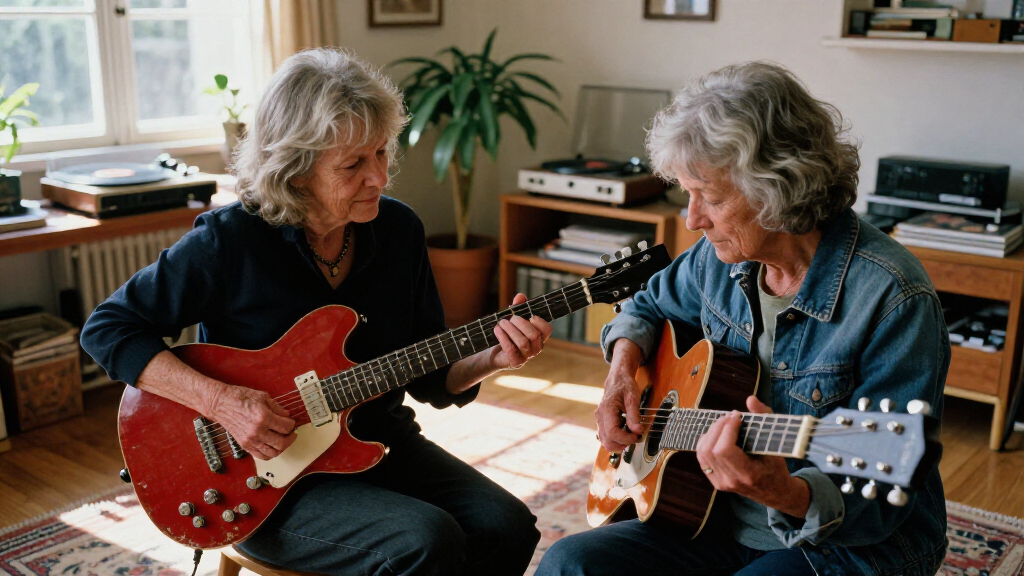
The writer says they have performed as a musician since 1972 and worked as a senior entertainer since 1992. Early in that work, they relied on standards from the Great American Songbook, but found that audiences also wanted to sway, dance and jitterbug. The author recalls joking about eventually playing Bruce Springsteen at a care home, and says the repertoire requested by older audiences has moved from Elvis and the Beatles into music from the late 1960s and early 1970s.
The essay treats Joel’s 1980 song as an example of continuing on one’s own terms despite criticism. It notes that the song reached No. 1 for two weeks and that Joel later performed sold-out residencies at Madison Square Garden, presenting those details as evidence of his continued audience appeal. The author also points to Joel’s later song “Turn the Lights Back On,” without claiming that it settles broader questions about aging or the music industry.
The writer connects that theme to personal choices. They say they and their wife have traveled extensively this year after planning and saving for it, and describe organizing monthly lunches or activities with mostly retired and semi-retired men. The author, now 69, says they are looking to resume performances at brew pubs and senior communities after a break, with a set that may include Springsteen and Taylor Swift alongside standards.
Music and Choice in Later Life
The essay speaks to readers facing assumptions that retirement should mean a quieter, less public or less adventurous life. Its central point is that age alone does not dictate interests: people may choose to travel, learn an instrument, dance or perform, while recognizing that ability, resources and circumstances differ from person to person.
The piece also makes a cultural argument about who is seen in lively public settings. The author describes what they call a “quiet rule,” a bias linking older people with calm music and limited activity, and an “invisible elder” effect in which older bodies are less welcome or visible in energetic spaces. These are the writer’s observations and interpretations, not findings from a cited survey or study.
That distinction matters: the essay offers personal experience and examples to prompt reflection, rather than evidence that every older adult can or should pursue the same activities. Its practical message is about personal agency, not a universal prescription for retirement.
As an affiliate, we earn on qualifying purchases.
From Standards to Springsteen
The writer’s professional experience shapes the argument. Having worked across decades and musical styles, they say they began senior entertainment with familiar standards but learned that older audiences also wanted to dance to rock. That experience challenges the assumption that musical taste belongs to a fixed generation, although the essay does not provide audience data or describe how broadly the pattern applies.
The author also invokes musicians whose careers continued to evolve beyond youth, including Bob Dylan, Leonard Cohen, Joni Mitchell and Johnny Cash. These examples support the essay’s theme that creativity can continue later in life. They are illustrative references, not a systematic comparison of artists or a claim that aging affects everyone alike.
For its broader cultural framing, the essay quotes Ashton Applewhite, author of This Chair Rocks, and mentions Jamie Lee Curtis as a celebrity who has rejected some conventional expectations about appearance. It also recalls the writer’s mother dancing into her late 80s. Together, the references place the author’s personal choices within a discussion of ageism and social expectations.
““Change your look. Change your sound. Or be true to yourself.””
— The essay’s author, describing the argument drawn from Billy Joel’s song
retirement community musical instruments
As an affiliate, we earn on qualifying purchases.
As an affiliate, we earn on qualifying purchases.
Limits of the Personal Account
The source is a first-person opinion essay, and it does not cite research measuring ageism, retirement behavior or how older audiences choose music. The anecdotes—including the author’s travel, social group and examples of people beginning new activities—are not identified as independently verified cases. It is also not clear when the article was published, because the supplied source material gives no publication date.
The author says they are actively looking to return to performing, but does not name venues, set a schedule or say that any bookings have been confirmed. The essay does not establish how widely the views it describes are shared, or address the financial, health and caregiving circumstances that can shape an individual’s choices in later life.
As an affiliate, we earn on qualifying purchases.
A Possible Return to Performing
The next development described by the writer is a personal plan: after a break of a couple of years, they are seeking opportunities to perform at brew pubs and senior communities. No dates or confirmed engagements are given. The author expects to draw on familiar standards while adding songs by Bruce Springsteen and possibly Taylor Swift.
For readers, the essay ends by inviting reflection on activities they may have labeled as “for the young” and on how they respond to age-based expectations. That invitation is part of the piece’s commentary; it does not signal a formal campaign, scheduled event or announced follow-up.
As an affiliate, we earn on qualifying purchases.
Key Questions
What is the news development?
Sixty and Me published a personal essay arguing that older adults can make their own choices about music, travel and activity instead of conforming to assumptions about aging.
The writer treats Billy Joel’s song as a metaphor for staying true to oneself despite pressure or criticism, and connects that idea to choices later in life.
Is the article based on a study?
No study is cited in the supplied material. The article is a first-person essay built around the author’s work as a musician and senior entertainer, personal experiences and cultural observations.
Is the author returning to live performances?
The author says they are looking for opportunities to perform at brew pubs and senior communities after a break. The essay does not confirm bookings or dates.
Source: rss
Fall Picks
fall essentials
As an affiliate, we earn on qualifying purchases.