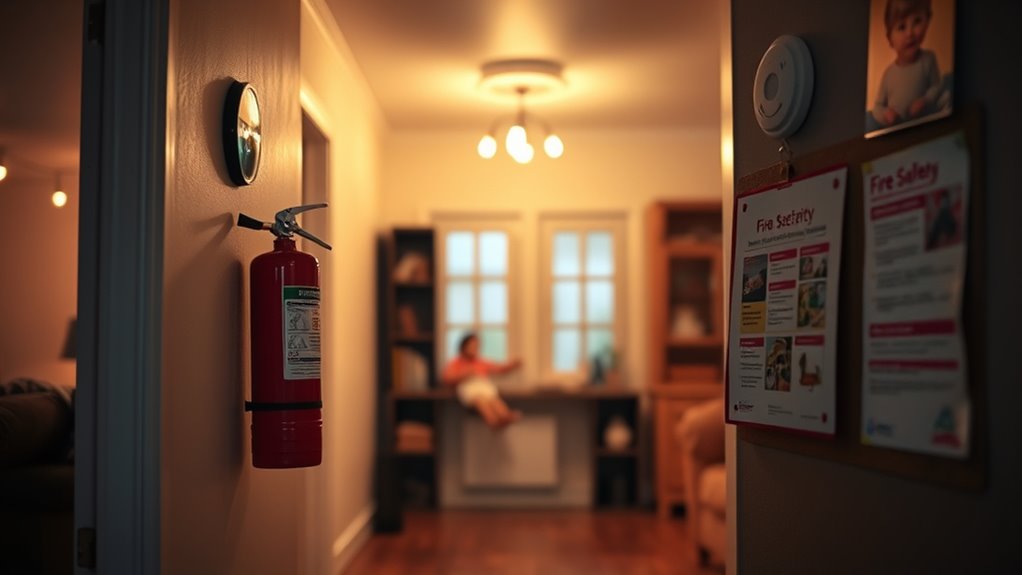

To protect your family from fires at home, regularly check smoke detectors and replace batteries yearly. Create and practice clear escape plans for everyone, including multiple exits from each room. Keep fire safety equipment, like extinguishers and carbon monoxide detectors, in good condition and accessible. Avoid hazards like overloaded outlets, flammable materials near heat sources, and unattended cooking. Staying aware of safety tips and planning ahead can make all the difference—keep exploring to learn more ways to stay safe.
Key Takeaways
- Install and regularly test smoke and carbon monoxide detectors; replace batteries annually and detectors every 8-10 years.
- Develop and practice a clear escape plan with multiple routes, posting maps in common areas for quick reference.
- Keep fire extinguishers accessible, check for proper charge, and learn proper usage to respond quickly in emergencies.
- Prevent fires by avoiding overloaded outlets, keeping flammable materials away from heat sources, and never leaving cooking unattended.
- Educate all household members on fire safety procedures and emergency contacts to ensure swift, coordinated responses.

Fire safety at home is essential to protect yourself and your loved ones from the dangers of fires. One of the most important steps you can take is ensuring your fire alarm maintenance is up to date. Regularly check your smoke detectors to make sure they’re functioning properly. Replace batteries at least once a year, or immediately if they start chirping or seem to be malfunctioning. A working fire alarm can give you precious seconds to escape in case of a fire, making all the difference between safety and tragedy. Don’t forget to test your alarms monthly to confirm they’re working correctly. It’s also wise to replace smoke detectors every 8-10 years, as their sensors can become less effective over time. Incorporating essential oils for fire safety in your home can also help create a safer environment, as some oils have properties that may help reduce fire risk when used appropriately.
Another vital aspect of fire safety is practicing escape plan drills. Having a clear, practiced escape route means you won’t waste precious time during an emergency. Sit down with your family to create a detailed escape plan, making sure everyone knows at least two ways to exit each room. Practice these routes regularly so that everyone is familiar with them, especially children who might panic or forget what to do. During drills, simulate different scenarios, such as a fire blocking a main exit, to ensure your family can adapt quickly and safely. Post escape plan maps near exits and in common areas to serve as visual reminders.
In addition to alarms and drills, you should also keep your home’s fire safety equipment in good condition. Fire extinguishers should be easily accessible and checked periodically to make sure they’re fully charged. Know how to use them properly, and don’t hesitate to get professional advice if you’re unsure. Also, be vigilant about potential fire hazards: avoid overloading electrical outlets, keep flammable materials away from heat sources, and never leave cooking unattended. Installing carbon monoxide detectors alongside smoke alarms adds extra protection, alerting you to invisible dangers that often accompany fires.
Frequently Asked Questions
How Often Should I Replace Smoke Detector Batteries?
You should replace your smoke detector batteries at least once a year to guarantee they work properly. The battery lifespan varies, but a common recommendation is to follow a regular replacement schedule, like during daylight saving time changes. Always test your smoke detectors monthly and replace batteries immediately if the device chirps or malfunctions. Staying consistent with this routine keeps your home safe and ensures your detectors are always ready to alert you in an emergency.
What Are the Best Fire Extinguishers for Home Use?
Imagine a small kitchen fire; a multi-purpose fire extinguisher can quickly put it out. For home fire safety, the best fire extinguishers are ABC types, suitable for various fires, or CO2 extinguishers for electrical fires. Look for models with easy-to-read labels, a safety pin, and a pressure gauge. Keep them accessible in key areas like the kitchen and garage to guarantee quick response during emergencies.
How Can I Prevent Kitchen Fires Effectively?
To prevent kitchen fires effectively, focus on cooking safety and follow fire prevention tips. Never leave food unattended on the stove, keep flammable items away from heat sources, and stay attentive while frying or grilling. Regularly clean grease buildup, use a timer to remind you, and keep a fire extinguisher nearby. These steps help minimize risks and ensure a safer cooking environment for you and your family.
Are Fire Escape Plans Necessary for Small Apartments?
Think of your small apartment as a ship in a storm; having a fire escape plan is your lifeboat. It’s essential for apartment safety and emergency preparedness, ensuring you know how to exit quickly if a fire breaks out. Even in tight spaces, planning your escape routes can save lives. Don’t wait for danger—prepare now, so you’re ready to act swiftly and confidently when it matters most.
What Should I Do if My Clothes Catch Fire?
If your clothes catch fire, stay calm and act quickly. Don’t run, as it can make the fire worse. Stop, drop, and roll to smother the flames, which is the best clothing safety technique. Call emergency response immediately if needed. Remember, quick action can prevent serious burns. Always have a fire extinguisher nearby and know how to use it. Practice fire safety regularly to stay prepared.
Conclusion
By following these fire safety tips, you can protect your loved ones and prevent tragedy. Imagine a family that installed smoke alarms and practiced escape routes—when a fire broke out, they escaped safely because they were prepared. Don’t wait for an emergency—take action today. Check your alarms, create a plan, and stay vigilant. Your efforts could be the difference between safety and disaster, keeping your home and family secure.