
Staying well-hydrated is key to successful weight loss because water helps regulate your body’s functions, boosts your metabolism, and improves exercise performance. Drinking enough water keeps your electrolytes balanced, prevents sluggishness, and supports efficient calorie burning. When you’re dehydrated, your metabolism slows down, making it harder to lose weight. If you want to discover more about how hydration can supercharge your weight loss efforts, keep exploring these essential benefits.
Key Takeaways
- Proper hydration supports metabolic processes that enhance calorie burning and fat breakdown.
- Drinking water suppresses appetite and helps prevent overeating by reducing confusing hunger signals.
- Staying hydrated maintains electrolyte balance, improving muscle function and exercise performance for effective workouts.
- Adequate water intake boosts overall energy levels, motivating consistent physical activity essential for weight loss.
- Cold water consumption can slightly increase calorie expenditure, aiding in faster weight management results.
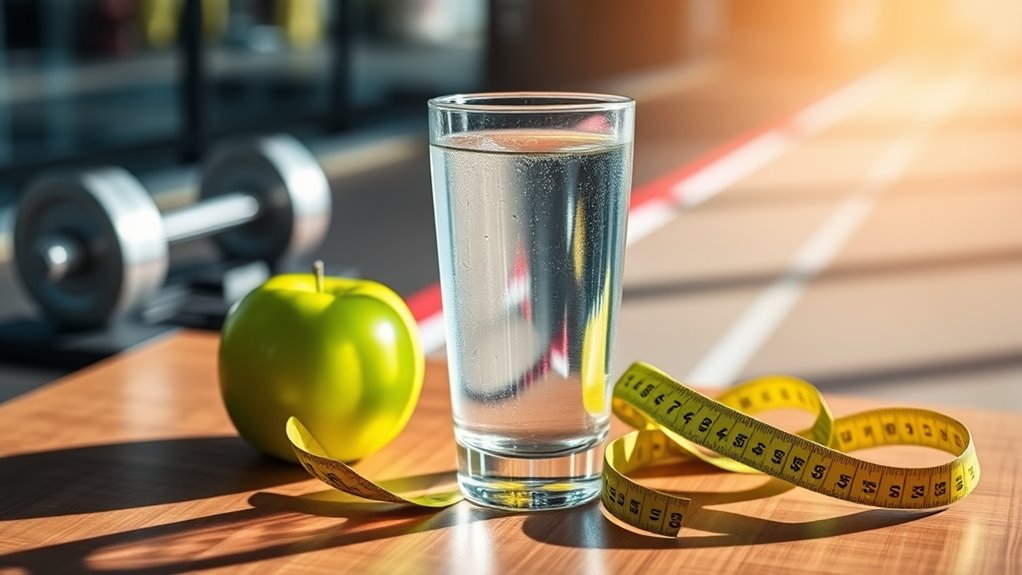
Staying well-hydrated is a key factor in effective weight loss because water helps regulate your body’s functions and can suppress appetite. When you drink enough water, you support your body’s ability to process nutrients efficiently and prevent confusing signals that often lead to overeating. Proper hydration also plays a significant role in maintaining electrolyte balance, which is essential for muscle function, nerve signaling, and overall energy levels. If your electrolytes are off, you might feel sluggish or experience cramping, both of which can hinder your workout performance and reduce your motivation to stay active. By keeping your electrolyte levels in check through adequate water intake, you guarantee your body remains balanced and ready to burn calories effectively.
Beyond electrolyte balance, hydration directly influences your metabolism, the process through which your body converts food into energy. When you’re dehydrated, your metabolic rate can slow down, making it harder to burn calories efficiently. Drinking enough water helps boost your metabolism, allowing you to break down fats and carbohydrates more effectively. This means that staying well-hydrated can give your weight loss efforts a vital edge, as it supports the natural processes that keep your metabolism running at prime speed. Additionally, water can increase the number of calories you burn at rest; studies suggest that drinking cold water may slightly elevate your calorie expenditure because your body works harder to warm it to body temperature. Proper hydration also supports your body’s ability to maintain a healthy weight by optimizing various physiological functions. Staying adequately hydrated can also improve your exercise performance, making your workouts more effective and helping you burn more calories during physical activity. Increasing hydration awareness through technology can further empower you to make informed choices about your fluid intake.
Frequently Asked Questions
Can Drinking Water Alone Lead to Significant Weight Loss?
You might wonder if drinking water alone can lead to significant weight loss. While water intake myths exist, staying hydrated helps control your appetite and reduces overeating. Drinking water before meals can make you feel full, supporting your weight loss efforts. Keep in mind, though, water alone isn’t enough; combine proper hydration with a balanced diet and exercise for the best results. Hydration and appetite regulation are key components of a successful weight loss plan.
How Much Water Should I Drink Daily for Weight Loss?
You should aim to drink about 8-10 cups of water daily for weight loss, but hydration timing matters. Spread your water intake throughout the day to stay consistently hydrated, especially before meals. Opt for water at a moderate temperature—lukewarm or cool—since it’s easier to drink more. Remember, listening to your body’s thirst cues helps you stay on track and supports your weight loss goals.
Does Hydration Help Reduce Water Retention and Bloating?
Hydration helps reduce water retention and bloating by maintaining electrolyte balance, which prevents your body from holding onto excess water. When you’re well-hydrated, digestion improves, helping your body eliminate waste more efficiently. Drinking enough water also flushes out toxins, reducing puffiness. Keep in mind that staying consistent with hydration supports overall digestion and electrolyte stability, ultimately helping you feel less bloated and more comfortable throughout the day.
Are There Specific Drinks That Hydrate Better Than Water?
When it comes to hydration, don’t put all your eggs in one basket. Some drinks, like sports drinks with electrolytes, can hydrate you better than plain water by balancing electrolytes and supporting hydration. Hydrating foods like cucumber and watermelon also help maintain electrolyte balance naturally. While water remains best, these options can give you a boost, especially during intense workouts or hot days.
Can Dehydration Slow Down My Metabolism?
Dehydration can lead to a metabolism slowdown because your body struggles to perform crucial functions efficiently without enough water. When you’re dehydrated, your body’s energy expenditure decreases, making it harder to burn calories effectively. The dehydration effects also cause fatigue and sluggishness, which can reduce your activity levels. To keep your metabolism running smoothly, stay well-hydrated by drinking enough water throughout the day.
Conclusion
Staying hydrated is key to successful weight loss—you might be surprised to learn that drinking water can boost your metabolism by up to 30%. When you hydrate well, you help your body burn calories more efficiently and curb unnecessary snacking. Remember, drinking enough water doesn’t just support weight loss; it also improves your energy and mood. So, keep a water bottle handy and make hydration a daily habit—you’ll see the benefits in your weight loss journey.