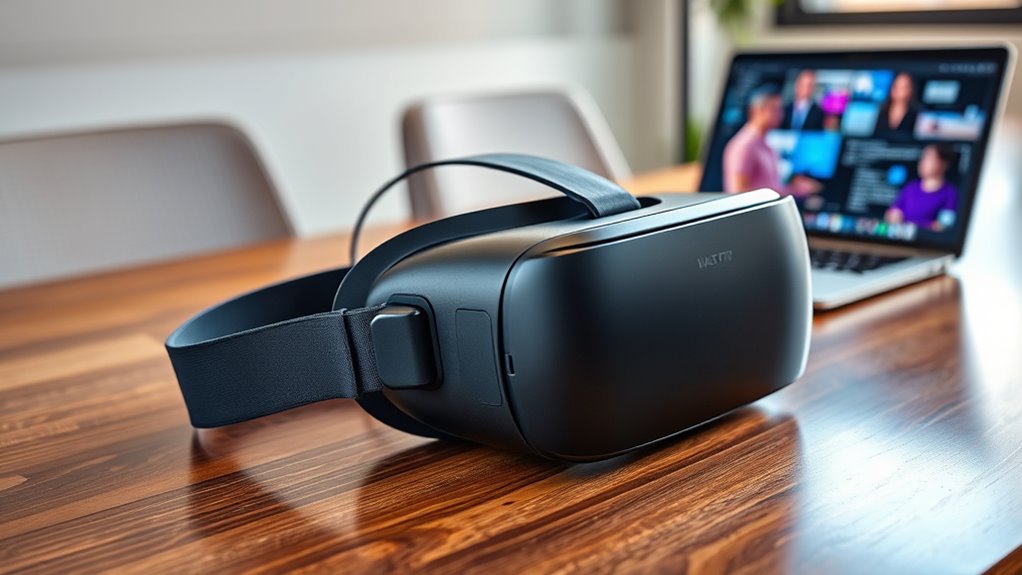
AR and VR headsets are revolutionizing how you experience digital content by creating immersive environments that blend the real and virtual worlds. They improve with better visuals, realistic interactions, and natural controls like hand and eye tracking. As they become more affordable and versatile, you’ll see these devices used in gaming, training, healthcare, and everyday tasks. Keep exploring to discover how these innovations will shape your future interactions.
Key Takeaways
- Advances in display technology and sensors will enable more realistic and seamless AR and VR experiences.
- Increased accessibility and affordability will expand adoption across consumer, professional, and educational sectors.
- Enhanced interaction features like hand tracking and eye movement detection will make immersive experiences more natural.
- Integration of emotional support and well-being features will promote healthier and more engaging user interactions.
- Growing use in healthcare, architecture, and remote collaboration will transform industries through immersive applications.
Augmented Reality (AR) and Virtual Reality (VR) headsets are transforming how you experience digital content by immersing you in new worlds or overlaying information onto your real environment. These devices are rapidly evolving, offering more realistic visuals, smoother interactions, and broader applications. When you put on an AR headset, you see digital images seamlessly integrated into your real-world surroundings, enhancing your perception with contextual information. Virtual reality headsets, on the other hand, transport you entirely into a computer-generated environment, where you can explore, interact, and feel present in a different space. This immersion is made possible by advanced sensors, high-resolution displays, and spatial audio, which work together to create a convincing sense of presence.
The core of this technology lies in how it blurs the line between the digital and physical worlds. Augmented reality enhances what you already see and do, whether it’s overlaying navigation directions onto your view of the street or providing interactive training simulations. Virtual reality, meanwhile, replaces your surroundings with entirely new environments, making it ideal for gaming, virtual tours, or immersive education. Both forms of immersive tech rely heavily on the headset’s ability to track your movements accurately, ensuring that digital overlays or environments respond naturally to your actions. This responsiveness is essential for creating a believable experience and avoiding motion sickness or disorientation.
As you explore these technologies, you’ll notice how they’re becoming more accessible and versatile. Consumer-grade AR devices like smart glasses are making augmented reality practical for daily use, from shopping to remote collaboration. Meanwhile, VR headsets are improving in comfort and affordability, opening the door for widespread adoption beyond gaming, into fields like healthcare, architecture, and training simulations. You might find yourself using virtual reality to practice surgical procedures, visualize building designs, or attend virtual conferences. Augmented reality continues to evolve with features like hand tracking and eye movement detection, making interactions more intuitive and natural. Additionally, the importance of emotional support in managing stress and adapting to new technologies can enhance user experience and well-being as these devices become more integrated into daily life.
Frequently Asked Questions
How Do AR and VR Headsets Impact Mental Health?
AR and VR headsets can positively impact your mental health by providing immersive experiences that reduce stress and anxiety, offering mental health benefits like relaxation and escapism. They also have cognitive effects, enhancing memory, problem-solving, and learning skills through interactive environments. However, prolonged use may cause eye strain or disorientation, so it is crucial to balance your time and use these technologies responsibly for maximum mental health benefits.
Are There Any Safety Concerns With Prolonged Headset Use?
Yes, prolonged headset use can cause safety concerns like eye strain and physical discomfort. You might experience headaches, blurred vision, or neck pain after extended sessions. It’s important to take regular breaks, adjust the headset properly, and guarantee good ergonomics. Listening to your body helps prevent long-term issues. Always follow manufacturer guidelines for safe use, and consult a professional if discomfort persists.
What ARe the Environmental Impacts of Manufacturing AR and VR Devices?
You should consider that manufacturing AR and VR devices impacts the environment through resource extraction and energy use. Promoting sustainable manufacturing helps reduce this footprint, while material recycling minimizes waste. By choosing companies that prioritize eco-friendly practices, you support efforts to lessen environmental harm. Your awareness and demand for greener products encourage the industry to adopt better sustainability measures, ultimately making immersive tech more eco-conscious and reducing its overall environmental impact.
How Do AR and VR Headsets Affect Social Interactions?
A picture is worth a thousand words, but AR and VR headsets can both connect and disconnect you. You might experience virtual empathy and a stronger sense of social presence, making interactions more immersive. However, they can also lead to social isolation if overused. You have the power to balance virtual and real-world connections, ensuring these tools enhance rather than hinder your relationships.
What Are the Latest Advancements in Headset Battery Technology?
You’ll notice that recent battery innovation has substantially improved headset power efficiency, allowing for longer immersive experiences without frequent recharging. Manufacturers now focus on lightweight, high-capacity batteries that enhance mobility and comfort. These advancements mean you can enjoy extended sessions, whether gaming or working, with less downtime. As technology advances, expect even smarter energy management systems that maximize battery life and optimize performance, making your immersive tech experiences more seamless and enjoyable.
Conclusion
As you step into the world of AR and VR headsets, remember that while they transport you to incredible new realities, they also bring you back to the present. The future of immersive tech promises limitless possibilities, yet it’s grounded in the real world you live in. Embrace the adventure, but stay aware—sometimes, the most powerful experiences are those that connect you to reality, not replace it.