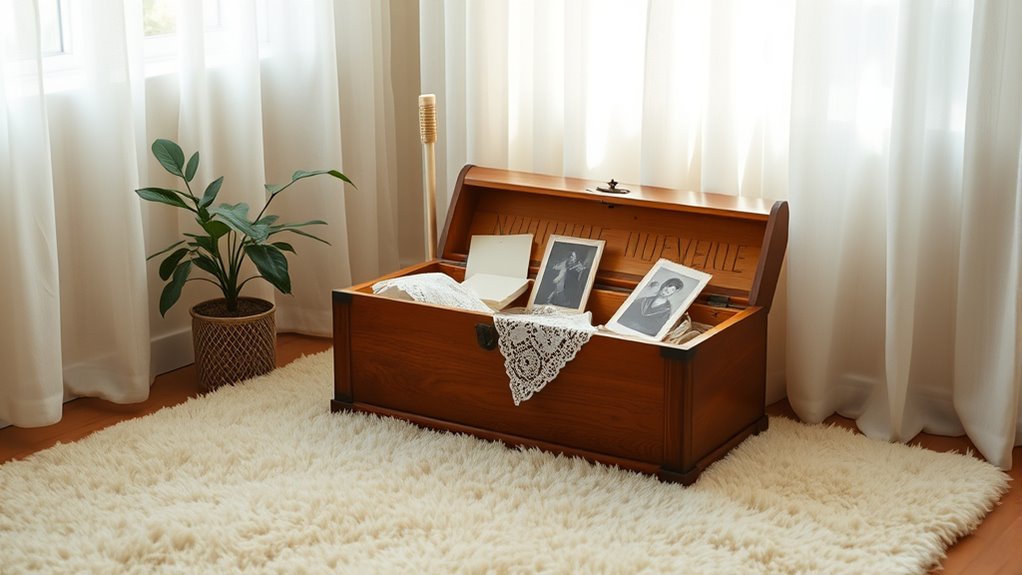

To let go of sentimental clutter mindfully, honor your emotions by reflecting on each item’s true significance. Take your time to decide if it still sparks joy or serves a purpose, and consider digital options to preserve memories without physical clutter. Set boundaries to manage space and prioritize items that genuinely matter. By approaching the process with patience and self-compassion, you’ll find it easier to create a personalized, clutter-free space that honors your memories—exploring further can help you master this balance.
Key Takeaways
- Reflect on each sentimental item’s significance before deciding to keep or let go.
- Use mindful techniques like deep breathing and reflection to manage emotional responses during decluttering.
- Create designated storage solutions or digital archives to preserve memories without physical clutter.
- Set clear boundaries and prioritize meaningful items to maintain a manageable and intentional sentimental collection.
- Focus on personal growth and space renewal, understanding that memories can be preserved beyond physical possessions.

Decluttering sentimental items can be a challenging process, but it’s also an opportunity to create a more organized and meaningful space. You might find yourself overwhelmed by the emotional attachment you feel toward certain objects, making it hard to decide what to keep and what to let go. The key is to approach this process with mindfulness, recognizing that your possessions are symbols of memories rather than the memories themselves. To ease the burden, consider implementing thoughtful storage solutions that help preserve the items you truly value. Well-designed boxes, labeled bins, or even digital archives can keep your keepsakes safe while freeing up space.
As you begin, acknowledge the emotional attachment you have to certain objects. These items often carry stories, milestones, or loved ones’ presence, which makes parting with them feel like losing a piece of your history. Instead of rushing, take time to reflect on each item’s significance. Ask yourself if it still brings you joy or if it serves a purpose in your current life. Sometimes, holding onto something out of guilt or obligation clouds your judgment. Remember, it’s okay to let go of items that no longer resonate with you, even if they seem important to others.
When deciding what to keep, consider creating a dedicated sentimental box or storage container. This allows you to contain your most meaningful items in one place, making it easier to manage and revisit them when needed. Using clear containers or labeled boxes ensures you can quickly identify your keepsakes without rummaging through clutter. For items that hold less significance but still have sentimental value, take photos or make digital copies. This way, you can preserve the memory without physically holding onto every object, reducing clutter while maintaining emotional connection.
It’s also helpful to set boundaries during this process. Limit the amount of space you allocate for sentimental storage, forcing yourself to prioritize what truly matters. This helps prevent sentimental clutter from taking over your entire living area. Remember, decluttering isn’t about erasing your memories; it’s about creating space for new experiences and making your environment more manageable. By thoughtfully choosing what to keep and how to store it, you honor your emotional attachments without being overwhelmed by possessions.
Ultimately, mindful decluttering requires patience and self-compassion. You’re not just sorting through objects—you’re re-evaluating what’s meaningful in your life. With the right storage solutions and a gentle approach, you can let go of the excess while preserving the memories that matter most. Understanding that emotional attachment plays a significant role in this process can help you navigate your feelings more effectively. This process can transform your space into one that truly reflects your current self and the story you want to tell.

ZICOTO Decorative Storage Boxes with Lids – Set of 2 Beautiful PU Leather Organizer Bins for Your Bookshelf Home Decor – Safely Store Photos, Documents and Memory Box Keepsakes in Style
Beautifully Master the Art of Organizing: Sleek, structured and designed to organize everything from photos and postcards to…
As an affiliate, we earn on qualifying purchases.
As an affiliate, we earn on qualifying purchases.
Frequently Asked Questions
How Do I Start Decluttering Sentimental Items?
Start by identifying the sentimental items that hold the strongest emotional attachment and focus on those first. Take time to reflect on the memories you want to preserve, and consider photographing or creating a memory book for items you’re ready to let go. As you declutter, remind yourself that emotional attachment isn’t about possessions but the memories they represent, helping you find a mindful balance between memory preservation and space.
What if I Regret Letting Go of Something?
If you regret letting go of something, don’t panic. Pause, practice patience, and prioritize guilt reduction by reminding yourself that emotional release fosters freedom. You might find comfort in revisiting memories through photographs or stories instead of physical items. Remember, decluttering is about creating space for positivity, not losing your past. Trust your decision, and know that emotional growth often involves letting go to gain peace.
How Can I Involve Family in Sentimental Decluttering?
You can involve your family in sentimental decluttering by creating a shared space for family bonding, where everyone feels comfortable sharing stories behind items. Encourage open conversations and emotional support, helping each person decide what holds true meaning. Make it a collaborative effort, respecting each other’s feelings, and celebrate memories together. This approach strengthens bonds and turns decluttering into a meaningful, supportive family activity.
Are There Ways to Preserve Memories Without Keeping Items?
You can preserve memories without keeping items by exploring digital preservation options like scanning photos or creating digital albums. Start a memory journal to document stories and feelings associated with your keepsakes, capturing their significance. This way, you hold onto the memories more than the physical objects, making it easier to let go while still honoring your sentimental attachments. Digital and written records keep your memories alive without clutter.
How Often Should I Revisit My Sentimental Belongings?
Think of revisiting your sentimental belongings like tending a garden—you need regular care to keep it healthy. You should check in every 6 to 12 months, especially if emotional attachment is strong. During these visits, assess whether your items still hold meaning or if storage solutions could better preserve memories. This approach helps you stay connected without becoming overwhelmed by clutter, maintaining a balanced emotional space.

Digital Picture Frame 10.1 Inch WiFi Digital Photo Frame IPS HD Touch Screen Smart Cloud Photo Frame with 32GB Storage, Auto-Rotate, Easy Setup to Share Photos or Videos Remotely via AiMOR APP (Black)
GIFT THE BEST PHOTO FRAME FOR YOUR LOVED ONES: Order an Anna Bella digital picture frame and preload…
As an affiliate, we earn on qualifying purchases.
As an affiliate, we earn on qualifying purchases.
Conclusion
As you let go of sentimental clutter, remember that it’s not about forgetting the memories but creating space for new ones. By releasing what no longer serves you, you make room for growth and peace. So, are you ready to cherish your past without being weighed down by it? Embrace mindful decluttering, and watch how your space—and your mind—become lighter and more open to what’s ahead.

GRANNY SAYS Storage Basket with Lid, Linen Fabric Storage Bins with Label, Decorative Storage Boxes, Clothes Storage and Organization, Memory Keepsake Box, 3-Pack, Khaki&Ivory
Perfect Size: These storage bins with lids come in a set of three, each measuring 14¾"L x 10½"W…
As an affiliate, we earn on qualifying purchases.
As an affiliate, we earn on qualifying purchases.

ENGRAVE MY MEMORIES Personalized Wooden Keepsake Box – Custom Memory Box for Photos Jewelry Letters Rustic Memento Storage Box for Wedding, Anniversary, Birthday, Graduation & Retirement Gifts
Personalized Memory Box for Every Special Occasion – Create a timeless keepsake with your custom text engraved on…
As an affiliate, we earn on qualifying purchases.
As an affiliate, we earn on qualifying purchases.