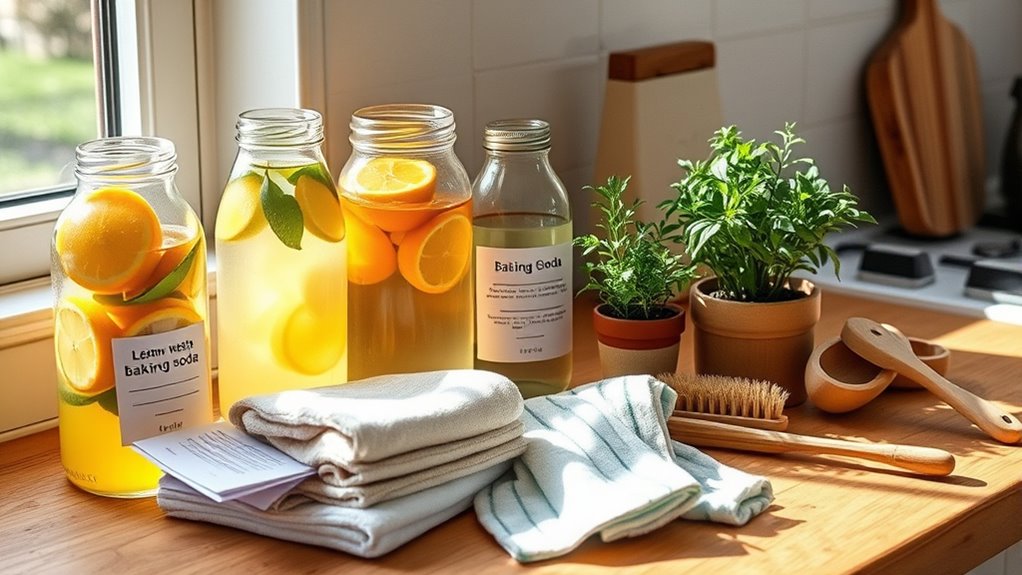

To create eco-friendly, zero-waste cleaning products, use natural ingredients like vinegar, baking soda, lemon, and castile soap, which are safe, affordable, and biodegradable. Store these in reusable containers such as glass jars or spray bottles to cut plastic waste. Customize your cleaners with essential oils for added freshness and cleaning power. These simple recipes and packaging choices help reduce environmental impact while keeping your home clean—discover more eco-smart tips ahead.
Key Takeaways
- Use natural ingredients like vinegar, baking soda, lemon, and castile soap for effective, chemical-free cleaning.
- Opt for reusable containers such as glass spray bottles and stainless-steel jars to minimize plastic waste.
- Customize DIY cleaners with essential oils for natural scents and enhanced cleaning power.
- Prepare simple recipes, like baking soda paste or vinegar solutions, for versatile, eco-friendly cleaning tasks.
- Reduce environmental impact by avoiding single-use plastics and choosing biodegradable, sustainable ingredients.

Ever wondered how you can keep your home spotless without generating waste? Embracing zero-waste cleaning means turning to natural ingredients and exploring packaging alternatives that reduce your environmental footprint. Instead of relying on store-bought cleaners wrapped in plastic, you can craft your own eco-friendly solutions using simple, effective ingredients you probably already have at home. Natural ingredients like vinegar, baking soda, lemon, and castile soap serve as powerful cleaning agents that are safe, affordable, and biodegradable. These ingredients are free from harsh chemicals, making them better for your health and the planet. Incorporating automation of security protocols into your cleaning routine can help streamline your efforts and ensure consistent results.
When it comes to packaging alternatives, think beyond traditional plastic bottles. You can use glass jars, refillable spray bottles, or stainless steel containers to store your homemade cleaners. This not only minimizes single-use plastics but also makes your cleaning routine more sustainable. For example, filling a glass spray bottle with a mixture of vinegar and essential oils creates a versatile all-purpose cleaner that’s easy to use and eco-friendly. Similarly, storing baking soda in a cardboard box or a reusable container keeps waste to a minimum. By choosing these packaging alternatives, you markedly cut down on plastic waste and contribute to reducing landfill overflow.
Making your own cleaning products also allows you to customize scents and strengths to suit your preferences. Add a few drops of essential oils like tea tree, eucalyptus, or lavender to enhance cleaning power and leave your home smelling fresh naturally. Plus, these ingredients are often available in bulk or in eco-friendly packaging, further reducing waste associated with shopping. When you’re ready to clean, simply mix your ingredients in your chosen container, avoiding the need for multiple single-use bottles. This approach not only saves money but also keeps your home free from unnecessary packaging waste.
Another advantage is that DIY zero-waste cleaning recipes are straightforward and quick to prepare. For instance, a simple paste of baking soda and water works wonders on sinks and tubs, while a solution of vinegar and water tackles glass and mirrors. Using natural ingredients and packaging alternatives empowers you to take control of your cleaning routine, making it more sustainable and less polluting. Plus, you can feel good knowing that you’re reducing your carbon footprint and helping protect the environment for future generations. Adopting these small changes in your cleaning habits can lead to a cleaner home and a healthier planet, all without sacrificing effectiveness.
Top picks for "zero waste clean"
Open Amazon search results for this keyword.
As an affiliate, we earn on qualifying purchases.
Frequently Asked Questions
Are DIY Cleaning Products as Effective as Commercial Ones?
DIY cleaning products can be just as effective as commercial ones if you focus on chemical efficacy and ingredient sourcing. When you select potent natural ingredients like vinegar, baking soda, and essential oils, you harness their cleaning power. By sourcing quality ingredients and following proper recipes, you guarantee your homemade cleaners tackle dirt and grime effectively, offering a safe, eco-friendly alternative without sacrificing performance.
How Long Do Homemade Cleaning Solutions Last?
Homemade cleaning solutions generally last about one to two weeks, depending on ingredients and storage methods. To prolong their shelf life, store your solutions in airtight containers away from sunlight and heat. Using preservative methods like refrigeration or adding natural preservatives such as vitamin E can also help maintain effectiveness. Always check for changes in smell, color, or texture before use to ensure safety and potency.
Can Zero-Waste Cleaners Be Used on All Surfaces?
Yes, zero-waste cleaners can be used on most surfaces, but you should consider surface compatibility and ingredient limitations. Always check the ingredients, like vinegar or baking soda, which may not be suitable for delicate surfaces such as marble or granite. Test a small area first to avoid damage, and use specific recipes designed for certain surfaces to guarantee safe, eco-friendly cleaning without harm.
What Are the Safety Tips for Handling DIY Cleaning Ingredients?
When handling DIY cleaning ingredients, always store them safely in labeled, airtight containers to prevent accidents. Wear gloves and eye protection to avoid skin and eye irritation. Follow allergy precautions by testing a small area first and avoiding ingredients you’re allergic to. Keep ingredients out of reach of children and pets. Ventilate your space well during and after cleaning. Proper storage and awareness diminish risks and ensure safe, eco-friendly cleaning.
Are There Any Environmental Concerns With Homemade Cleaning Ingredients?
Think of your homemade cleaning ingredients as tiny guardians of the environment, so you want to handle them with care. While they’re eco-friendly, you should still consider chemical safety and ingredient sourcing. Some ingredients might harm local wildlife if not disposed of properly, or contain chemicals that could affect your health. Always choose sustainable sources, and use ingredients in moderation to keep your cleaning routine both safe and kind to the planet.
Conclusion
Think of your cleaning routine as a garden—you plant seeds of eco-friendly habits and watch them blossom into a healthier home and planet. By choosing DIY zero-waste cleaning recipes, you’re not just tidying up; you’re nurturing a sustainable future. Every small step you take is like watering that garden, helping it thrive. So, embrace these simple solutions and watch your eco-conscious efforts grow into a beautiful, vibrant sanctuary you can be proud of.