AI in wearables gives you real-time health feedback by constantly analyzing your vital signs, activity, and sleep patterns. It detects subtle changes, triggers alerts, and offers personalized insights to help you stay proactive about your health. With ongoing learning, these devices adapt to your habits and provide early warnings of potential issues. If you want to discover how this technology keeps you ahead of health concerns, you’ll find more details below.
Key Takeaways
- AI enables wearables to process real-time data and deliver immediate health feedback and alerts.
- Predictive analytics help identify early signs of health issues, facilitating proactive intervention.
- Continuous learning allows wearables to adapt insights based on evolving individual habits and health patterns.
- Real-time monitoring supports management of chronic conditions and recovery through personalized alerts.
- Integration of AI transforms wearables into active health partners, enhancing early detection and personalized healthcare.
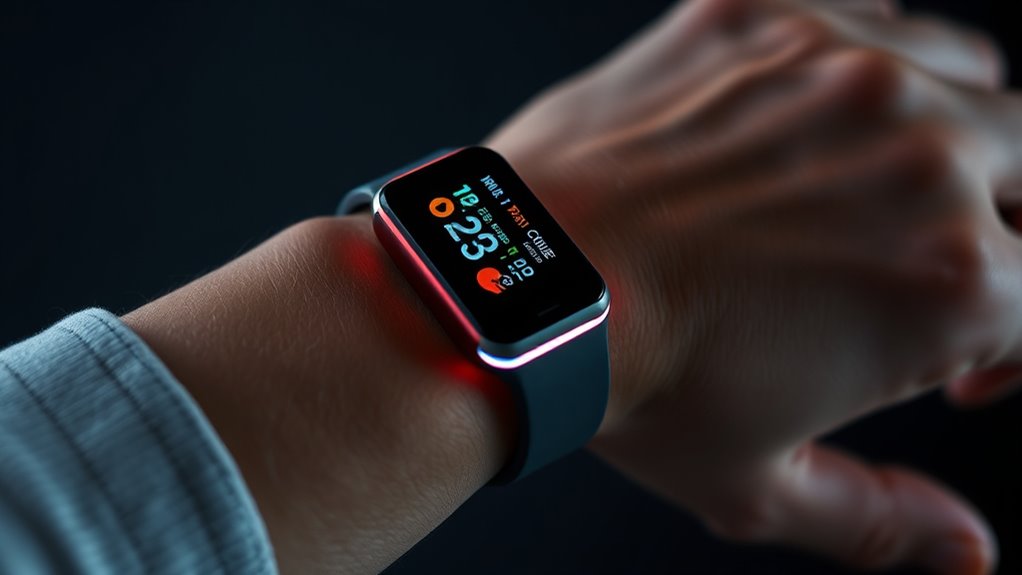
Artificial intelligence is transforming wearables by enabling devices to learn from your habits and provide personalized insights. This shift allows your wearable devices to move beyond simple data collection, offering tailored feedback that helps you better understand your health. With personalized monitoring, these devices can track your vital signs, activity levels, sleep patterns, and more, adjusting their analysis based on your unique lifestyle. For instance, if you tend to sleep late, your wearable can recognize this trend and suggest improvements or alert you if your sleep quality drops. By continuously adapting to your behaviors, AI-powered wearables give you a more accurate picture of your health in real time.
AI-driven wearables adapt continuously, offering personalized insights for better health understanding and management.
Predictive analytics plays a pivotal role in this transformation. Instead of just recording data, wearables now analyze patterns over time to forecast potential health issues before they become serious. For example, if your device notices a consistent rise in resting heart rate or irregularities in your blood oxygen levels, it can alert you early. This proactive approach helps you take preventive actions, whether that’s seeking medical advice or adjusting your lifestyle. The ability to predict issues based on ongoing data collection greatly enhances early detection, giving you peace of mind and empowering you to manage your health more effectively.
As you wear these devices daily, AI processes a vast amount of information almost instantly. This enables your wearable to identify subtle changes that might go unnoticed otherwise. For example, a sudden increase in activity or a deviation in your usual sleep cycle can trigger alerts or recommendations. When combined with predictive analytics, your device doesn’t just react to current data; it anticipates future risks and provides actionable insights. This real-time health feedback becomes especially valuable for managing chronic conditions or monitoring recovery from illness, as it keeps you informed without needing frequent visits to a doctor.
Furthermore, AI-enhanced wearables learn from your ongoing data, creating a personalized health profile that evolves with you. This continuous learning helps improve the accuracy of health predictions and recommendations over time. Whether you’re training for a marathon or recovering from surgery, your device adapts to your changing needs, offering tailored guidance. Additionally, advancements in filtration technology can help ensure your device’s sensors operate optimally by minimizing interference from environmental factors. Overall, AI’s integration into wearables transforms them from passive trackers into active health partners, providing you with real-time, personalized insights and early warnings that can make a significant difference in your health management.
Frequently Asked Questions
How Accurate Is AI in Predicting Health Issues From Wearable Data?
AI’s algorithm accuracy in predicting health issues from wearable data is impressive but varies. You can rely on its predictive reliability, especially with high-quality data and advanced algorithms. While it often detects early signs of conditions like arrhythmia or glucose fluctuations, it isn’t foolproof. Regular updates and personalized calibration improve accuracy, so stay attentive to both AI insights and professional medical advice for the best health outcomes.
What Privacy Measures Protect User Health Information in AI Wearables?
You’re protected by privacy measures like data encryption, which secures your health information from unauthorized access, and user consent, ensuring you control what data is shared. When you use AI wearables, manufacturers typically require your approval before collecting and processing data. These measures work together to safeguard your privacy, giving you confidence that your sensitive health details remain confidential and are only used with your permission.
Can AI Wearables Replace Traditional Medical Diagnostics?
AI wearables aren’t quite ready to replace traditional diagnostics, like a Swiss Army knife, they’re handy but not all-in-one solutions. You need clinical validation and regulatory approval to guarantee accuracy and safety. While they provide real-time health feedback and early detection, they serve better as supplementary tools rather than complete replacements. Trust in well-validated devices, but don’t rely solely on them for critical diagnoses yet.
How Do AI Algorithms Adapt to Individual Health Variations?
You might wonder how AI algorithms adapt to your unique health variations. They face personalization challenges, as they need to accurately interpret your data without falling into algorithm bias. Developers train algorithms on diverse datasets, but biases can still occur, impacting accuracy. Continuous updates and user feedback help the system improve over time, ensuring the AI better reflects your individual health profile and provides more precise, personalized insights.
Are There Potential Risks or Drawbacks to Relying on AI Wearables?
Is relying on AI wearables a double-edged sword? Absolutely. While they offer invaluable health insights, risks like data security breaches threaten your privacy, and algorithm bias can lead to inaccurate health assessments. You might find yourself trusting technology that isn’t infallible, risking false alarms or overlooked issues. Stay cautious, question the data, and advocate for improved security and unbiased algorithms to truly benefit from this innovation.
Conclusion
By now, you see how AI in wearables can transform your health journey. Imagine a smartwatch that detects irregular heartbeats and alerts you instantly, helping prevent a potential emergency. With real-time feedback and early detection, you’re empowered to take control of your well-being. As technology advances, your wearable could become your personal health partner, catching issues before they become serious. Embrace AI-powered wearables to stay proactive and healthier every day.