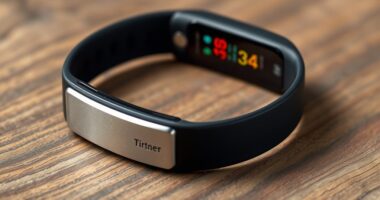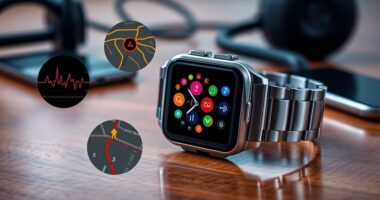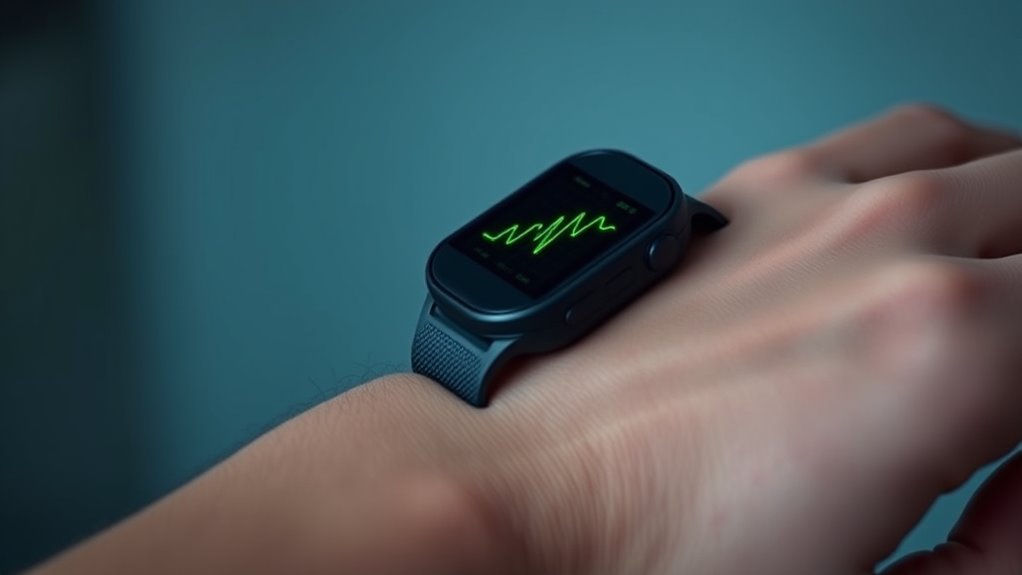
ECG wearables now let you track your heart rhythms accurately right from your wrist, offering real-time monitoring and instant alerts for irregularities like atrial fibrillation. These devices use advanced sensors to detect electrical activity, sync with your smartphone, and give you detailed insights into your heart health throughout the day. They make managing your heart health easier and more accessible. If you keep exploring, you’ll discover how these innovations can help you stay proactive about your well-being.
Key Takeaways
- ECG-enabled wearables can monitor and record heart electrical activity in real time from your wrist.
- These devices detect irregular heart rhythms like atrial fibrillation and alert users immediately.
- Wearables sync with smartphones and health apps for easy review and sharing of heart data.
- Continuous monitoring provides detailed insights into heart health throughout the day and night.
- Advances in sensors and user interfaces make ECG wearables more accurate, reliable, and user-friendly.
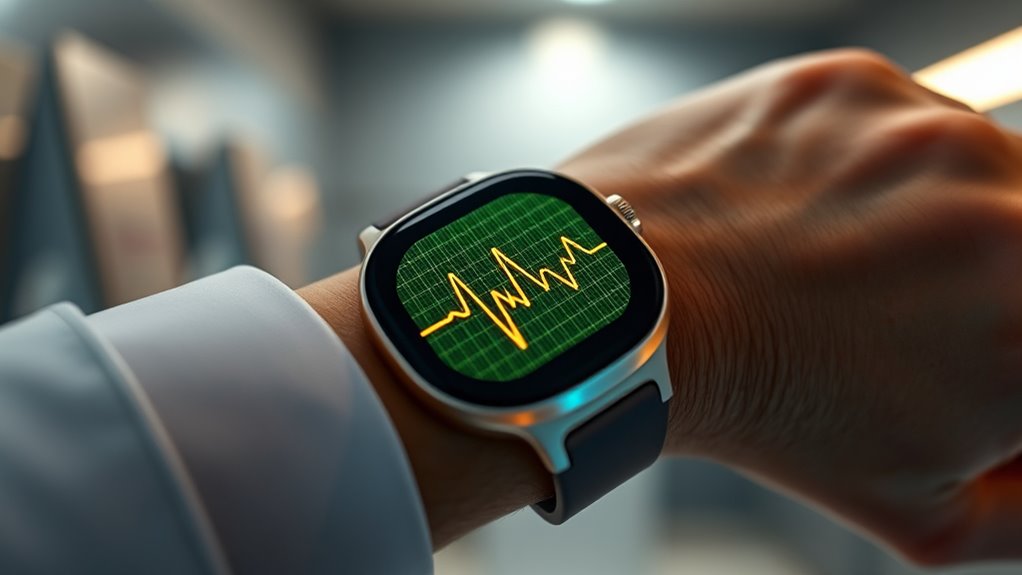
Have you ever wondered how wearable technology can help monitor your heart health in real time? Today’s devices go beyond simple step counting or calorie tracking. Thanks to recent advancements in wearable technology, you can now keep a close eye on your heart’s rhythm right from your wrist. Heart rate monitoring has become more accurate and accessible, giving you valuable insights that were once only available through expensive medical tests. These innovations aren’t just about convenience; they’re about empowering you to take control of your health. Modern wearables now feature integrated ECG sensors that detect and record your heart’s electrical activity, providing a detailed picture of your heart’s rhythm. Unlike traditional devices, these wearables are designed to be discreet, easy to use, and capable of delivering real-time data. When you wear a device equipped with ECG capabilities, you can monitor your heart’s electrical signals continuously throughout the day and night. This constant stream of data helps identify irregularities, such as atrial fibrillation or other arrhythmias, often before symptoms even appear. Thanks to wearable technology advancements, the process of tracking your heart rhythm has become seamless. Many devices now synchronize with your smartphone or health app, allowing you to review detailed reports and even share data directly with your healthcare provider. This immediate access to information can be vital, especially if you’re at risk for cardiac issues. The ability to monitor your heart’s electrical activity on the go means you can respond quickly if an abnormal pattern shows up. For example, some wearables alert you instantly if they detect signs of arrhythmia, prompting you to seek medical attention without delay. The continuous monitoring also offers a better understanding of how your lifestyle affects your heart health. You can see how exercise, stress, sleep, and medication impact your heart rhythm, leading to more personalized health decisions. As wearable technology advances, these devices are becoming increasingly sophisticated, with improved sensors, longer battery life, and more intuitive interfaces. The goal is to make ECG monitoring accessible to everyone, not just those with existing heart conditions. By integrating ECG features into daily wearables, the line between medical-grade diagnostics and consumer technology blurs. This democratization of health data empowers you to stay proactive and informed about your heart health. In addition, wearable sensors are continually evolving, enhancing the accuracy and reliability of heart rhythm detection. So, with the latest in wearable technology advancements, tracking your heart’s rhythm has never been easier or more reliable. Now, you can confidently wear a device that not only keeps you connected but also actively safeguards your heart’s well-being, giving you peace of mind and potentially life-saving insights whenever you need them.
Frequently Asked Questions
Can ECG Wearables Detect All Types of Arrhythmias?
ECG wearables can’t detect all types of arrhythmias because of device limitations. While they excel at identifying common irregularities like atrial fibrillation, they may miss more complex or less frequent arrhythmias. You should remember that these devices are useful tools for arrhythmia detection, but they aren’t perfect. For thorough diagnosis, always consult a healthcare professional who can perform detailed tests beyond what a wearable can provide.
How Accurate Are Wrist-Based ECG Devices Compared to Traditional ECGS?
Wrist-based ECG devices are about 90% as accurate as traditional ECGs when properly calibrated. You can improve accuracy by ensuring your device’s calibration and sensor technology are up-to-date. While they may not replace standard ECGs for detailed diagnosis, they offer reliable, real-time heart rhythm monitoring. Regular calibration and mindful use help you get the most accurate readings, making these wearables a convenient tool for ongoing heart health tracking.
What Is the Battery Life of Most ECG Wearable Devices?
Most ECG wearable devices offer a battery longevity of about 24 to 48 hours on a single charge, depending on their power consumption. You’ll find that lower power consumption prolongs battery life, so choosing devices with efficient sensors and optimized software helps. Regular charging is necessary, especially if you use the device daily for continuous heart monitoring. Keep an eye on the battery indicator to make certain your device stays ready when you need it.
Are ECG Wearables Suitable for People With Existing Heart Conditions?
Are ECG wearables suitable for people with existing heart conditions? They can be helpful, but you should always consult your doctor before relying on them. These devices offer valuable data, but they have device limitations and shouldn’t replace medical supervision. While they can alert you to irregularities, your healthcare provider’s guidance remains essential for managing heart health effectively and ensuring proper treatment.
How Secure Is the Data Collected by ECG Wearable Devices?
The data collected by ECG wearables is generally secure thanks to data encryption, which protects your information during transmission and storage. However, you should be aware of privacy concerns, as some devices may share data with third parties or not have strict security measures. To stay safe, choose reputable brands that prioritize privacy and regularly update their security protocols. Always review privacy policies before using these devices.
Conclusion
With ECG wearables on your wrist, you’re literally holding the power to detect heart issues before they become emergencies—like having a medical team in your pocket! Imagine catching irregular rhythms faster than you can blink, preventing potential disasters and saving your life. This isn’t just technology; it’s your personal health superhero, transforming your everyday routine into a life-saving mission. Get ready to take control of your heart health—because the future of wellness is literally in your hands!