
Home automation gadgets like smart plugs, locks, and thermostats make your life more convenient, secure, and energy-efficient. You can control devices remotely, schedule routines, and monitor access with smart locks. Thermostats learn your preferences to save on energy bills, while smart plugs turn off devices when not in use. These devices create a safer, smarter home environment that adapts to your needs. Keep exploring to discover how choosing the right gadgets can transform your living space.
Key Takeaways
- Smart plugs enable remote control and scheduling of devices to save energy and enhance convenience.
- Smart locks allow remote locking, access sharing, and monitoring to improve home security.
- Smart thermostats learn preferences and automate temperature adjustments for energy efficiency.
- Integrating these gadgets creates a safer, more energy-conscious, and convenient living environment.
- Home automation enhances safety, saves energy, and provides seamless control over home routines.
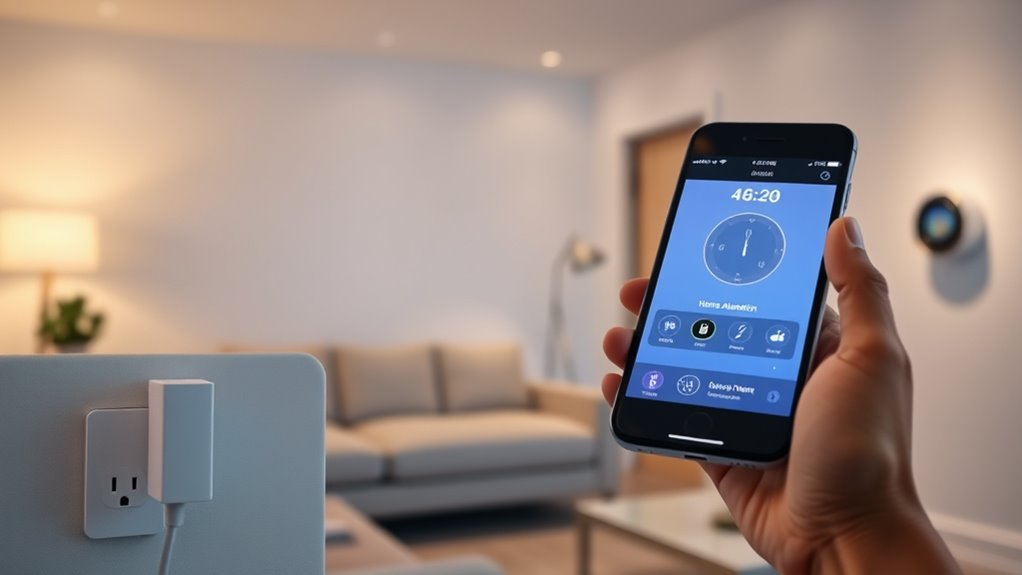
Home automation gadgets are transforming the way you manage your living space, making daily routines more convenient and efficient. With smart devices like plugs, locks, and thermostats, you gain greater control over your environment while also saving energy and boosting security. These gadgets enable you to automate tasks that once required manual effort, giving you more time and peace of mind. Incorporating evidence‑based insights helps ensure that these technologies genuinely improve your home’s efficiency and safety. Smart plugs are one of the simplest yet most effective ways to improve your home’s energy efficiency. By plugging your devices into these intelligent sockets, you can control them remotely via your smartphone or voice commands. Imagine turning off your coffee maker or lamp from bed or when you’re away, reducing unnecessary energy consumption. Many smart plugs also offer scheduling options, so your devices only operate during designated times, preventing waste and lowering your utility bills. Beyond energy savings, these plugs contribute to your home’s security by giving the impression that someone is home, even when you’re away, deterring potential intruders. Security enhancements come from smart locks that provide you with more control over who can access your home. Unlike traditional locks, these gadgets let you lock and *disengage* doors remotely, share digital keys with family or friends, and monitor access history. If you forget to lock the door before leaving, you can do it from your phone without rushing back home. Some smart locks are integrated with security cameras, allowing you to verify who’s at the door before granting entry, adding an extra layer of safety. The ability to monitor and control access remotely not only provides peace of mind but also *guarantees* your home remains secure at all times. Smart thermostats are another *essential* element in home automation that enhances both energy efficiency and security. They learn your schedule and preferences, adjusting heating and cooling to optimize comfort while conserving energy. When you’re away, you can remotely lower the temperature or turn the system off entirely, preventing unnecessary energy use. Many models can detect when you leave or return, automatically adjusting themselves to match your routines. This not only saves money but also reduces your carbon footprint. Additionally, a well-maintained, comfortable home is less likely to attract unwanted attention, contributing to overall security. Together, these gadgets create a smarter, safer, and more energy-conscious home. They empower you to manage your environment proactively, *making certain* your routines are seamless and your space is protected. Embracing home automation isn’t just about modern convenience — it’s a practical step toward a more efficient and secure living space.
Frequently Asked Questions
How Secure Are Smart Home Devices Against Hacking?
Smart home devices can be quite secure if you follow best practices. They use encryption protocols to protect your data and firmware updates to fix vulnerabilities. Regularly updating your devices guarantees you receive security patches, making hacking more difficult. Additionally, strong, unique passwords and secure Wi-Fi networks further boost your security. While no system is completely invulnerable, staying vigilant with updates and security measures markedly reduces your risk.
Can I Integrate Multiple Brands of Smart Gadgets Seamlessly?
Yes, you can integrate multiple brands of smart gadgets seamlessly, but watch out—brand compatibility and device interoperability can pose challenges. Some devices work well together, while others might require a universal hub or specific apps. To avoid frustration, research compatibility before buying, and consider platforms that support broad device integration. This way, you create a cohesive smart home experience without sacrificing functionality or security.
What Is the Average Lifespan of a Smart Plug or Lock?
Smart plugs typically last around 2 to 5 years, depending on usage and quality, with battery life impacting their longevity if they rely on batteries. Locks often last 5 to 10 years, but you’ll need to perform regular maintenance, like battery replacement and cleaning, to guarantee durability. Keep an eye on signs of wear and tear, and replace these gadgets when they start showing performance issues to maintain security and functionality.
Are There Energy-Saving Benefits With Smart Thermostats?
Yes, smart thermostats offer energy efficiency and cost savings by automatically adjusting your home’s temperature based on your schedule and preferences. You can optimize heating and cooling, reducing unnecessary energy use. This not only lowers your utility bills but also helps the environment. Plus, many smart thermostats provide real-time usage data, so you can monitor your energy consumption and make informed decisions to maximize savings and efficiency.
How Difficult Is It to Set up and Install These Gadgets?
Setting up these gadgets is generally straightforward, thanks to their user-friendly designs. Most smart devices come with clear instructions and simple installation steps, often requiring just a few minutes. You might encounter minor installation difficulty with certain locks or thermostats, but overall, manufacturers aim to make the process accessible for most users. With basic tech familiarity, you’ll find the setup quick and hassle-free, allowing you to enjoy your smart home features sooner.
Conclusion
So, after all this, you’ve got the power to control your home with just a tap or voice command—how futuristic! Yet, here you are, still debating whether to get that fancy smart plug or just keep hitting the switch. Ironically, these gadgets promise convenience but sometimes make you wonder if you’ve just given your home a mind of its own. Either way, you’re now officially living in the future—whether you’re ready or not.