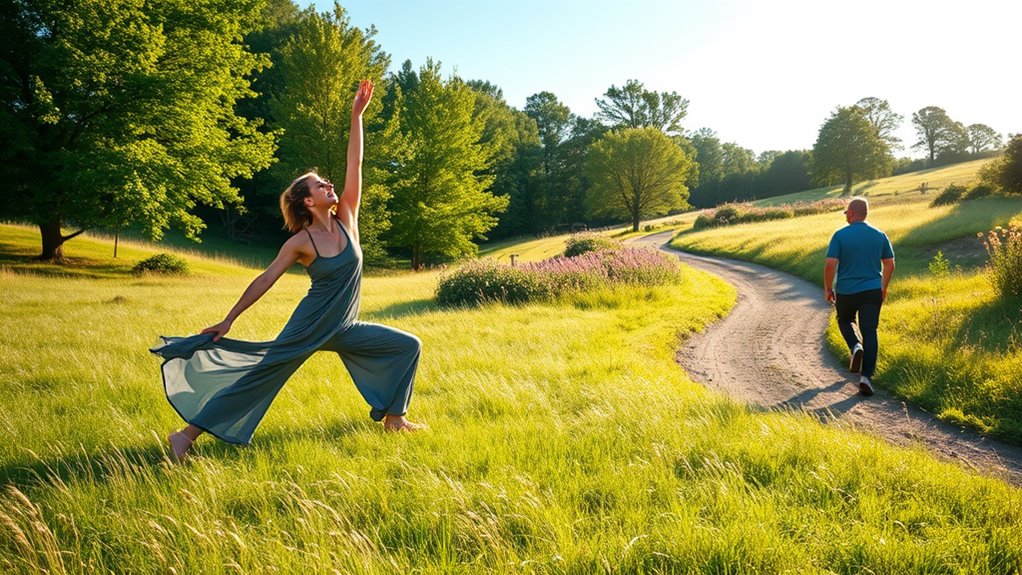

Engaging in outdoor, low-impact activities like walking, yoga, and mobility exercises can boost your overall well-being. These gentle movements improve flexibility, strengthen muscles, and support joint health without straining your body. Being outside offers mental benefits such as reduced stress and increased relaxation, especially on flat paths or natural surfaces. Incorporating these practices into your routine is easy and enjoyable, and if you keep exploring, you’ll discover even more ways to enhance your health and happiness.
Key Takeaways
- Outdoor walking on flat or gently sloped trails promotes low-impact cardiovascular health suitable for all fitness levels.
- Practicing outdoor yoga enhances flexibility, mindfulness, and relaxation in peaceful natural settings.
- Incorporating mobility exercises like ankle circles and shoulder rolls supports joint health and range of motion outdoors.
- Natural surfaces such as grass or gravel challenge balance safely while engaging stabilizing muscles.
- Choosing quiet, flat areas and wearing proper attire ensures safe, enjoyable outdoor low-impact movement experiences.

Have you ever wondered how outdoor activities can boost your well-being without putting stress on your joints? The good news is that you can enjoy a variety of low-impact movements that support your health while being gentle on your body. One of the easiest and most accessible options is walking along urban trails or through nature stretches. These paths are often flat or gently sloped, making them perfect for people of all fitness levels. As you stroll through city parks or along scenic pathways, you get the benefits of fresh air and natural surroundings, which can lift your mood and reduce stress. Plus, walking on varied surfaces like gravel or grass can help improve your balance and strengthen stabilizing muscles without overloading your joints.
Nature stretches are another fantastic way to incorporate outdoor low-impact movement into your routine. These gentle stretches not only enhance flexibility but also promote relaxation and mindfulness. You might find a quiet spot under a tree or beside a stream to perform simple stretches that target your hips, hamstrings, and shoulders. Doing these movements outdoors allows you to connect with nature, which adds an extra layer of mental health benefits. When you stretch outside, you’re less likely to feel rushed or confined, and the natural surroundings can make the experience more enjoyable and calming. It’s a perfect way to unwind, improve circulation, and enhance your overall mobility without risking injury or discomfort.
Connecting with nature through outdoor stretches enhances flexibility, relaxation, and mental well-being.
Yoga is an excellent low-impact activity that works well outdoors, especially when you find a peaceful spot in a park or by a lake. Practicing yoga outside allows you to breathe in fresh air and enjoy the serenity of nature. Many yoga poses are gentle and focus on alignment, balance, and breath control, making them ideal for increasing flexibility and strength without stressing your joints. Whether you prefer slow, restorative poses or more dynamic flows, outdoor yoga helps you cultivate mindfulness while strengthening your body. You can adapt poses to suit your comfort level, using the natural environment as a backdrop to deepen your practice. Just remember to wear comfortable clothing and bring a mat or towel for added support.
Mobility exercises are another way to stay active outdoors without putting unnecessary strain on your joints. These movements focus on maintaining and improving your range of motion, making daily activities easier and reducing the risk of stiffness. Simple routines like ankle circles, shoulder rolls, or gentle spinal twists can be performed in your backyard, at a park, or along urban trails. Doing these exercises outdoors can boost your motivation and keep things interesting, especially when you incorporate the sights and sounds of nature. Incorporating proper equipment and safety measures such as supportive footwear or mats can further enhance your experience. Regularly practicing low-impact mobility moves outside helps you stay limber, supports joint health, and encourages a more active, balanced lifestyle.
Top picks for "outdoor impact movement"
Open Amazon search results for this keyword.
As an affiliate, we earn on qualifying purchases.
Frequently Asked Questions
How Can I Prevent Injuries During Outdoor Low-Impact Exercises?
To prevent injuries during outdoor low-impact exercises, you should start with a proper warm-up to loosen your muscles and increase blood flow. Stay hydrated by following good hydration strategies before, during, and after your activity. Listen to your body, avoid overexertion, and wear appropriate footwear. Taking these steps helps you stay safe, reduces the risk of strains or sprains, and keeps your movement enjoyable.
What Are the Best Shoes for Outdoor Walking and Yoga?
Choosing the right footwear for outdoor walking and yoga is like finding a trusted companion for your journey. Look for shoes that offer excellent sole cushioning to absorb impact and provide comfort. Prioritize proper footwear selection, ensuring they fit well and support your arches. Lightweight, flexible shoes with good grip work best for walking, while yoga shoes or barefoot options help maintain balance and stability during your practice.
How Do I Adapt Low-Impact Routines for Different Fitness Levels?
To adapt low-impact routines for different fitness levels, you should use personalization strategies and adaptation techniques. Start by evaluating your current ability and gradually increase intensity or duration. Modify poses or movements to suit your flexibility and strength, and listen to your body. Incorporate rest days when needed, and focus on proper form. This approach guarantees safe progress while preventing injury and keeping your routine enjoyable and effective.
Can Outdoor Movement Help Manage Chronic Health Conditions?
You might find that outdoor movement considerably helps manage chronic health conditions. The benefits of outdoor activity include improved cardiovascular health, increased mobility, and enhanced mental health. Fresh air and sunlight boost your mood and reduce stress, making it easier to stay committed. Regular outdoor walking or yoga can lower blood pressure and improve circulation, empowering you to take control of your health and experience emotional and physical well-being.
What Equipment Is Necessary for Outdoor Mobility Exercises?
For outdoor mobility exercises, you mainly need portable mats and resistance bands. The portable mats provide a comfortable surface for stretching and mobility drills, while resistance bands add gentle resistance to improve strength and flexibility. You can easily carry these lightweight tools to parks or open spaces, making your outdoor workouts more effective and versatile. Incorporate these tools into your routine to enhance mobility and support your overall health goals.
Conclusion
Incorporating outdoor and low-impact movements like walking, yoga, and mobility exercises can substantially boost your overall health. Did you know that just 150 minutes of moderate activity weekly reduces your risk of chronic diseases by up to 30%? So, lace up your shoes or roll out your mat today. Embrace these gentle activities, enjoy nature, and enjoy the lasting benefits for your body and mind. Your healthier, happier self is just a step away.