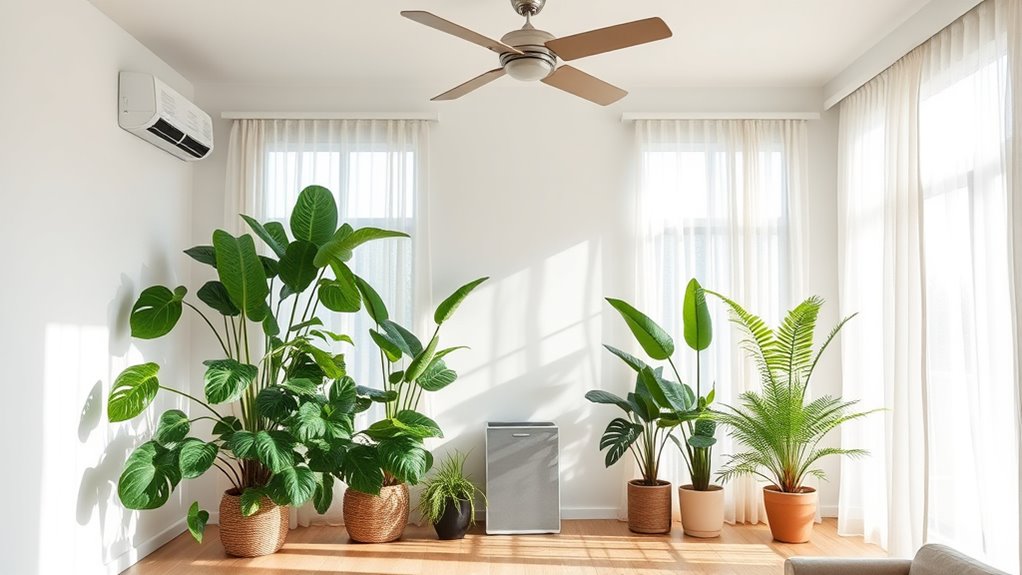

Improving your home’s air quality involves choosing the right plants, using effective filters, and ensuring proper ventilation. Incorporate air-purifying plants like pothos or peace lilies to naturally filter toxins, and use HEPA or activated carbon filters to trap dust, pet dander, and odors. Keep ventilation systems well-maintained, open windows when possible, and use exhaust fans during cooking. Taking these simple steps will help create a healthier indoor environment and prevent common air quality issues—discover how to optimize your space further.
Key Takeaways
- Incorporate indoor plants like snake plants and peace lilies to naturally filter air pollutants.
- Use HEPA and activated carbon filters in air purifiers to remove allergens and odors effectively.
- Ensure proper ventilation by opening windows and using exhaust fans during cooking and cleaning.
- Regularly maintain HVAC systems and air purifiers to maximize their efficiency in cleaning indoor air.
- Adopt habits like avoiding indoor smoking and limiting chemical cleaners for healthier indoor air quality.
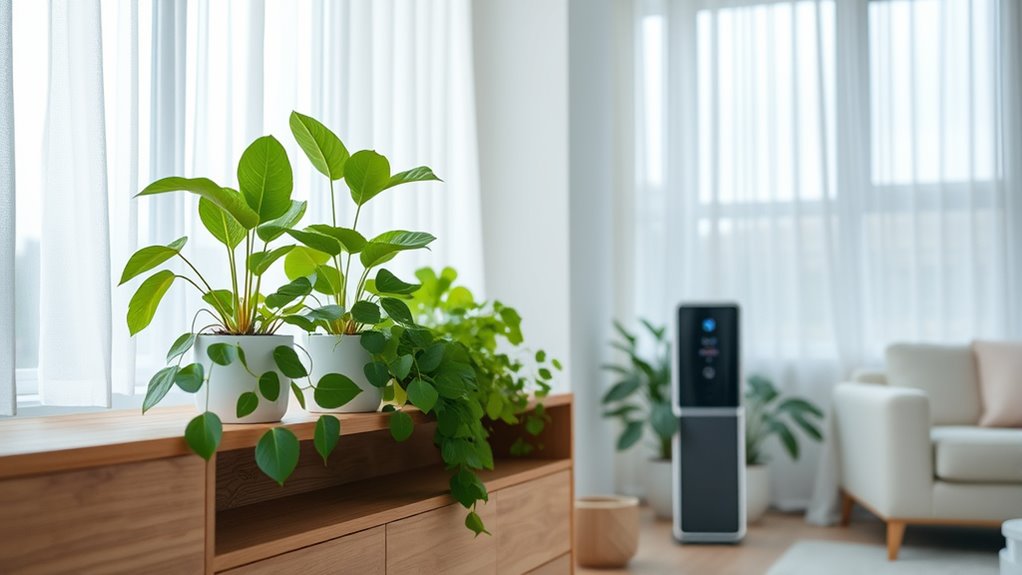
Have you ever wondered how the air inside your home affects your health? The quality of the air you breathe daily plays a vital role in your overall well-being, yet it often goes unnoticed. Poor indoor air can contain pollutants like dust, pet dander, mold spores, and volatile organic compounds (VOCs), which can trigger allergies, asthma, or other respiratory issues. Fortunately, there are simple yet effective ways to improve your indoor air quality, starting with air purifying solutions and proper ventilation.
Indoor air quality impacts health; improve it with purifiers, ventilation, and healthy habits.
Air purifying devices are a great first step. These systems use filters designed to trap airborne contaminants, substantially reducing the presence of allergens and pollutants. HEPA filters, for example, are highly effective at capturing tiny particles like pollen, dust mites, and pet dander, making the air cleaner and healthier to breathe. Activated carbon filters also help by absorbing odors and chemical fumes, creating a fresher environment. By incorporating these air purifying systems into your home, you actively remove common indoor pollutants, which can alleviate allergy symptoms and improve respiratory health.
Equally important is making sure your home has efficient ventilation systems. Proper ventilation not only introduces fresh outdoor air but also helps remove indoor pollutants, moisture, and stale air. If your home lacks adequate airflow, pollutants tend to linger, increasing the risk of health issues over time. Installing or upgrading ventilation systems allows you to control indoor air quality proactively. Mechanical ventilation systems, like exhaust fans in kitchens and bathrooms, help vent out excess moisture and odors. For a more extensive approach, consider HVAC systems with integrated fresh air intake and filtration features. These systems circulate air through filters, removing contaminants before distributing it throughout your home. Regular maintenance of these systems ensures they operate efficiently, keeping indoor air clean and reducing the buildup of harmful substances.
Additionally, simple habits can make a substantial difference. Opening windows whenever weather permits allows fresh air to circulate naturally, diluting indoor pollutants. Using exhaust fans during cooking and cleaning prevents the accumulation of fumes and moisture. Avoiding smoking indoors and limiting the use of chemical-based cleaning products can also drastically improve your home’s air quality. Combining these practices with reliable air purifying and ventilation systems creates a healthier environment for you and your family.
Frequently Asked Questions
How Do Indoor Plants Improve Air Quality Long-Term?
Indoor plants improve air quality long-term by actively filtering toxins and increasing humidity through regular plant maintenance. They absorb pollutants like formaldehyde and benzene, enhancing air purification techniques naturally. As you care for your plants, they continually remove airborne contaminants, creating a healthier environment. Consistent watering, pruning, and ensuring proper light help your plants thrive, maximizing their ability to purify air over time and maintaining a fresher, cleaner home atmosphere.
Which Air Filters Are Most Effective Against Allergens?
Did you know that HEPA filters can remove up to 99.97% of airborne allergens? You should prioritize air filter ratings that specify allergen removal, especially HEPA filters, for the best results. These filters target common allergens like pollen, pet dander, and dust mites effectively. Consistently using high-rated filters guarantees cleaner indoor air, reducing allergy symptoms and creating a healthier environment for you and your family.
How Often Should Ventilation Systems Be Maintained?
You should schedule an HVAC inspection at least once a year to guarantee your ventilation system runs efficiently. Regular filter replacement, typically every 1 to 3 months, keeps the air clean and prevents buildup. Keep an eye on your system’s performance, and if you notice issues like strange odors or reduced airflow, consider more frequent inspections and filter changes. Proper maintenance helps maintain ideal home air quality and system longevity.
Can Specific Plants Help Reduce Airborne Toxins?
Yes, specific plants can help reduce airborne toxins, enhancing your home’s air quality. Plants like snake plants, peace lilies, and spider plants offer notable benefits, including absorbing volatile organic compounds, formaldehyde, and benzene. These plants actively improve toxin reduction, making your indoor environment healthier. Incorporating these green allies into your space provides natural air purification, boosts your well-being, and creates a fresher, cleaner atmosphere effortlessly.
What Are Signs of Poor Indoor Air Quality?
If you notice persistent allergies, headaches, or respiratory issues, these are air quality indicators warning of poor indoor air quality. You might also experience fatigue, coughing, or skin irritation. Unpleasant odors, visible mold, or dust buildup are signs to watch for. Regularly check for these health symptoms and indicators, and improve ventilation or filter your air to create a healthier indoor environment.
Conclusion
By paying a little attention to your home’s air, you’re gently inviting crispness and comfort into every corner. Think of it as giving your space a subtle, nurturing hug—plants, filters, and good ventilation work together like a caring team. With these simple touches, you’ll create an environment that feels naturally inviting and healthy, making every breath you take a quiet reminder of the cozy, invigorating haven you’ve cultivated.