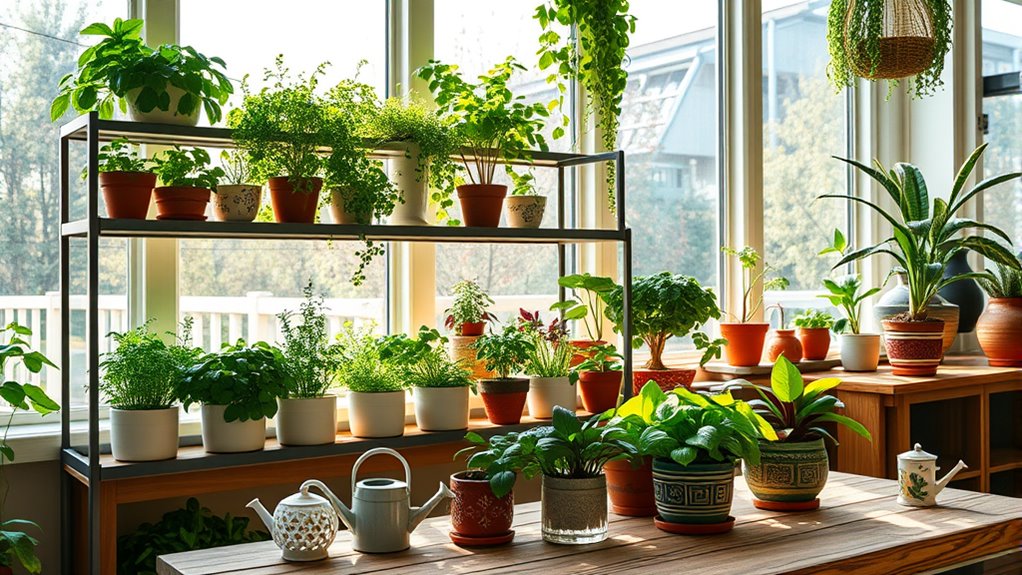

To grow herbs and greens year-round indoors, make certain you provide ample, full-spectrum LED lighting about 12 to 24 inches from your plants for 12-16 hours daily. Keep your space clean, inspect for pests regularly, and water only when the topsoil feels dry to prevent issues. Maintaining proper lighting, hygiene, and pest control creates a healthy environment for continuous growth. Keep these tips in mind, and you’ll discover how easy it is to maintain a thriving indoor garden all year long.
Key Takeaways
- Use full-spectrum LED grow lights positioned 12-24 inches from plants to mimic natural sunlight and support year-round growth.
- Maintain a daily light schedule of 12-16 hours to ensure consistent development of herbs and greens indoors.
- Regularly inspect and manage pests with natural methods like neem oil, while keeping the environment dry and clean.
- Water plants only when the top inch of soil is dry to prevent overwatering and mold, promoting healthy growth.
- Combine proper lighting, hygiene, and pest control practices to create an optimal environment for continuous indoor gardening.
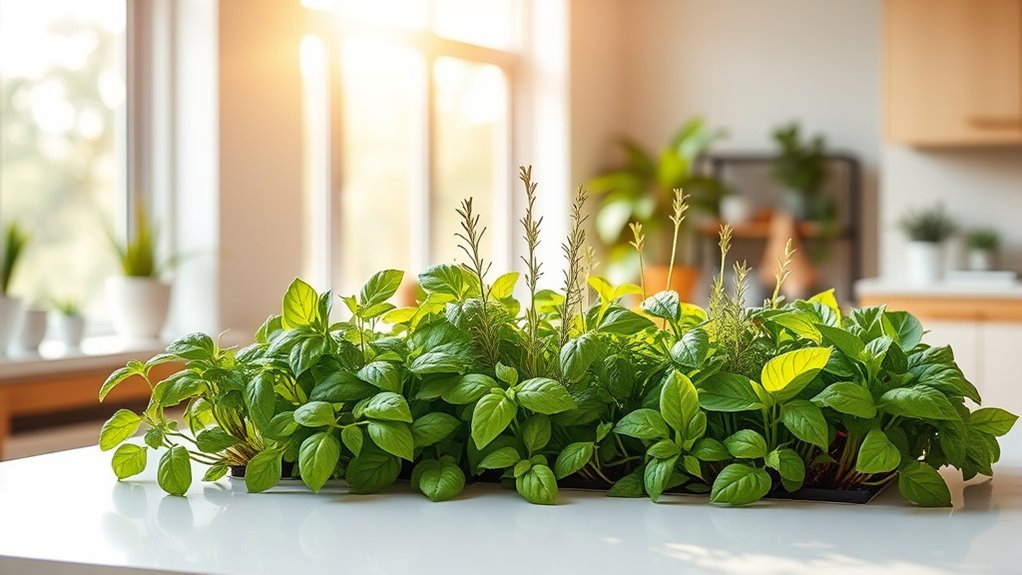
Indoor gardening is a rewarding way to bring greenery into your home and improve your living space. When you’re growing herbs and greens indoors, one of the biggest challenges is guaranteeing your plants get enough light. Urban lighting plays a vital role here; because natural sunlight can be limited in city environments, you need to supplement it with proper artificial lighting. Choose full-spectrum LED grow lights that mimic natural sunlight, providing your plants with the energy they need to thrive year-round. Position your grow lights close enough to your plants—about 12 to 24 inches—and keep them on for around 12 to 16 hours daily, depending on the specific needs of your herbs and greens. This setup helps compensate for the limited window of natural sunlight often found in urban settings, guaranteeing consistent growth. Proper urban lighting not only boosts plant health but also allows you to grow a variety of greens regardless of the season.
Along with providing adequate light, pest control is essential to keep your indoor garden healthy and productive. Unlike outdoor gardens, indoor setups typically have fewer pests, but when infestations occur, they can spread rapidly and threaten your plants. To prevent this, maintain good hygiene by regularly checking your plants for signs of pests like aphids, spider mites, or fungus gnats. Use natural pest control methods such as neem oil or insecticidal soap, which are safe for indoor use and won’t harm you or your family. Keeping the area clean and removing dead or yellowing leaves also reduces hiding spots for pests. Proper watering practices are key—overwatering creates a damp environment that attracts pests and promotes mold, so make sure you’re watering only when the top inch of soil feels dry. Additionally, consider introducing beneficial insects like ladybugs or predatory mites if pests become a persistent problem. These natural predators help keep pest populations in check without resorting to chemical treatments.
Creating an ideal environment for your indoor herbs and greens involves balancing adequate urban lighting and vigilant pest control. By investing in good lighting solutions, you give your plants the foundation for healthy growth throughout the year. Simultaneously, maintaining a clean, pest-free environment ensures your plants remain vigorous and free from disease. Together, these practices allow you to enjoy fresh herbs and greens all year long, right from the comfort of your home. With patience and attention, you’ll develop a lush indoor garden that enhances your space and your well-being.
Frequently Asked Questions
What Are the Best LED Lights for Indoor Herb Gardening?
You should choose LED grow lights with a full spectrum, particularly emphasizing the blue and red wavelengths, to support herb growth. Look for lights with adjustable grow light intensity so you can customize light levels based on your plants’ needs. A good option is an LED with a balanced spectrum and high efficiency, ensuring your herbs get the right light for healthy, year-round growth indoors.
How Do I Prevent Pests Indoors Without Chemicals?
Think of your indoor garden as a peaceful oasis, and pests as unwelcome guests. To keep them out, use organic pest control methods like neem oil or insecticidal soap, and natural repellents such as garlic or peppermint oil. Regularly inspect your plants, remove any visible pests, and maintain good airflow. These steps create a barrier, letting your herbs flourish naturally without chemicals.
What Are Common Signs of Nutrient Deficiency in Indoor Greens?
You’ll notice nutrient deficiencies in your greens through leaf discoloration, like yellowing or pale leaves, and poor growth. Check your soil pH because if it’s off, nutrients become unavailable. For example, too low or high pH can cause deficiencies, leading to symptoms like browning leaf edges or stunted growth. Regularly monitor soil pH and adjust it to keep nutrients accessible, ensuring your greens stay healthy and vibrant.
How Often Should I Water My Indoor Herbs?
You should water your indoor herbs when your soil moisture level drops, usually every 2-3 days. Check the soil by sticking your finger about an inch deep; if it feels dry, it’s time to water. Maintain a consistent watering schedule to prevent overwatering or underwatering. Remember, keep the soil moist but not soggy, and adjust frequency based on your herb’s specific needs and environment.
Can I Grow Herbs Successfully in Low-Light Conditions?
Sure, you can grow herbs in low-light conditions—who would’ve thought? While many herbs have shade tolerance, they still need some light to thrive. If natural light’s limited, consider light supplementation with grow lights to boost growth. Relying solely on dim conditions might stunt your herbs or make them leggy. So, yes, you can succeed, but a little extra light makes all the difference for healthy, flavorful herbs.
Conclusion
Indoor gardening lets you enjoy fresh herbs and greens year-round, no matter the season. While outdoor plots wait for spring, your indoor oasis stays lush and vibrant. It’s a quiet sanctuary amid chaos, a source of nourishment and calm in your busy life. By cultivating your own green space inside, you prove that growth isn’t limited by weather or time. Your home becomes a living demonstration: even indoors, life flourishes when you nurture it.