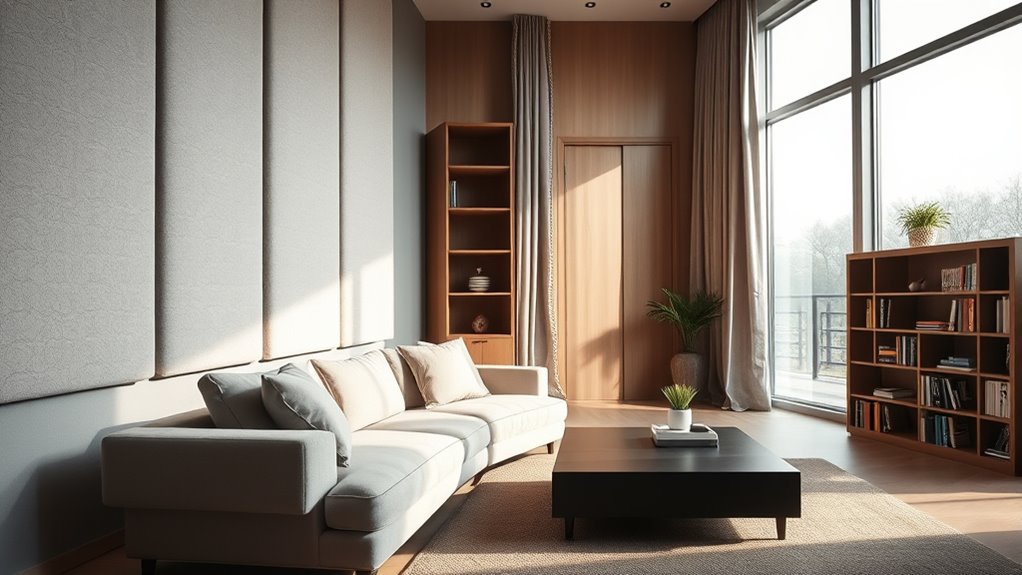

To reduce noise for better health, focus on sealing gaps around doors and windows with high-quality seals and weatherstripping. Upgrade your windows to double or triple glazing, or add acoustic curtains, to block out external sounds. Incorporate soft furnishings like heavy curtains, rugs, and upholstered furniture to absorb echoes. Combining these measures creates layered soundproofing that enhances comfort and sleep. Keep exploring more ways to transform your space into a quieter haven.
Key Takeaways
- Seal gaps around doors and windows with high-quality weatherstripping or sealant to prevent sound leakage.
- Upgrade to double or triple-glazed windows to significantly reduce outdoor noise intrusion.
- Use sound-absorbing decor like thick curtains, rugs, and upholstered furniture to dampen indoor echoes.
- Implement layered soundproofing by combining door seals, window upgrades, and sealing cracks for maximum noise reduction.
- Prioritize accessible areas first, focusing on gaps and seals, to create a quieter, healthier living environment efficiently.
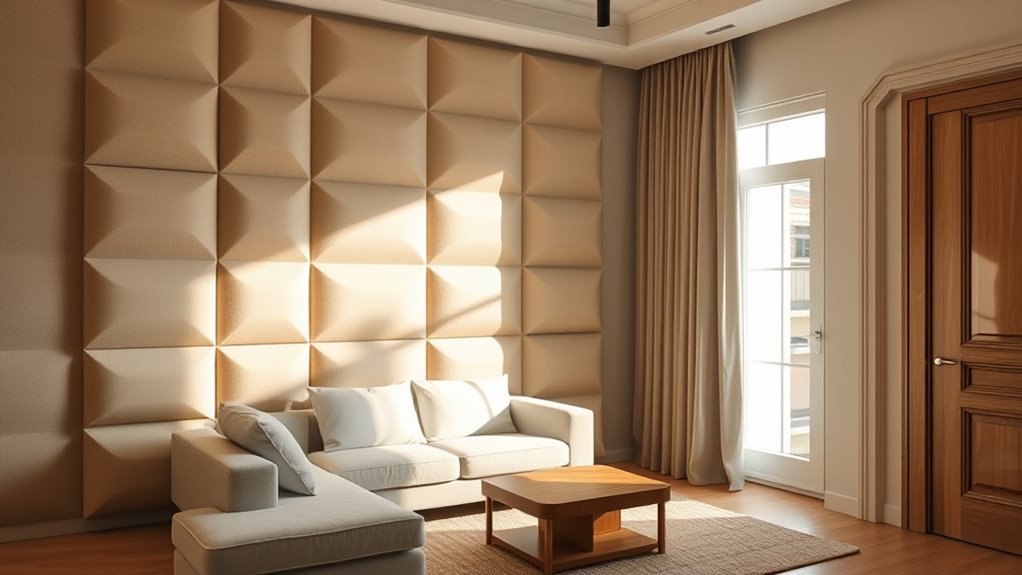
If noise disruptions are affecting your comfort at home, soundproofing offers an effective solution. You can considerably reduce unwanted sounds by focusing on sealing gaps and upgrading existing features. One of the most straightforward methods involves improving door seals. Over time, gaps around doors can let in a surprising amount of noise, especially if your home is close to busy streets or noisy neighbors. Installing high-quality door seals creates a tight barrier, preventing sound from leaking through. These seals are easy to apply, affordable, and highly effective at muffling sounds, making your space quieter and more peaceful.
Along with door seals, paying attention to your windows can make a big difference. Window glazing plays an important role in soundproofing, especially if your windows are single-pane or older. Upgrading to double or triple glazing can dramatically cut down on noise transmission. Modern window glazing uses layers of glass separated by air or gas pockets, which absorb and block sound waves more efficiently than traditional single-pane windows. If replacing windows isn’t feasible, consider adding window inserts or heavy curtains designed for acoustic insulation. These additions can help dampen sound and create a calmer environment inside your home.
Another key aspect is sealing any gaps or cracks around your window frames. Even tiny openings can let in noise, diminishing the benefits of upgraded glazing. Use weatherstripping or specialized sealant to close these gaps tightly. Additionally, consider the placement of your furniture and decor. Heavy curtains, upholstered furniture, and thick rugs can absorb sound, complementing your efforts with door seals and window glazing. These soft materials help reduce echo and overall noise levels, making your living space more comfortable.
Implementing these strategies doesn’t require a complete overhaul of your home. Focus first on the most accessible areas—doors and windows—and work your way through other potential sources of noise. For instance, adding door sweeps and sealing any visible cracks can quickly improve soundproofing. Combining these measures with upgraded window glazing creates a layered defense against noise intrusion. This approach not only enhances your peace and quiet but also improves your overall well-being by reducing stress and promoting better sleep.
Frequently Asked Questions
How Much Does Professional Soundproofing Typically Cost?
Professional soundproofing typically costs between $1,000 and $10,000, depending on your space size and desired noise reduction. You should consider various cost estimates and your budget considerations to determine the best options for you. Larger rooms or extensive soundproofing projects will usually be more expensive, so it’s smart to get multiple quotes and prioritize areas needing the most noise control to maximize your investment.
Can Soundproofing Materials Be Environmentally Friendly?
Did you know that eco-friendly materials account for over 30% of sustainable soundproofing options? Yes, you can choose environmentally friendly materials like recycled cotton, cork, and sheep’s wool for effective soundproofing. These sustainable soundproofing methods reduce environmental impact while enhancing your home’s comfort. By opting for eco-friendly options, you help protect the planet and create a healthier living space without sacrificing performance.
How Long Does It Take to Install Soundproofing Solutions?
The installation timeline for soundproofing solutions varies depending on the project’s scope, but you can generally anticipate it to take from a few hours for small fixes to several days for extensive upgrades. The project duration depends on factors like the number of rooms, materials used, and complexity of the installation. Planning ahead helps ensure a smoother process, so set realistic expectations based on your specific needs and consult with professionals for accurate estimates.
Are There Temporary Soundproofing Options for Renters?
Yes, you can use temporary solutions like heavy curtains, draft stoppers, or adhesive acoustic panels to reduce noise. These options are great for renters because they usually don’t violate rental restrictions and are easy to remove. You simply attach or place them where needed, providing immediate noise relief without permanent modifications. This way, you improve your living environment without risking your security deposit or violating lease agreements.
What Are the Best Soundproofing Methods for Shared Walls?
To tame troubling sounds through shared walls, try treating the terrain with targeted tactics. Use thick wall insulation to block bothersome noises and install acoustic panels to absorb sound waves. Combining these methods creates a barrier that boosts quietness and comfort. Remember, investing in layered soundproofing measures can remarkably reduce disruptions, making your space more serene and satisfying. Stay strategic and soundproof your shared walls effectively!
Conclusion
By taking these simple soundproofing steps, you can turn your home into a peaceful retreat. Reducing noise isn’t just about comfort—it’s about safeguarding your health and well-being. Remember, silence is golden, and when you invest in soundproofing, you’re not just blocking out noise—you’re creating a sanctuary where you can truly relax and recharge. So don’t wait for quiet to come knocking—take control today and enjoy the calm you deserve.