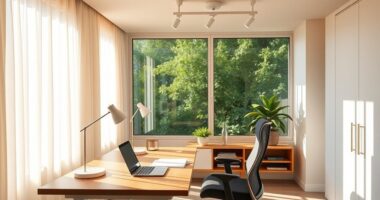
To boost productivity, maximize natural light by strategically placing windows and using adjustable coverings to control glare and heat. Incorporate biophilic elements like indoor plants to create a calming, lively environment that enhances focus and reduces stress. Balancing sunlight and greenery helps you feel more energized and improves overall well-being. If you want to discover how combining these elements can transform your space and work performance, keep exploring ways to bring nature indoors.
Key Takeaways
- Maximizing natural daylight enhances mood, focus, and energy, boosting overall productivity in indoor spaces.
- Strategically placed indoor plants improve air quality and provide visual stimuli that promote mental clarity.
- Adjustable window coverings and light-diffusing materials optimize sunlight levels, reducing glare and overheating.
- Combining greenery with proper sunlight regulation creates vibrant, calming environments that foster creativity and well-being.
- Well-designed biophilic spaces support physical comfort and mental health, leading to increased concentration and productivity.
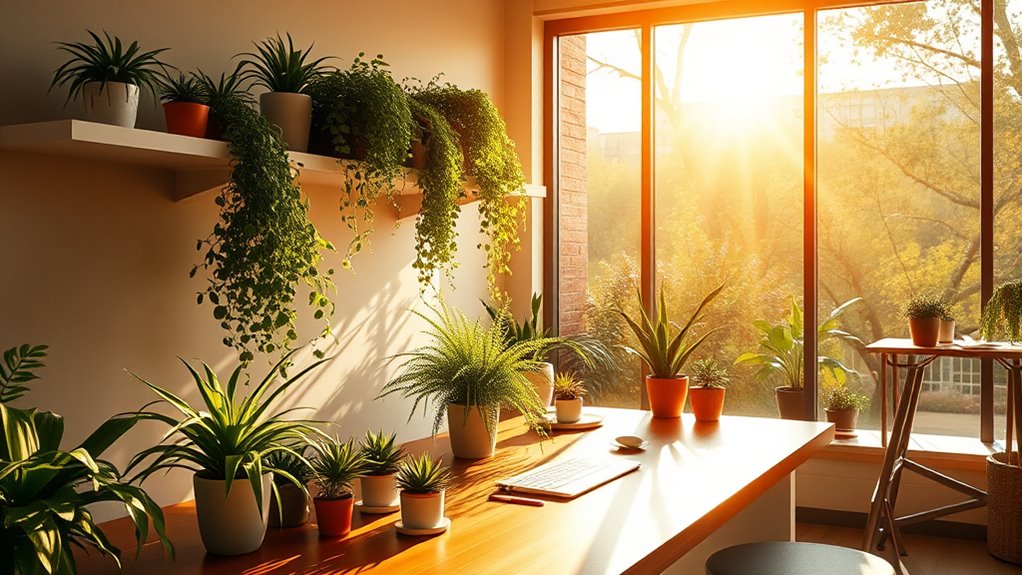
Natural lighting and biophilic elements are transforming the way we design and experience indoor spaces. When you prioritize sunlight regulation, you’re actively creating environments that maximize daylight while minimizing glare and heat. This often involves strategic window placement, the use of adjustable window coverings, or even light-diffusing materials that allow natural light to flood in without overwhelming the space. By managing sunlight effectively, you help reduce reliance on artificial lighting during the day, which not only conserves energy but also enhances your mood and focus. Proper sunlight regulation ensures that your workspace or living area feels bright and inviting, fostering productivity and well-being.
Prioritize sunlight regulation to create bright, inviting spaces that boost mood, focus, and energy while reducing energy use.
Incorporating indoor plants is a key aspect of biophilic design that directly influences how sunlight interacts with your environment. Plants thrive with the right amount of natural light, and their presence encourages you to optimize sunlight exposure. When you position indoor plants near windows or in well-lit corners, you’re naturally prompted to keep curtains open or adjust blinds to let in more light, creating a more dynamic and lively atmosphere. Furthermore, the greenery itself acts as a natural air purifier, improving indoor air quality, which further boosts your focus and energy levels. The visual connection to nature through indoor plants also reduces stress and enhances overall satisfaction in your space.
You might notice that with thoughtful sunlight regulation and strategic placement of indoor plants, your space feels more vibrant and alive. The interplay of light and greenery stimulates your senses and creates a calming environment that promotes productivity. For example, during cloudy days, opening blinds wider or adding reflective surfaces can help bounce more light into the room, while on bright sunny days, adjustable shading prevents overheating and glare. When you integrate plants into these spaces, they not only benefit from the light but also serve as natural focal points that draw your attention and encourage regular care, fostering a sense of connection and responsibility. Additionally, understanding how bad lemon juice can spoil and how to identify it reminds us of the importance of proper food storage, which parallels the need for managing natural resources efficiently in our environment.
Ultimately, mastering sunlight regulation and incorporating indoor plants are simple yet powerful ways to leverage natural lighting and biophilic elements for increased productivity. These practices help you craft a space that feels more natural, energizing, and conducive to work or relaxation. As you fine-tune the balance of light and greenery, you’ll find your environment becomes a sanctuary that supports your mental clarity and physical comfort, turning everyday spaces into inspiring zones of growth and well-being.
Frequently Asked Questions
How Does Natural Lighting Impact Mental Health?
Natural lighting considerably improves your mental health by providing sunlight exposure that boosts your mood and reduces stress. When you get enough sunlight, your body releases serotonin, which enhances your mood and promotes happiness. It also helps regulate your sleep patterns, making you feel more energized and focused. By incorporating natural light into your environment, you actively support your mental well-being and experience mood enhancement, leading to a healthier, more balanced life.
What Are Biophilic Design Principles?
Biophilic design principles focus on connecting you with nature indoors. You incorporate indoor plants to improve air quality and enhance well-being. Daylight harvesting maximizes natural light, reducing energy use and boosting your mood. By integrating these elements, you create a space that fosters productivity, comfort, and health. The principles emphasize natural materials, views of nature, and spatial arrangements that make you feel more engaged and relaxed in your environment.
Can Biophilic Elements Reduce Stress Effectively?
Did you know that incorporating biophilic elements like plant integration and natural patterns can reduce stress by up to 15%? You’ll find that these elements create calming environments, helping you feel more relaxed and focused. By bringing nature indoors, you enhance your space’s connection to the natural world, which effectively lowers stress levels. So, adding plants and natural patterns isn’t just aesthetic—it’s a smart move for your well-being.
How to Maximize Natural Light in Small Spaces?
You can maximize natural light in small spaces by strategically placing windows where they catch the most sunlight, such as south-facing walls. Use light-reflective surfaces like mirrors, glossy paint, or metallic accents to bounce light around the room, making it feel brighter and more open. Keep window treatments minimal to allow maximum daylight in, and consider using glass doors or partitions to let light flow between spaces.
Are There Any Health Risks With Excessive Natural Lighting?
Excessive natural lighting can pose health risks like increased UV exposure and glare, which may lead to skin damage or eye strain. To protect yourself, use UV filters on windows and wear protective eyewear if needed. Managing glare with blinds or screens helps prevent headaches and discomfort. Keep a balance by ensuring you get enough light without overdoing it, so you enjoy the benefits safely.
Conclusion
By embracing natural lighting and biophilic elements, you can turn your workspace into a haven that boosts productivity and well-being. These elements bring the outdoors inside, helping you stay energized and focused. Remember, sometimes the best way to get ahead is to think outside the box and bring nature into your daily routine. When you create a space that feels connected to nature, you’re setting yourself up for success — it’s a win-win all around.