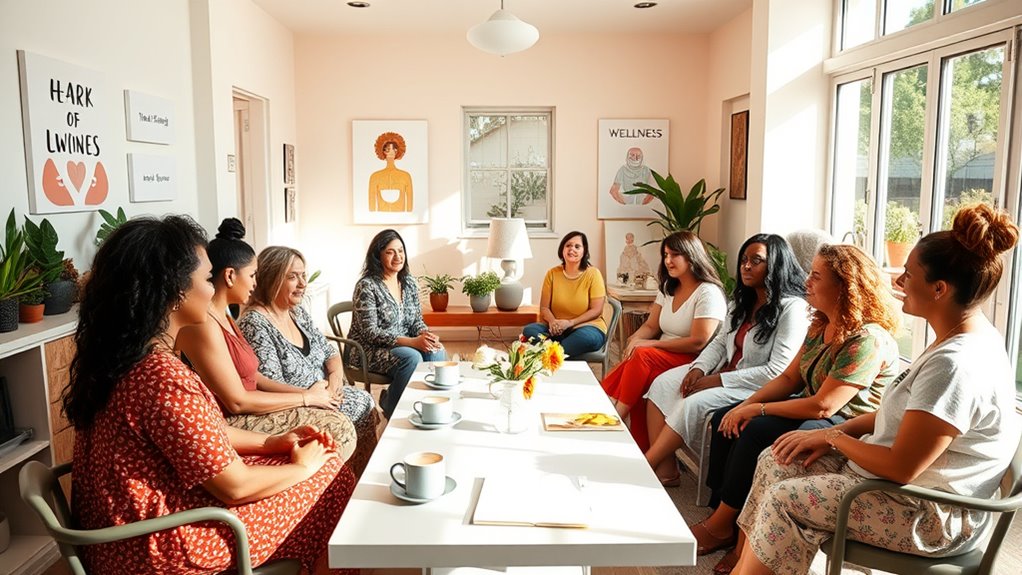

Joining community support groups and health hubs can boost your hormonal wellness journey by providing shared experiences, practical tips, and emotional encouragement. You’ll connect with others who understand your challenges, learn new strategies for managing symptoms, and stay motivated through collective accountability. These communities help you track your cycles, improve your habits, and reduce feelings of isolation. Keep exploring—there’s more to discover about how these networks can transform your health approach.
Key Takeaways
- Community support enables sharing resources and experiences for managing hormonal imbalances effectively.
- Health hubs offer practical tips on diet, stress management, and lifestyle adjustments to promote hormonal balance.
- Peer groups foster accountability, motivation, and emotional reassurance through collective efforts and success stories.
- Connecting with others helps track symptoms, improve habits, and recognize early signs of hormonal issues.
- Engagement in community settings enhances confidence and sustained commitment to hormonal wellness goals.

Community support plays a vital role in promoting hormonal wellness, as sharing experiences and resources can empower you to manage hormonal imbalances more effectively. When you connect with others facing similar challenges, you gain valuable insights into practical strategies like menstrual tracking and lifestyle adjustments. Menstrual tracking, for example, helps you become more aware of your body’s rhythms, enabling you to recognize patterns and identify potential issues early. By recording your cycle, symptoms, and mood changes, you can provide your healthcare provider with detailed information that leads to more tailored treatment options. This routine also boosts your confidence in understanding your body, making it easier to implement lifestyle adjustments that support hormonal health.
Joining a health hub or peer support group gives you access to a community that shares tips on managing hormonal fluctuations. These groups often discuss simple lifestyle adjustments, such as diet modifications, stress management techniques, and exercise routines, that can have a significant impact on hormonal balance. You’ll learn from others’ experiences about what has worked for them, helping you avoid common pitfalls and discover new approaches suited to your needs. For instance, some may recommend incorporating anti-inflammatory foods or practicing mindfulness to reduce cortisol levels, which in turn balances hormones.
Join support groups to share tips on diet, stress management, and lifestyle changes that balance hormones naturally.
Being part of a community also encourages accountability. When you see others making positive changes, you’re more likely to stay committed. Sharing your progress and setbacks fosters a sense of camaraderie, making the journey less isolating. Peer groups often organize workshops or challenges focused on lifestyle adjustments, providing structure and motivation. These collective efforts help you stay consistent with your menstrual tracking and support the implementation of healthy habits, such as improving sleep hygiene or reducing caffeine intake, which can influence hormonal health.
Furthermore, community support offers emotional reassurance. Dealing with hormonal issues can sometimes feel overwhelming or confusing, but knowing you’re not alone makes a difference. Hearing success stories from others can inspire you to keep going, even when progress feels slow. Plus, health hubs often connect you with professionals or specialists who can offer guidance based on the shared experiences of the group, ensuring you’re not contending with hormonal wellness alone.
In essence, engaging with a community centered around hormonal health enhances your ability to manage imbalances through shared knowledge, accountability, and emotional support. It transforms what can be a lonely struggle into a collective effort, making it easier to stay consistent with menstrual tracking and lifestyle adjustments. As you become more involved, you’ll find that the collective wisdom and encouragement of your peers can be a powerful catalyst for achieving better hormonal wellness. Additionally, understanding the importance of color accuracy in projectors can help you create an optimal visual environment for relaxation and stress reduction, which further supports hormonal balance.
Frequently Asked Questions
How Do Peer Support Groups Influence Hormonal Health Outcomes?
Peer support groups positively influence your hormonal health outcomes by providing emotional validation and a sense of shared experiences. When you connect with others facing similar challenges, you feel understood and less isolated, which can reduce stress—an important factor for hormonal balance. This emotional support encourages you to share coping strategies, stay motivated, and manage symptoms more effectively, ultimately promoting better hormonal wellness and overall health.
What Are the Qualifications of Staff at Health Hubs Specializing in Hormonal Wellness?
At health hubs specializing in hormonal wellness, you’ll find staff with strong credentials like certified health practitioners, endocrinologists, and licensed dietitians. They meet rigorous certification standards to guarantee quality care. These professionals have advanced training in hormonal health, enabling them to provide personalized assessments, guidance, and treatments. You can trust their expertise to support your hormonal balance and overall well-being, knowing they meet high qualification standards.
Can Peer Support Replace Professional Medical Advice for Hormonal Issues?
Peer support can provide valuable emotional support and peer mentoring, but it shouldn’t replace professional medical advice for hormonal issues. While sharing experiences and offering encouragement helps you feel understood, only qualified healthcare providers can diagnose and treat hormonal imbalances effectively. Rely on peer support as a supplement, not a substitute, ensuring you get the expert care necessary for your health and wellbeing.
How Accessible Are Health Hubs for Underserved or Rural Communities?
Health hubs are increasingly accessible to underserved or rural communities thanks to telehealth services, which help overcome transportation barriers. You can connect with healthcare providers remotely, making it easier to access hormonal wellness support even if you’re far from urban centers. While telehealth improves accessibility, ongoing efforts are needed to guarantee reliable internet and technology access so everyone can benefit from these resources.
What Privacy Measures Are in Place During Peer Support Sessions?
Imagine you’re sharing your struggles in a peer support session, feeling safe and heard. Rest assured, confidentiality protocols keep your information private, and data security measures protect your personal details. These protocols guarantee your conversations remain confidential, fostering trust and openness. Health hubs prioritize your privacy by implementing strict policies and secure technology, so you can openly discuss your hormonal wellness without worry, knowing your privacy is a top priority.
Conclusion
By joining peer support and health hubs, you create a community that’s like a steady heartbeat in your journey toward hormonal wellness. Together, you’ll share stories, find comfort, and lift each other up—turning challenges into collective strength. Remember, you’re not alone in this. Like a symphony in harmony, your community keeps the rhythm alive, guiding you toward balance and health. Embrace the support, and let your wellness story unfold beautifully.