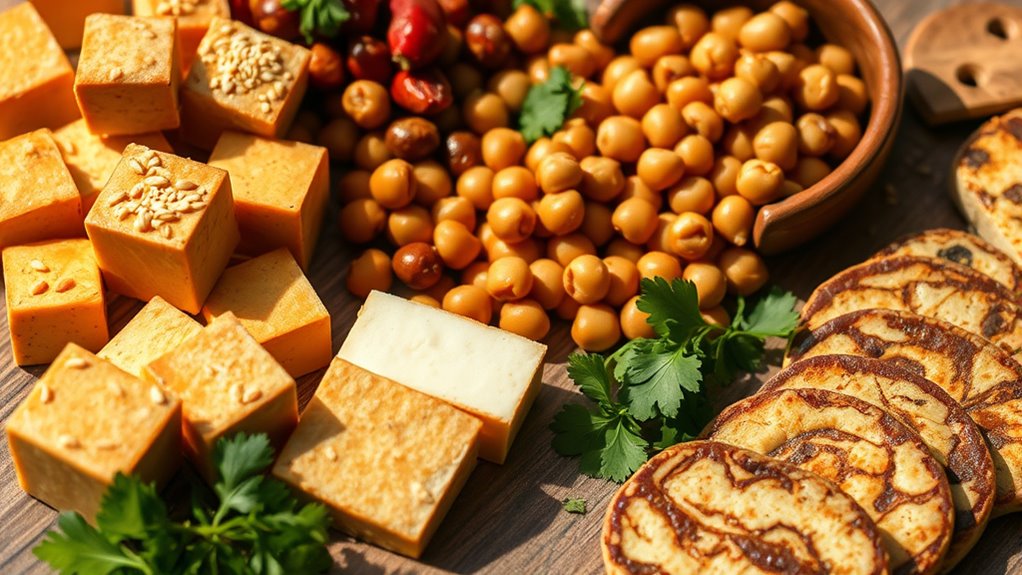

To cook with plant-based proteins like legumes, tofu, and tempeh, start by soaking or steaming to improve flavor and texture. Use techniques like boiling, marinating, or baking to enhance taste and nutrition. Incorporate aromatics like garlic and herbs to naturally boost flavor. Mastering these methods helps make your dishes more satisfying and variety-filled. Keep exploring, and you’ll discover many tips to elevate your plant-based meals even further.
Key Takeaways
- Properly soak and cook legumes to enhance digestibility and flavor, suitable for salads and soups.
- Press and marinate tofu to improve texture and absorb flavors for stir-fries and baked dishes.
- Steam or boil tempeh before frying or baking to mellow flavor and improve texture.
- Use aromatics like garlic, onion, and herbs to naturally boost flavor without added salt or fats.
- Experiment with various cooking techniques—boiling, grilling, baking—to maximize taste and nutritional benefits.

Have you ever wondered why plant-based proteins are gaining popularity? It’s because more people are recognizing their nutritional benefits and discovering versatile ways to incorporate them into everyday meals. Legumes, tofu, and tempeh are staples in plant-based diets, offering rich sources of protein, fiber, vitamins, and minerals. These foods not only support overall health but also contribute to sustainable eating habits. Understanding their cooking techniques can help you open their full flavor potential and make your dishes more satisfying.
Legumes, like lentils, chickpeas, and black beans, are incredibly nutritious. They’re high in protein and fiber, which aids digestion and keeps you feeling full longer. To maximize their nutritional benefits, it’s best to soak dried legumes before cooking, reducing cooking time and improving digestibility. You can boil them until tender for salads or soups, or mash them into spreads like hummus. Canned legumes are a quick alternative—just rinse them thoroughly to remove excess sodium. When cooking legumes, using aromatics such as garlic, onion, or herbs can enhance their flavor naturally, making them more appealing without relying on extra salt or fats. Incorporating vertical storage solutions can help keep dried legumes organized and easily accessible in your kitchen.
Soak dried legumes before cooking to boost flavor, reduce cooking time, and improve digestion.
Tofu, made from soybeans, is another plant-based protein packed with essential amino acids. Its mild flavor makes it incredibly adaptable to various cooking techniques. For example, pressing tofu before cooking removes excess moisture, allowing it to crisp up nicely when pan-fried or baked. Silken tofu works well blended into smoothies, sauces, or desserts, adding creaminess without dairy. Firm or extra-firm tofu is ideal for stir-fries or grilling. Marinating tofu helps infuse it with flavor, transforming a simple ingredient into a flavorful main or side dish. Whether you’re scrambling tofu as a breakfast alternative or slicing it for stir-fries, mastering these techniques will elevate your meals.
Tempeh, fermented soybeans pressed into cakes, offers a nutty flavor and firm texture. It’s rich in protein, probiotics, and vitamins. To prepare tempeh, steaming or boiling it first can mellow its strong flavor and improve texture. Then, slicing it thin and marinating it in soy sauce, garlic, or spices allows it to soak up flavors before frying or baking. This technique ensures that tempeh is tender inside and crispy outside, making it a hearty addition to salads, sandwiches, or Buddha bowls. Its fermentation process not only boosts nutritional value but also makes it easier to digest.
Incorporating these plant-based proteins into your cooking using various techniques unblocks their nutritional benefits and enhances your meals. It’s about experimenting with methods like soaking, marinating, and different cooking styles to bring out the best in legumes, tofu, and tempeh. Doing so will help you enjoy the health advantages and delicious flavors that plant-based proteins have to offer, making your diet more vibrant, sustainable, and satisfying.
Frequently Asked Questions
How Do I Store Cooked Legumes to Maximize Freshness?
To maximize freshness, store cooked legumes in an airtight container in your refrigerator. Use storage tips like letting them cool completely before refrigerating to prevent spoilage. For longer preservation, consider freezing them in portions—this helps maintain their texture and flavor. Always label containers with dates, so you know when to use them. Proper storage tips guarantee your legumes stay fresh and safe to enjoy for several days or weeks.
What Are the Best Cooking Methods for Tofu to Improve Texture?
To improve tofu’s texture, try marinating it for at least 30 minutes to enhance flavor and firmness. Baking tips include pressing out excess moisture first, then baking at 375°F for 25-30 minutes until golden and crispy. You can also pan-fry or grill for different textures. Marinating techniques and baking tips help you achieve a delicious, firm tofu that holds its shape and absorbs flavors beautifully.
How Can I Reduce the Gas Caused by Legumes?
Think of legumes as big sponge balls absorbing gas, so soaking them overnight helps release some of their built-up pressure. You can also try alternative preparation methods like sprouting or fermenting, which unleash fermentation benefits and reduce gas production. These techniques make legumes easier to digest, decreasing discomfort. Remember, cooking thoroughly and discarding soaking water further minimizes gas, helping you enjoy your meals without the bloating side effects.
Are There Specific Spices That Enhance Plant-Based Protein Dishes?
You can enhance your plant-based protein dishes with spice combinations like cumin, turmeric, and coriander, which add depth and warmth. Garlic and ginger work as flavor enhancers, boosting overall taste. Don’t forget to experiment with chili flakes or smoked paprika for a smoky kick. These spices not only improve flavor but also make your dishes more aromatic and satisfying, turning simple ingredients into flavorful, wholesome meals.
How Do I Select the Freshest Tempeh at the Store?
You want the absolute freshest tempeh, like it just hopped off the farm! To find top-quality store-bought tempeh, check for a clean, firm appearance with no discoloration or mold. Smell it—should be slightly nutty but fresh. Make sure it’s stored properly, refrigerated, and within the use-by date. The best tempeh feels firm and dense, promising vibrant flavor and perfect texture for your dish.
Conclusion
Switching to plant-based proteins like legumes, tofu, and tempeh not only benefits your health but also helps the environment. Did you know that producing plant proteins uses up to 90% less water than animal proteins? So, by incorporating these options into your meals, you’re making a positive impact on the planet while enjoying delicious, nutritious dishes. Give it a try—you might find your new favorite meal while contributing to a more sustainable future.