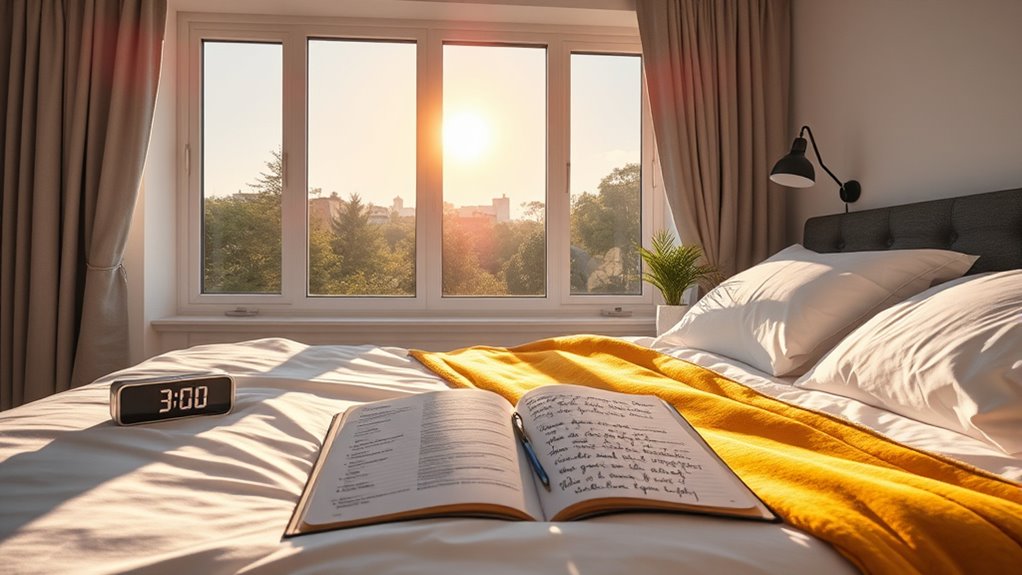

To align your body clock, get natural sunlight exposure for 15-20 minutes in the morning, and limit artificial blue light in the evening by using blue-blocking glasses or night mode on devices. Keep a consistent sleep schedule, even on weekends, and create a calming environment in your bedroom. Combining these tips helps regulate your circadian rhythm, boosting sleep, energy, and health—discover more ways to optimize your internal clock for better wellbeing.
Key Takeaways
- Get 15-20 minutes of natural morning sunlight to reset and strengthen your internal clock.
- Minimize artificial blue light in the evening by dimming lights and using blue light filters or glasses.
- Maintain a consistent sleep and wake schedule, including weekends, to reinforce circadian rhythms.
- Create a relaxing pre-sleep routine and optimize your bedroom environment for darkness, coolness, and quiet.
- Use light therapy tools if outdoor exposure is limited, helping to simulate natural sunlight and boost alertness.

Your circadian rhythm governs your sleep-wake cycle and impacts your energy, mood, and overall health. To keep this internal clock running smoothly, you need to prioritize sleep optimization and manage your light exposure wisely. Light is one of the strongest cues for regulating your circadian rhythm. When you get natural sunlight during the day, especially in the morning, it signals your body that it’s time to be alert and awake. This boosts your mood and helps set your sleep schedule for later. Conversely, reducing exposure to artificial light, especially blue light from screens in the evening, is essential. Blue light tricks your brain into thinking it’s still daytime, suppressing melatonin—the hormone responsible for making you feel sleepy. To optimize your sleep, aim to spend time outside in the morning or early afternoon, even if it’s just for 15-20 minutes. If outdoor exposure isn’t feasible, consider using a light therapy box that mimics natural sunlight. During the evening, dim the lights and avoid screens at least an hour before bed. Wearing blue light-blocking glasses or enabling night mode on devices can also help. These steps reinforce your body’s natural circadian cues, making it easier to fall asleep and wake up refreshed. Understanding city dynamics is also important for adapting your routines and environment to support your circadian health. In addition to managing light exposure, establishing a consistent sleep schedule is vital. Going to bed and waking up at the same time every day helps reinforce your circadian rhythm, making sleep more restorative and waking more energetic. Even on weekends, try to stick to your routine to prevent disrupting your internal clock. This consistency enhances sleep quality and boosts daytime alertness. Creating a calming pre-sleep routine can also signal to your body that it’s time to wind down, further supporting sleep optimization. Activities like reading, gentle stretching, or practicing mindfulness reduce stress and prepare you for restful sleep. Keep your bedroom cool, dark, and quiet, as these conditions align with your natural sleep environment. When your surroundings are optimized for sleep, your circadian rhythm can do its job effectively, making it easier to fall asleep and stay asleep throughout the night.
Top picks for "circadian rhythm hack"
Open Amazon search results for this keyword.
As an affiliate, we earn on qualifying purchases.
Frequently Asked Questions
Can Circadian Rhythm Affect Mental Health Disorders?
Yes, your circadian rhythm can influence mental health disorders. Disrupted sleep patterns may worsen conditions like depression or anxiety. You can improve your mood by using light therapy in the morning to reset your internal clock and taking melatonin supplements at night to promote better sleep. These hacks help stabilize your circadian rhythm, which in turn supports your mental well-being and reduces symptoms of mental health issues.
How Does Age Influence Circadian Rhythm Patterns?
As you age, your circadian rhythm patterns change due to aging effects and hormonal fluctuations. You might find it harder to fall asleep or wake up early, and your sleep cycles may become less consistent. These shifts happen because your body’s internal clock becomes less sensitive to external cues, like light. To stay aligned, you should maintain regular sleep schedules, get morning sunlight, and manage stress levels effectively.
Are There Genetic Factors That Determine Circadian Preferences?
Did you know that about 50% of your circadian preferences are influenced by genetic factors? Your genetic predispositions, including sleep gene variations, play a significant role in whether you’re naturally a morning lark or a night owl. These variations impact your internal clock, shaping your sleep-wake cycle. So, your sleep tendencies aren’t just habits—they’re partly wired into your DNA, making some people more inclined to specific routines.
Can Shift Work Permanently Alter My Body Clock?
Yes, shift work can permanently alter your body clock. Consistent sleep deprivation and hormonal imbalance from irregular hours disrupt your circadian rhythm, making it harder to reset. Over time, your internal clock adapts, leading to long-term sleep issues and health problems. To minimize effects, try to maintain regular sleep schedules on days off, expose yourself to natural light, and avoid caffeine close to bedtime.
What Are the Risks of Disrupting My Circadian Rhythm Regularly?
Disrupting your circadian rhythm regularly increases risks like sleep deprivation and hormonal imbalance, which can harm your overall health. When your body’s internal clock is off, you may struggle to fall asleep or wake up refreshed, leading to fatigue and poor concentration. Hormonal imbalances can affect mood, metabolism, and immune function. To stay healthy, prioritize consistent sleep schedules and expose yourself to natural light during the day.
Conclusion
By implementing these circadian rhythm hacks, you can optimize your sleep, boost your energy, and improve your overall health. Isn’t it worth waking up feeling refreshed and ready to conquer your day? When you align your body clock with natural light and consistent routines, you’re fundamentally giving your body the rhythm it craves. So, why not take control today and set your internal clock to work for you? Your best self is just a routine away.