
To protect your skin from oxidative damage, use antioxidants daily, like vitamin C and E, to neutralize free radicals caused by sun exposure and pollution. Wear broad-spectrum sunscreen with at least SPF 30, reapplying often, and cover up with protective clothing. Keep your skin hydrated and incorporate antioxidant-rich foods into your diet. Consistency is key to maintaining youthful and healthy skin, and understanding more ways to shield your skin helps you stay ahead in skincare.
Key Takeaways
- Use broad-spectrum sunscreen daily with at least SPF 30 to block harmful UV rays.
- Incorporate antioxidant-rich skincare products containing vitamin C, E, or green tea extract.
- Maintain a diet high in berries, nuts, and leafy greens to boost internal antioxidant levels.
- Wear protective clothing, hats, and sunglasses to minimize environmental stressors on skin.
- Practice consistent skincare routines and avoid smoking to support long-term skin health.
Oxidative damage is a major factor behind premature skin aging and environmental skin issues, but you can take steps to protect your skin effectively. One of the most powerful strategies is incorporating antioxidant skincare into your daily routine. Antioxidants, such as vitamin C, vitamin E, and green tea extract, help neutralize free radicals—unstable molecules generated by sun exposure, pollution, and other environmental stressors. When you use products rich in antioxidants, you bolster your skin’s defenses and reduce the visible signs of damage, like fine lines, wrinkles, and dullness. Consistent use of antioxidant skincare not only repairs existing damage but also prevents future harm, keeping your skin looking healthy and vibrant over time.
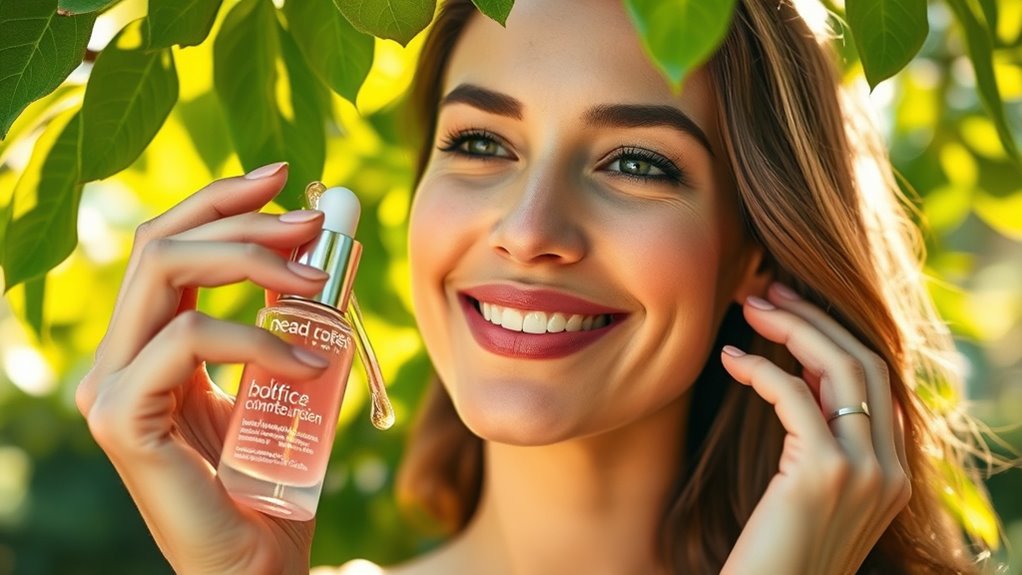
Incorporate antioxidants like vitamin C and green tea to protect and rejuvenate your skin daily.
Equally important is ensuring you have adequate UV protection. Ultraviolet rays from the sun are a primary source of oxidative stress, and lacking proper protection accelerates skin aging and increases the risk of skin conditions. Applying a broad-spectrum sunscreen with at least SPF 30 every day forms a essential barrier against harmful UV rays. Make sure to apply it generously to all exposed areas of your skin, and reapply every two hours if you’re outdoors or sweating. Besides sunscreen, wearing protective clothing, wide-brimmed hats, and sunglasses can further shield your skin from direct sun exposure. Remember, UV rays can cause damage even on cloudy days, so consistent protection is vital regardless of the weather. Using sunscreen correctly maximizes its protective benefits and enhances your skin’s resilience against environmental damage.
You should also be mindful of your environment and lifestyle choices. Avoid smoking, as it introduces additional free radicals that contribute to oxidative stress. Incorporating foods rich in antioxidants, like berries, nuts, and leafy greens, into your diet can support your skin from the inside out. Hydration is equally essential—drinking plenty of water helps maintain your skin’s barrier function and flush out toxins. Using antioxidant skincare products can significantly boost your skin’s defenses against environmental stressors. Additionally, choosing skincare products that include self-watering plant pots ingredients can help maintain moisture levels and reduce skin dryness, especially in dry or harsh climates. Implementing lifestyle modifications, such as reducing pollution exposure and managing stress, can further enhance your skin’s resilience against oxidative damage.
Lastly, staying consistent is key. Protecting your skin isn’t a one-time effort; it’s an ongoing commitment. Regularly updating your skincare routine with effective antioxidant formulations and diligently applying sunscreen will yield the best results. By making these practices a daily habit, you actively combat environmental stressors and preserve your skin’s youthfulness. Remember, the sooner you start, the better your skin will withstand the ravages of oxidative damage, helping you maintain a healthier, more radiant complexion for years to come.
Frequently Asked Questions
Can Oxidative Damage Cause Skin Cancer?
Oxidative damage can contribute to skin cancer, especially when you’re exposed to UV rays. UV exposure generates free radicals, unstable molecules that damage your skin cells’ DNA. Over time, this damage increases your risk of developing skin cancer. To lower that risk, you should protect your skin by wearing sunscreen, avoiding excessive sun exposure, and using antioxidants to neutralize free radicals and reduce oxidative stress.
Are There Natural Remedies to Repair Oxidative Skin Damage?
Your skin’s battle against oxidative damage feels like a never-ending war, but there are natural warriors to help you fight back. Herbal remedies like green tea and turmeric can soothe and repair, while dietary antioxidants such as berries, nuts, and spinach boost your body’s defenses. Incorporating these into your routine can markedly improve skin health, making your complexion radiant and resilient—like a superhero ready to conquer any environmental villain.
How Does Stress Contribute to Oxidative Skin Damage?
Stress impacts your skin by increasing cortisol levels, which can lead to more oxidative damage. Elevated cortisol effects weaken your skin’s natural defenses, making it more vulnerable to free radicals. When you’re stressed, your body produces more oxidative stress, accelerating skin aging and damage. Managing stress helps reduce cortisol effects, supporting your skin’s ability to repair itself and stay healthier longer.
What Are the Best Topical Antioxidants for Skin?
You should look for topical antioxidants like Vitamin C and Vitamin E, as they’re highly effective for skin. Vitamin C brightens your complexion and boosts collagen production, while Vitamin E shields your skin from environmental damage. Apply serums containing these ingredients daily, preferably in the morning. Together, they fight free radicals and help keep your skin healthy, youthful, and protected from oxidative stress.
Does Dehydration Worsen Oxidative Skin Damage?
Dehydration can worsen oxidative skin damage because it reduces your skin’s ability to repair and defend itself. Hydration importance is essential; when you’re dehydrated, your skin becomes more vulnerable to environmental stressors and free radicals. Dehydration effects include dry, flaky skin and diminished barrier function, which allows oxidative damage to accelerate. Staying well-hydrated helps maintain skin resilience, supports antioxidant defenses, and minimizes damage from oxidative stress.
Conclusion
By shielding your skin from oxidative damage, you’re not just preserving your youthful glow—you’re guarding the very canvas of your confidence. Think of your skin as a delicate garden; with the right care, you can keep it vibrant and resilient against the harsh elements. Every mindful choice you make today plants seeds for a radiant tomorrow. So, embrace these habits and let your skin shine like a beacon of health, shining brighter with each passing day.