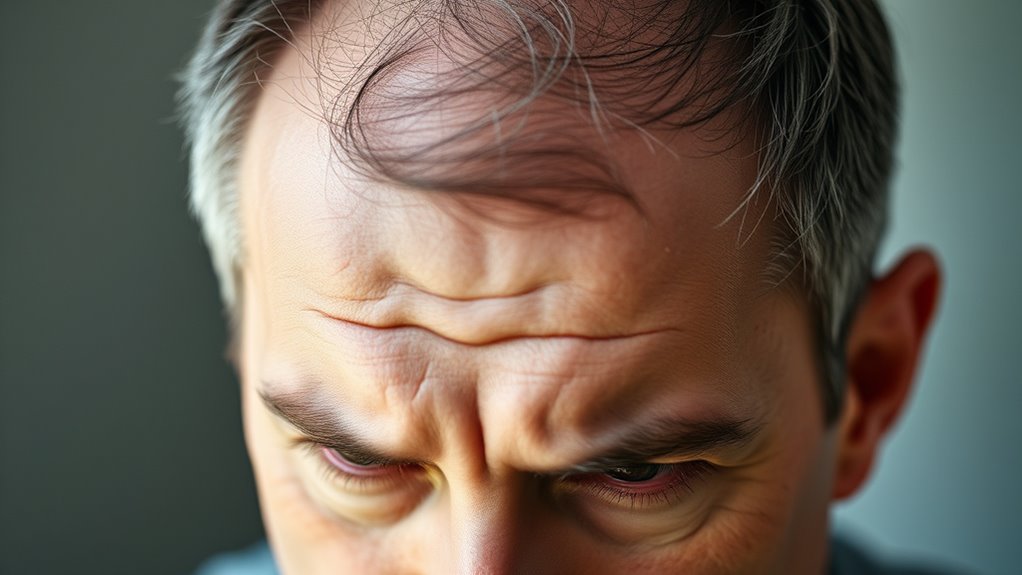

During midlife, stress triggers hormonal shifts that can weaken your hair follicles, leading to increased shedding and thinning. Elevated cortisol levels from chronic stress can push hair into a resting phase, while hormonal fluctuations like decreased estrogen or testosterone make follicles more vulnerable. Managing stress and supporting hormonal balance are essential for maintaining healthy hair. Keep exploring to discover effective strategies that can help you preserve your hair and overall well-being.
Key Takeaways
- Chronic stress increases cortisol levels, which disrupts hair growth cycles and promotes hair shedding.
- Elevated cortisol causes inflammation and reduces circulation, damaging hair follicles over time.
- Stress-induced hormonal fluctuations weaken hair follicles, making them more vulnerable to thinning and loss.
- Managing stress through mindfulness, exercise, and sleep supports hormonal balance and healthy hair.
- Recognizing stress as a factor helps in adopting holistic strategies to prevent or slow midlife hair loss.
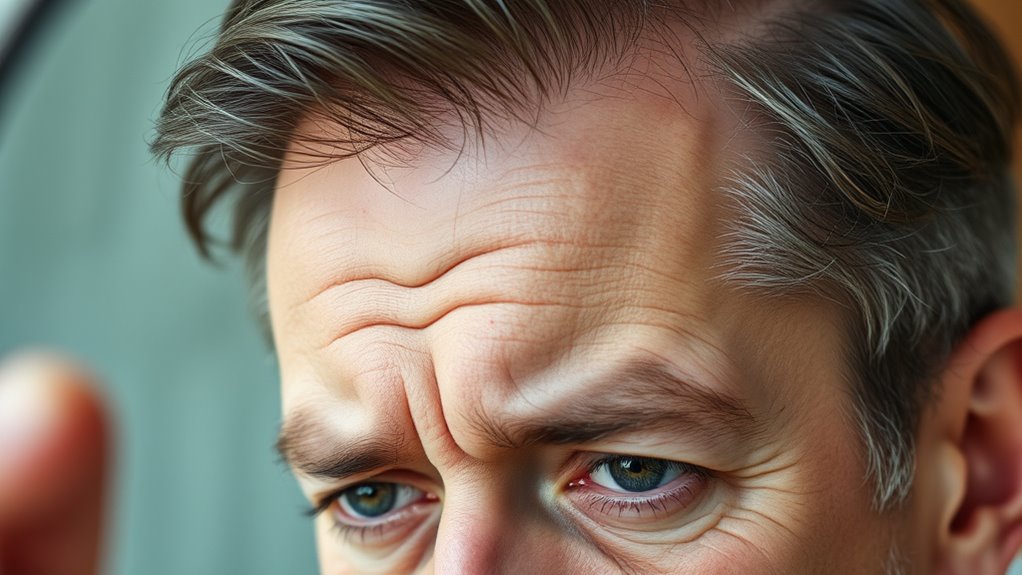
As you reach midlife, you might notice more hair falling out than usual, and stress could be playing a bigger role than you realize. This phase of life often brings about significant hormonal changes, which can directly impact your hair health. During menopause or andropause, shifts in hormone levels like estrogen, progesterone, and testosterone can weaken hair follicles, making hair thinning more noticeable. These hormonal fluctuations, coupled with increased stress, create a perfect storm that accelerates hair loss.
Stress management becomes essential in this context. Chronic stress triggers the body’s production of cortisol, a hormone that, in excess, can disrupt the normal hair growth cycle. Elevated cortisol levels may push hair follicles into a resting phase, causing more hair to shed and reducing new growth. When stress is unmanaged, it can also lead to inflammation, which further damages hair follicles and hampers their ability to produce healthy hair. So, actively managing stress isn’t just about feeling better mentally — it’s a critical step toward maintaining your hair’s health.
Understanding the connection between stress and hormonal changes is key. The hormones involved in your reproductive and endocrine systems influence hair growth patterns. For women, declining estrogen levels during menopause can slow hair growth or lead to thinning, especially when compounded by stress. For men, falling testosterone levels can result in pattern baldness, which stress can exacerbate. These hormonal shifts weaken hair follicles’ resilience, making them more vulnerable to damage from stress-induced inflammation and poor circulation. Hormonal fluctuations are a key factor that can be influenced by lifestyle choices and overall health, emphasizing the importance of holistic well-being. Incorporating lifestyle changes that support hormonal balance can significantly mitigate some of these effects. Additionally, addressing nutritional deficiencies can bolster hair follicle strength and resilience.
To combat these effects, you should prioritize stress management techniques like mindfulness, regular exercise, and adequate sleep. These activities help lower cortisol levels and improve your overall hormonal balance. Additionally, seeking support from a healthcare provider can help you address hormonal imbalances directly, whether through lifestyle adjustments or medical treatments. Incorporating practices from the Law of Attraction can also support a positive mindset, which may indirectly influence hormonal health and stress levels. Taking steps to regulate your stress not only benefits your mental health but also supports healthier hair growth by reducing inflammation and supporting hormonal stability.
In essence, midlife stress and hormonal changes are intertwined factors that influence hair loss. By managing stress effectively and understanding hormonal impacts, you can help slow down hair loss and improve your overall well-being. While some level of hair thinning is natural at midlife, staying proactive with stress management and hormonal health strategies can make a meaningful difference in maintaining a fuller head of hair for years to come. Recognizing the importance of oxidative stress reduction can further protect hair follicles from damage.
Frequently Asked Questions
Can Stress-Induced Hair Loss Be Reversed Completely?
Stress-induced hair loss can often be reversed, especially if you address stress triggers early. When you reduce stress, your body can focus on hair regrowth, and you might see new hair emerge. While some hair loss might be permanent if it’s advanced, many people experience full hair regrowth by managing stress and maintaining a healthy lifestyle. Consistent care and patience are key to reversing stress-related hair loss.
Are Certain Hair Loss Patterns More Linked to Stress Than Others?
Did you know that about 60% of women and 50% of men experience patterned hair loss? Certain patterns, like thinning at the crown or a receding hairline, are more linked to stress, especially when combined with genetic predisposition and hormonal fluctuations. Stress-related hair loss often presents as diffuse thinning across the scalp, making these patterns more noticeable. Your genetics and hormone levels influence how stress impacts your hair loss pattern.
How Long Does It Typically Take for Stress-Related Hair Loss to Appear?
When you’re wondering about the stress timeline, it’s common to see hair loss onset within a few months of experiencing significant stress. Typically, hair shedding begins around 3 to 6 months after stress peaks, as your body responds to hormonal changes. If you notice increased hair loss during this period, it’s likely linked to recent stress, and addressing your stress can help prevent further shedding and promote recovery.
Does Stress Cause Hair Loss Only in Midlife or at Any Age?
Did you know that stress can cause hair loss at any age, not just midlife? While age-related patterns and hormonal influences play a role, intense stress triggers hair shedding across all ages. Whether you’re in your 20s or 50s, high stress levels can disrupt your hair growth cycle. So, it’s important to manage stress regardless of your age to maintain healthy hair.
Can Stress Management Techniques Prevent Hair Loss?
Stress management techniques can definitely help prevent hair loss. By practicing stress reduction and anxiety management, you lower your body’s cortisol levels, which are linked to hair thinning. Regular exercise, meditation, and deep-breathing exercises are effective tools. When you actively manage your stress, you create a healthier environment for your hair follicles, reducing the risk of hair loss caused by high stress levels.
Conclusion
Remember, stress is temporary but hair loss can feel permanent. While midlife challenges might seem overwhelming, taking steps to manage your stress can make a real difference. Don’t forget, a healthy mind often leads to a healthier head of hair. Keep in mind the saying, “This too shall pass.” By prioritizing your well-being now, you’re investing in both your mental health and your confidence for the future.