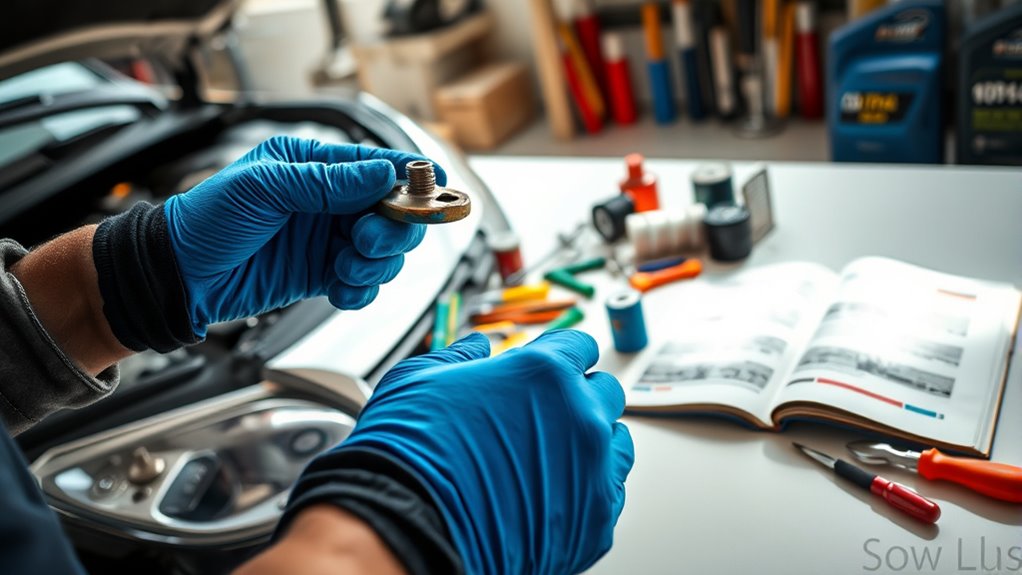

Performing basic auto maintenance at home helps you save money, time, and keeps your vehicle safe. You can rotate your tires, check and top off fluids like oil, coolant, and windshield washer fluid, and inspect your brakes. Using simple tools like a jack and wrench, you can prevent costly repairs and improve your vehicle’s performance. Keep exploring these straightforward tasks to gain confidence in maintaining your car and uncover more helpful tips along the way.
Key Takeaways
- Perform routine fluid checks (oil, coolant, brake fluid, windshield washer) to ensure vehicle health and prevent costly repairs.
- Rotate tires regularly following manufacturer patterns to promote even wear and extend tire lifespan.
- Use basic tools like a jack and lug wrench to safely lift the vehicle and tighten lug nuts during tire rotation.
- Consult your vehicle’s manual for specific maintenance procedures and safety tips before starting any DIY repair.
- Regularly inspect and replace fluids and worn components to improve vehicle safety, efficiency, and overall longevity.
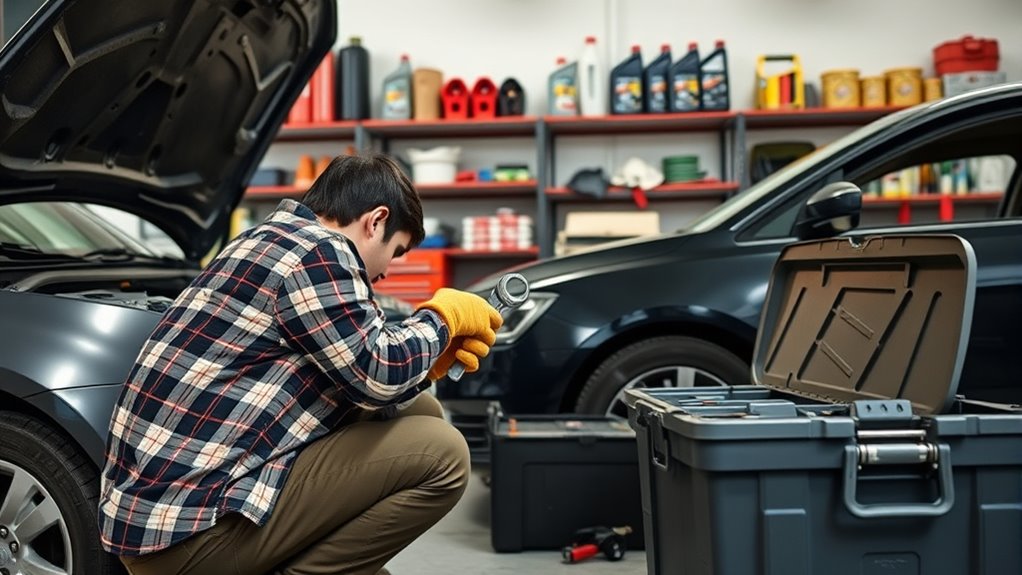
Have you ever wondered how to handle car troubles without the hassle of visiting a mechanic? The good news is, many basic maintenance tasks are simple enough to do at home, saving you time and money. One of the most straightforward ways to keep your vehicle running smoothly is by performing a tire rotation and fluid check regularly. These chores not only extend the life of your tires but also ensure your car operates safely and efficiently.
Start with tire rotation. It’s a simple process that helps prevent uneven tire wear, which can lead to premature tire replacement or even dangerous driving conditions. To do it yourself, you’ll need a jack, lug wrench, and possibly a torque wrench. First, park your car on a flat surface and engage the parking brake. Loosen the lug nuts while the tire is still on the ground, then lift the vehicle using the jack and remove the tire. Rotate the tires according to your vehicle’s pattern—typically moving front tires to the back and crossing the rear tires to the front. Once in position, tighten the lug nuts securely, following the manufacturer’s torque specifications. Remember, a proper tire rotation can improve fuel economy and handling, making it a worthwhile task to include in your routine.
Next, a fluid check is vital for your vehicle’s health. Check the oil level, coolant, brake fluid, and windshield washer fluid regularly. To do this, pull out the dipstick for oil, wipe it clean, then reinsert and pull it out again to read the level. If it’s below the recommended mark, top it up with the right grade of oil. Coolant levels can be checked by inspecting the reservoir—ensure it’s between the “low” and “full” marks. Brake fluid should be clear or slightly yellow; if it’s dark or cloudy, it might need replacing. Windshield washer fluid is easy; just open the cap and fill it up as needed. Regular fluid checks help prevent overheating, brake failure, and other issues that could lead to costly repairs or breakdowns. Additionally, using the right paint sprayer accessories can ensure your equipment performs optimally when you need it, much like maintaining your vehicle.
Performing these basic maintenance tasks at home requires minimal tools and time but offers significant benefits. By routinely checking fluids and rotating your tires, you can catch potential problems early and keep your vehicle running reliably. These tasks also give you a better understanding of your car’s condition, making you more confident behind the wheel. Remember, always consult your vehicle’s manual for specific instructions and safety precautions. With a little effort, you can take charge of your auto maintenance, saving money and extending the lifespan of your car.
Frequently Asked Questions
When Should I Replace My Car’s Timing Belt?
You should replace your car’s timing belt according to the belt replacement schedule in your owner’s manual, typically every 60,000 to 100,000 miles. Regular timing belt inspection is essential to catch signs of wear, such as cracks or fraying. Don’t wait until it breaks; proactive replacement prevents engine damage. If you notice any unusual noises or difficulty starting, get it checked sooner to guarantee your vehicle runs smoothly.
How Do I Diagnose a Coolant Leak?
Ever wondered how to tell if your car has a coolant leak? Check the coolant color—if it’s green, pink, or orange, and you notice puddles under your vehicle, you likely have a leak. Look for signs like a sweet smell, engine overheating, or low coolant levels. Inspect hoses and the radiator for cracks or wet spots. These signs help you diagnose a coolant leak early and prevent costly repairs.
What’s the Proper Way to Jump-Start a Vehicle?
You should start by ensuring battery safety—wear gloves and eye protection. Connect the red jumper cable to the positive terminal of the dead battery, then to the good battery’s positive terminal. Next, attach the black cable to the good battery’s negative terminal, and the other end to an unpainted metal surface on your car’s engine. Start the working vehicle, then attempt to start your car. Remove cables in reverse order, and you’re done.
How Often Should I Change My Brake Pads?
You should change your brake pads when you notice signs like squealing, reduced braking performance, or a thicker pad lining during inspection. It’s a good idea to examine your brake pads every 10,000 to 20,000 miles, depending on driving habits. Regular brake pad inspection helps catch wear early, preventing damage to rotors. When the pads are worn down to about 3mm, it’s time for brake pad replacement to ensure safe braking.
Can I Fix a Faulty Alternator Myself?
Think of your car’s electrical system as a heartbeat—if it stalls, your vehicle won’t run. You can test your alternator with a multimeter to check if it’s producing enough voltage. If testing shows issues, alternator replacement might be necessary. While some DIYers can handle alternator testing, replacing it often requires more advanced skills, tools, and safety precautions, so consider consulting a professional if you’re unsure.
Conclusion
By now, you’re practically a home auto repair superhero, capable of tackling basic maintenance tasks with confidence. Remember, even the tiniest check or tweak can save you a fortune—you’re basically wielding a magic wand against costly mechanic visits! Keep learning, stay curious, and don’t be afraid to get your hands dirty. With a little practice, you’ll be able to handle most car issues faster than a speeding bullet, saving time, money, and stress along the way.