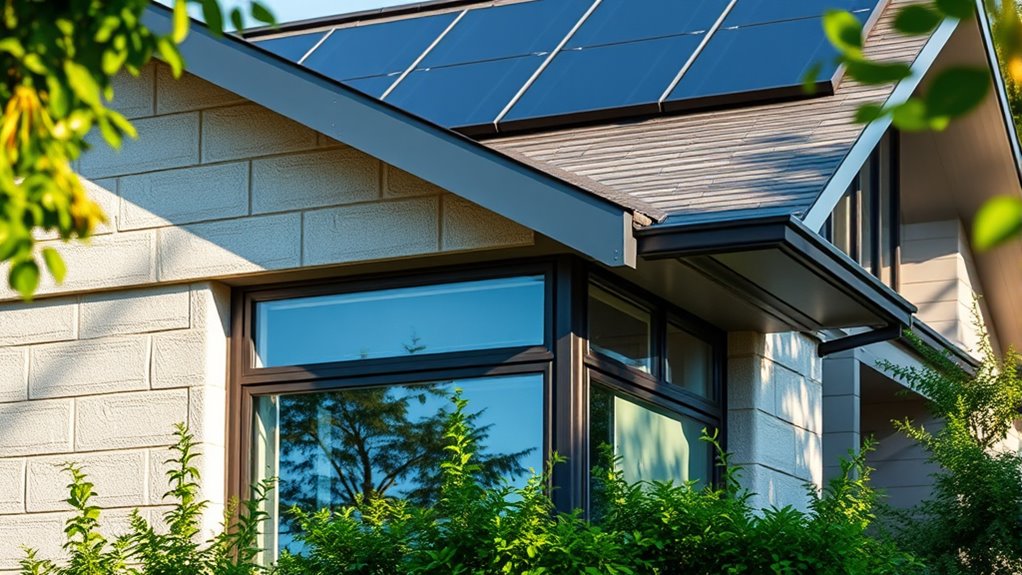

Improving your home’s energy efficiency involves upgrading insulation, installing modern glazing, and adding solar power systems. Better insulation keeps warm or cool air inside, reducing your heating and cooling needs. Upgrading to double or triple-pane windows with low-emissivity coatings prevents drafts and minimizes heat transfer. Solar panels help generate your own electricity, cutting energy bills and reliance on the grid. To discover how these upgrades can work together for maximum savings, continue exploring these smart solutions.
Key Takeaways
- Upgrading insulation improves thermal retention, reducing energy costs and enhancing comfort throughout seasonal changes.
- Installing double or triple-pane glazing with low-emissivity coatings minimizes drafts and heat transfer, boosting indoor efficiency.
- Solar panels generate renewable electricity, decreasing reliance on the grid and lowering overall energy bills.
- Combining insulation, glazing, and solar power creates a comprehensive, sustainable energy efficiency plan for your home.
- Conducting an energy audit identifies specific needs and guides targeted improvements for maximum savings.
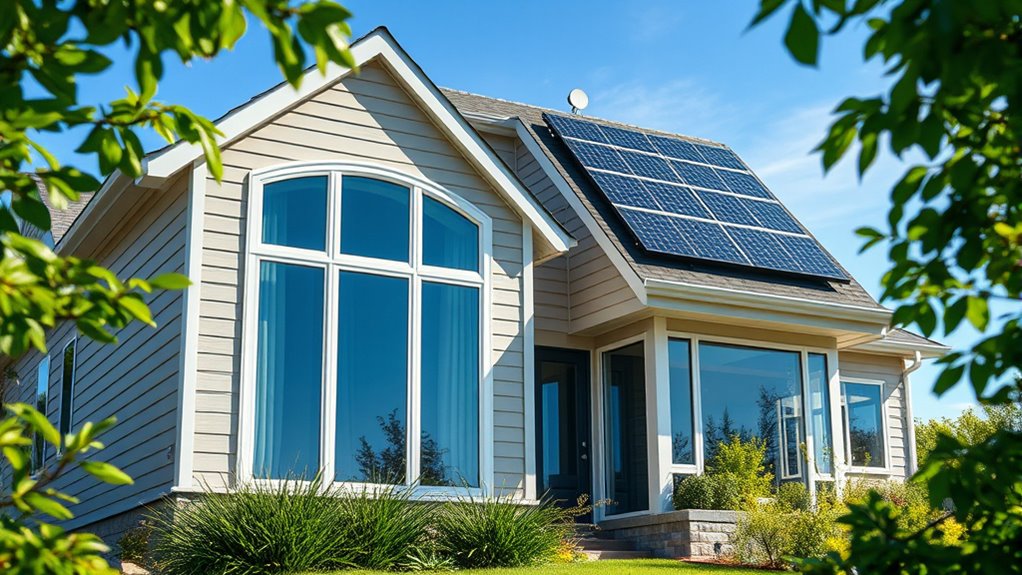
Are you looking for ways to reduce your energy bills and make your home more sustainable? One effective approach is to focus on energy efficiency upgrades that target your home’s insulation, glazing, and solar power options. These improvements not only cut costs but also lessen your environmental impact, making your living space more comfortable and eco-friendly.
Start by considering an energy audit. An energy audit provides a detailed assessment of your home’s energy use, pinpointing areas where you lose heat or cool air. This step is essential because it guides you on where to invest your resources for maximum efficiency. Once you understand your home’s specific needs, integrating smart thermostats can considerably enhance your heating and cooling management. These devices learn your schedule and preferences, automatically adjusting temperature settings to save energy when you’re away or asleep. Using smart thermostats in conjunction with insights from an energy audit ensures you’re not wasting energy on unnecessary heating or cooling, ultimately lowering your utility bills.
Start with an energy audit to identify heat loss and optimize your home’s efficiency.
Next, focus on improving your home’s insulation. Proper insulation keeps warm air inside during the winter and prevents heat from entering during the summer. Pay particular attention to the attic, walls, and floors, as these are common sources of heat transfer. Upgrading insulation materials can be an immediate upgrade with long-term savings, making your home more resilient against seasonal temperature changes. Better insulation reduces the workload on your heating and cooling systems, which means they don’t have to run as often or as hard, saving you money and extending the lifespan of your equipment.
Glazing is another essential factor in boosting your home’s energy efficiency. Swapping out single-pane windows for double or triple-pane options can make a noticeable difference. Modern glazing options feature low-emissivity coatings that reflect heat back into your home during winter and block solar heat during summer. This improves indoor comfort and reduces the need for excessive air conditioning or heating. Additionally, properly sealed windows prevent drafts and air leaks, further enhancing insulation efforts.
Finally, consider harnessing solar power as a sustainable energy solution. Installing solar panels allows you to generate your own electricity, reducing reliance on the grid and lowering your energy bills. Over time, the investment in solar power pays off through energy savings and potential incentives or tax credits. Incorporating sound design principles, such as acoustic insulation, can also improve your home’s overall energy efficiency by reducing noise pollution and unwanted airflow. Combining solar power with insulation, upgraded glazing, and smart thermostats creates a thorough energy efficiency plan that maximizes your home’s sustainability and minimizes ongoing costs.
Frequently Asked Questions
What Are the Most Cost-Effective Upgrades for My Climate?
You should prioritize insulation and high-efficiency glazing, as they offer significant energy savings tailored to your climate considerations. These upgrades typically have lower initial costs and provide long-term benefits by reducing heating and cooling needs. Solar power might be more expensive upfront but can be worthwhile if you get ample sunlight. Always compare upgrade costs with potential energy savings in your specific climate to guarantee the most cost-effective improvements.
How Long Does It Take to See Energy Savings From Upgrades?
You’ll typically see energy savings within a few months to a year after completing upgrades, depending on the specific improvements and your usage habits. The payback period varies, but solar power, for example, often offers an energy payback in 3-7 years. Insulation and glazing generally provide quicker returns, helping you cut energy costs sooner. Keep track of your energy bills to see how your investment starts paying off.
Are There Government Incentives for Insulation, Glazing, or Solar Power?
Yes, you can benefit from government incentives like tax credits and rebate programs for insulation, glazing, and solar power. These programs often offer significant savings, making upgrades more affordable. You should check local, state, and federal websites to find current offers. By taking advantage of these incentives, you’ll reduce your upfront costs and see faster return on your energy efficiency investments, saving you money in the long run.
How Do Upgrades Impact Property Value and Resale Potential?
Upgrades like insulation, glazing, and solar power boost your property’s valuation and resale potential. Buyers increasingly seek energy-efficient homes, so these improvements make your property more attractive and competitive. You’ll likely see a higher resale value, as energy savings appeal to eco-conscious buyers. Plus, these upgrades can help your home stand out in the market, leading to quicker sales and potentially higher offers, making your investment worthwhile.
What Maintenance Is Required for Solar Panels and Insulation Systems?
You should regularly clean your solar panels to keep them efficient, especially after storms or dust buildup. Additionally, schedule insulation inspections every few years to check for gaps or wear that could reduce energy savings. Proper maintenance ensures your solar power system operates at its best and your insulation continues to save you money. Keep a routine, and you’ll enjoy long-lasting energy efficiency without unexpected problems.
Conclusion
By upgrading your insulation, installing energy-efficient glazing, and harnessing solar power, you’re not just saving coins, but also helping Mother Earth breathe easier. Think of it as your own personal quest for sustainability, like a modern-day knight wielding a solar lance. So, don’t wait for a dragon to attack—start these upgrades today, and watch your home become a fortress of energy efficiency, proving that even in our digital age, old-school eco-warrior spirit still matters.