

For seniors who want help hearing conversations or nearby sounds, I rank the Williams Sound PockeTalker Ultra DUO as my best overall pick for its pocket-worn design and choice of headphone or earbud. The SuperEar SE5000 is a straightforward option for amplifying nearby sound, while the Audien Atom X suits shoppers drawn to a compact, rechargeable in-ear style with touchscreen controls. The main tradeoff is between simple personal amplifiers with an external microphone and ear-level devices that are less conspicuous but may take more adjustment. Battery style, comfort, control size, and the listening situations a device supports matter as much as amplification claims. Read on for my comparison of all 15 options, plus guidance on choosing the right type.

Turn quiet afternoons into listening time
- Thousands of audiobooks, podcasts and originals
- Listen on your phone, tablet or Echo — also offline
- Cancel anytime
Complete the kit

Key Takeaways
- The PockeTalker Ultra DUO stands out for flexibility: its included headphone and earbud let buyers choose how sound is delivered, unlike more fixed-wear options.
- The SuperEar SE5000 and SE7500 represent the direct-listening approach: a personal amplifier can suit nearby conversations or TV, but the user needs to position its microphone toward the sound.
- Rechargeable in-ear models prioritize discretion: options such as Audien Atom X and Atom One may appeal to users who dislike a pocket unit, though fit and small controls can be harder to manage.
- Battery claims do not tell the whole story: models advertising long runtime or a charging case still need to match the buyer’s charging habits and ability to handle small parts.
- These products are not interchangeable with a hearing evaluation: amplification can help with some listening situations, but persistent hearing difficulty or sudden changes call for advice from a hearing professional.
| SuperEar SE5000 Hearing Amplifier for Seniors, Sound Amplifier, Headphones |  | Best for TV and Shared Listening | Amplification: Up to 50+ dB | Battery life: Up to 30 hours | Included listening options: Stereo headphones and earbuds | VIEW ON AMAZON | See Our Full Breakdown |
| Hearing Aids for Seniors, Rechargeable Noise Cancellation OTC Hearing Amplifier with 5-Level Volume Control | 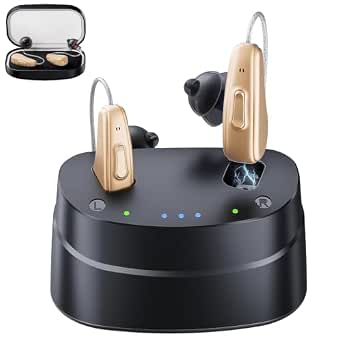 | Best for Simple Rechargeable In-Ear Use | Fit: In-ear | Volume control: Five levels; button control | Volume gain: 43 dB ±5 dB | VIEW ON AMAZON | See Our Full Breakdown |
| Bluetooth Hearing Aids for Seniors, Rechargeable Earbuds |  | Best for Calls and Everyday Audio | Bluetooth: Supported | Built-in processing: DSP chip | Volume adjustments: Five levels | VIEW ON AMAZON | See Our Full Breakdown |
| Audien Atom X OTC Hearing Aid for Seniors & Adults with Touchscreen Control |  | Best for Touchscreen Controls | Device type: Over-the-counter hearing aid | Fit: In-ear | Control: Touchpad control on touchscreen charging case | VIEW ON AMAZON | See Our Full Breakdown |
| Reizen Loud Ear 110dB Gain Personal Amplifier |  | Best for Long-Distance Sound Pickup | Sensitivity: 110 dB ±3 dB per mW | Frequency range: 20 Hz–20 kHz | Battery life: 48 hours | VIEW ON AMAZON | See Our Full Breakdown |
| SuperEar SE7500 Hearing Amplifiers for Seniors, Personal Sound Amplifier |  | Best for Long Battery Life | Maximum sound gain: 50+ dB | Battery life: Up to 80 hours | Batteries included: 2 AAA batteries | VIEW ON AMAZON | See Our Full Breakdown |
| Williams Sound PockeTalker Ultra DUO Sound Amplifier with Headphone & Earbud |  | Best for Adjustable Conversation Listening | Power source: Battery powered | Required batteries: 2 AAA batteries | Battery life: Up to 100 hours | VIEW ON AMAZON | See Our Full Breakdown |
| Aurimi Bone Conduction Personal Sound Amplifier for Seniors |  | Best Open-Ear Option | Technology: Bone conduction | Weight: 0.88 oz | Battery life: Up to 10 hours | VIEW ON AMAZON | See Our Full Breakdown |
| OTC Hearing Aids for Seniors, 2026 Rechargeable Digital Hearing Amplifier with Noise Cancelling and Easy Volume Control | 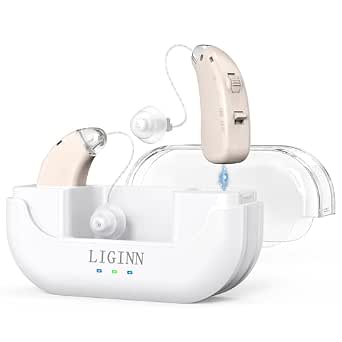 | Best Rechargeable Daily-Wear Pick | Fit type: Behind-the-ear | Power: Rechargeable lithium-ion battery | Battery voltage: 3.7 volts | VIEW ON AMAZON | See Our Full Breakdown |
| Williams Sound Pocketalker Ultra Hearing Amplifier |  | Best Simple Body-Worn Amplifier | Power source: Battery powered | Battery composition: Alkaline | Controls: Button control with adjustable volume and tone | VIEW ON AMAZON | See Our Full Breakdown |
| MSA PRO Sound Amplifier, Amplifies Sound by 30 Times, Up to 20 Hours Continuous Use, Lightweight, Nearly Invisible, Adjustable Volume, Fast Charging, Nude, 1ct |  | Best for Discreet Wear | Amplification: 30 times | Battery life: Up to 20 hours continuous use | Charging: Fast-charging station | VIEW ON AMAZON | See Our Full Breakdown |
| Rechargeable Hearing Amplifier with Headphone and Directional Microphone for Seniors |  | Best for Simple Directional Listening | Control type: Manual, one-knob operation | Power listed in specs: AA batteries | Battery life: Up to 120 hours claimed in product details | VIEW ON AMAZON | See Our Full Breakdown |
| Hearing Aids for Seniors Rechargeable Noise Cancelling with 48+ Hour Battery and Charging Case – Blue/Red |  | Best for First-Time In-Ear Users | Fit: In-ear | Controls: One-button control | Noise control: Adaptive noise cancellation | VIEW ON AMAZON | See Our Full Breakdown |
| Audien Atom One OTC Hearing Aids |  | Best for Manual Sound Adjustment | Fit: In-ear | Controls: Analog dial control | Adjustment: Volume and frequency | VIEW ON AMAZON | See Our Full Breakdown |
| Hearing Aids for Seniors & Adults, 5-Level Volume, 100-Hour Battery Life |  | Best for Longer Case-Backed Runtime | Noise reduction: 16-channel chip with noise-canceling technology | Battery life per charge: Up to 25 hours | Battery life with case: Up to 100 hours | VIEW ON AMAZON | See Our Full Breakdown |
| hearing amplifiers for senior | Battery life |
|---|---|
| SuperEar SE5000 Hearing Amplif | Up to 30 hours |
| Hearing Aids for Seniors | Up to 25 hours per charge; up to 100 hours with charging case |
| Bluetooth Hearing Aids for Sen | — |
| Audien Atom X OTC Hearing Aid | Up to 16 hours |
| Reizen Loud Ear 110dB Gain Per | 48 hours |
| SuperEar SE7500 Hearing Amplif | Up to 80 hours |
| Williams Sound PockeTalker Ult | Up to 100 hours |
| Aurimi Bone Conduction Persona | Up to 10 hours |
| OTC Hearing Aids for Seniors | — |
| Williams Sound Pocketalker Ult | — |
| MSA PRO Sound Amplifier | Up to 20 hours continuous use |
| Rechargeable Hearing Amplifier | Up to 120 hours claimed in product details |
| Hearing Aids for Seniors Recha | Up to 60 hours |
| Audien Atom One OTC Hearing Ai | — |
| Hearing Aids for Seniors & Adu | — |
More Details on Our Top Picks
SuperEar SE5000 Hearing Amplifier for Seniors, Sound Amplifier, Headphones
The SuperEar SE5000 is the most straightforward choice here for someone who wants to bring nearby sounds forward without wearing an in-ear device. Its separate amplifier, stereo headphones, and adjustable volume suit TV watching or one-to-one conversation, while the belt clip makes it easier to carry around the house. Compared with the Reizen Loud Ear, it includes stereo headphones and earbuds rather than focusing on a single earpiece, but it is less suited to picking up distant sounds. The tradeoff is its wired, proximity-based approach: it does not connect wirelessly to a TV, and it amplifies ambient sound rather than replacing a hearing aid. I’d choose it for occasional listening support, not as a substitute for hearing care.
Pros:- Includes stereo headphones and earbuds for different listening preferences
- Adjustable volume allows the listener to set amplification to their comfort
- Up to 30 hours of battery life reduces frequent battery changes
- Belt clip and lightweight portable design suit use around the home or outdoors
Cons:- No wireless connection to a TV or other audio device
- Works best when the listener is physically near the sound source
- Amplifies ambient sound and is not a hearing aid replacement
Best for: Seniors who want a portable, adjustable amplifier for TV or nearby conversation and prefer headphones to an in-ear device
Not ideal for: Buyers seeking wireless TV audio, discreet all-day hearing support, or a hearing aid replacement
- Amplification:Up to 50+ dB
- Battery life:Up to 30 hours
- Included listening options:Stereo headphones and earbuds
- Power:AAA battery included
- Portability:Belt clip included
- Compatibility:Disposable earpad covers and extension cables
Our verdict“Choose the SuperEar SE5000 for portable headphone-based help with nearby TV and conversation, but skip it if you need wireless audio or an in-ear hearing aid.”
Hearing Aids for Seniors, Rechargeable Noise Cancellation OTC Hearing Amplifier with 5-Level Volume Control
This rechargeable in-ear model suits seniors who want a compact device with a few clear manual settings rather than a separate amplifier box. Its five volume levels offer a simple way to adjust amplification, while active noise cancellation is aimed at making listening in busier settings less distracting. The charging case extends stated use to 100 hours with the case, giving it a practical advantage over the Audien Atom X’s stated 16-hour use between charges. The tradeoff is that controls are button-operated, and the product is described for moderate hearing loss rather than a wider range of needs. I’d favor it over the SuperEar SE5000 for portable in-ear wear, but the SuperEar is the better fit for someone who prefers headphones and an external volume unit.
Pros:- Five volume levels provide straightforward manual adjustment
- Active noise cancellation is designed for clearer listening in noisy settings
- Charging case supports up to 100 hours of use according to the product data
- Multiple ear-tip sizes help accommodate different ear fits
Cons:- Volume adjustment requires operating buttons manually
- Positioned for moderate hearing loss, so it may not suit every level of need
- No app or software update support is specified
Best for: Seniors with moderate hearing loss who want rechargeable in-ear amplification, several manual volume settings, and a portable charging case
Not ideal for: People who struggle with small manual controls, need app-based personalization, or prefer an over-ear listening setup
- Fit:In-ear
- Volume control:Five levels; button control
- Volume gain:43 dB ±5 dB
- Noise control:Active noise cancellation
- Battery life:Up to 25 hours per charge; up to 100 hours with charging case
- Charging time:3 hours
- Included components:Hearing amplifiers, ear tips, charging case, and carrying case
- Color:Beige
Our verdict“Pick this model for rechargeable, button-controlled in-ear amplification with a useful charging case, but look elsewhere if you need app controls or a headphone-style amplifier.”
Bluetooth Hearing Aids for Seniors, Rechargeable Earbuds
This is the lineup’s most versatile pick for seniors who want amplification alongside wireless earbud functions. The Bluetooth design supports calls and music as well as hearing voices, so it can replace carrying separate listening devices for some users. Three noise-reduction levels and five volume settings offer more adjustment than the simpler SuperEar SE5000, though the SuperEar is easier to understand if the main goal is amplified nearby sound through headphones. A 2000mAh charging unit is listed as providing 17 charge cycles, and the product claims more than seven days of use; actual convenience will depend on listening habits. Manual buttons, limited app information, and a fit that may not work for every ear make this a less appealing choice for buyers who value minimal setup.
Pros:- Combines hearing amplification with Bluetooth calls and music playback
- Three noise-reduction levels and five volume settings provide adjustment options
- Charging unit is specified for 17 charge cycles
- Three ear-tip sizes offer some flexibility for fit
Cons:- Manual button controls may be harder for some seniors to operate
- No app or software update support is described
- Ear-hook and in-ear design may not fit every user comfortably
Best for: Seniors who want one rechargeable device for hearing assistance, Bluetooth calls, and music, and are comfortable using buttons
Not ideal for: People who want the simplest possible controls, need a guaranteed fit without trying ear tips, or prefer a dedicated amplifier for TV listening
- Bluetooth:Supported
- Built-in processing:DSP chip
- Volume adjustments:Five levels
- Maximum volume increase:42 dB
- Noise reduction:Three levels
- Battery capacity:2000 mAh
- Charging capacity:17 charge cycles
- Stated usage time:More than 7 days
- Ear-tip sizes:Three
Our verdict“Choose these Bluetooth amplifiers if calls and music matter as much as hearing support, but opt for the SuperEar SE5000 for simpler nearby listening.”
Audien Atom X OTC Hearing Aid for Seniors & Adults with Touchscreen Control
The Audien Atom X is aimed at seniors who find tiny buttons or app-based setup frustrating. Its touchscreen charging case puts controls on a larger surface, while four listening modes let users select among different listening situations. That gives it a more guided, hearing-aid-style approach than the SuperEar SE5000, which is a simpler ambient sound amplifier with headphones. The Atom X also includes expert-guided setup, a useful distinction for someone who wants help getting started. Its main compromise is endurance: the stated 16-hour battery life is shorter than the rechargeable in-ear option from B0H999PP9G, which lists up to 25 hours per charge. The touchscreen may also be unfamiliar to people who prefer traditional controls, and app or software update details are not provided.
Pros:- Touchscreen charging case avoids reliance on small device buttons or an app
- Four listening modes support different listening situations
- Expert-guided setup is included
- Rechargeable design includes a portable charging case
Cons:- Stated use of up to 16 hours is shorter than the 25-hour claim for B0H999PP9G
- Touchscreen case controls may not suit buyers who prefer traditional controls
- Software update support is not specified
Best for: Seniors who want an in-ear OTC device with larger touchscreen case controls, multiple listening modes, and guided setup
Not ideal for: People who need longer use between charges, prefer traditional hearing-aid controls, or want detailed app and update support
- Device type:Over-the-counter hearing aid
- Fit:In-ear
- Control:Touchpad control on touchscreen charging case
- Listening modes:Four
- Battery life:Up to 16 hours
- Battery:Two lithium-ion batteries required
- Materials:Silicone
- Color:Beige
- Additional support:Expert-guided setup
Our verdict“Choose the Atom X if a touchscreen case and guided setup matter more than longer battery life or traditional controls.”
Reizen Loud Ear 110dB Gain Personal Amplifier
The Reizen Loud Ear is the specialist choice for listeners who need to pick up sound from farther away, with the product describing reception from up to 100 feet. Its built-in microphone, belt clip, and stated 48-hour battery life make it practical for portable listening, including situations where a speaker is not close by. Compared with the SuperEar SE5000, it emphasizes distance and a single-ear setup rather than including stereo headphones and earbuds. That focus comes with clear limits: it has no noise-control features, uses replaceable AAA batteries, and its single earphone may not be comfortable for everyone. I’d choose it for distance-oriented listening, not for noisy environments or buyers seeking discreet, rechargeable, two-ear amplification.
Pros:- Designed to pick up sounds from as far as 100 feet
- Built-in microphone and adjustable volume support portable listening
- Stated 48-hour battery life limits how often batteries need replacing
- Compact body and belt clip are convenient to carry
Cons:- No noise-control features for reducing distracting background sound
- Requires two AAA batteries rather than rechargeable power
- Single-ear in-ear use may not suit every fit or comfort preference
Best for: Seniors who need a portable single-ear amplifier to pick up a speaker or sound source from a distance
Not ideal for: Listeners who need noise reduction, rechargeable power, stereo listening, or a comfortable in-ear fit for extended wear
- Sensitivity:110 dB ±3 dB per mW
- Frequency range:20 Hz–20 kHz
- Battery life:48 hours
- Power source:Two AAA batteries
- Dimensions:2.5 in H × 1.75 in L × 0.75 in W
- Weight:2.4 oz
- Included:Single earphone and two AAA batteries
- Portability:Belt clip
Our verdict“Choose the Reizen Loud Ear when distance pickup is the priority, but prefer the SuperEar SE5000 for a stereo headphone option or noise-reducing rechargeable models for busier settings.”
SuperEar SE7500 Hearing Amplifiers for Seniors, Personal Sound Amplifier
The SuperEar SE7500 makes the most sense for someone who wants a straightforward amplifier for conversations, television, or outdoor listening without frequent battery changes. Its stated up to 80 hours of use is a major advantage over the Aurimi Bone Conduction Personal Sound Amplifier, which offers up to 10 hours per charge. The included earbuds, headphones, carry case, and belt clip also give buyers more ways to carry and use it than a basic single-style setup. Adjustable volume and 50+ dB of ambient sound gain offer flexibility, but amplification is not the same as hearing-aid treatment and may not suit severe hearing loss. The tradeoff is its reliance on disposable AAA batteries and a device that may be noticeable in public. I’d choose it for flexible, extended listening, not a discreet all-day fit.
Pros:- Up to 80 hours of battery life reduces how often batteries need replacing.
- Includes earbuds, headphones, and a carry case with belt clip for different listening situations.
- Adjustable amplification can help bring nearby speech and other sounds forward.
- Compatible with disposable ear pad covers and an extension cable.
Cons:- Requires two AAA batteries rather than charging by cable or case.
- The separate amplifier and listening accessories may be noticeable when worn in public.
- May not provide suitable support for severe hearing loss.
Best for: Seniors who want a simple personal amplifier for home conversations and TV, value long stretches between battery changes, and would use both earbuds and headphones.
Not ideal for: People seeking a discreet in-ear device, rechargeable operation, or support for severe hearing loss.
- Maximum sound gain:50+ dB
- Battery life:Up to 80 hours
- Batteries included:2 AAA batteries
- Included listening accessories:Earbuds and headphones
- Included carrying accessory:Carry case with belt clip
- Additional compatibility:Disposable ear pad covers and extension cable
Our verdict“Choose the SE7500 if you want a versatile, battery-powered amplifier for extended listening and can accept a more visible setup.”
Williams Sound PockeTalker Ultra DUO Sound Amplifier with Headphone & Earbud
The PockeTalker Ultra DUO is a strong fit for seniors who want more control over speech clarity than a basic volume-only amplifier provides. Its separate volume and tone controls let users adjust the sound to their preference, while the removable microphone can be positioned for a particular listening setup. The included headphones and earbud add practical flexibility; compared with the Aurimi Bone Conduction Personal Sound Amplifier, though, this model doesn’t keep the ear canals open. Its stated up to 100 hours of use also exceeds the SuperEar SE7500’s listed battery life, but it still depends on two AAA batteries, which are not included. The body-worn design and choice of wired listening accessories suit one-on-one conversations and TV better than buyers seeking a tiny, hands-free device. I’d favor it for people who value control and accessory choice over a minimal setup.
Pros:- External volume and tone controls allow more sound adjustment than a volume-only model.
- Removable microphone offers flexibility in how nearby sound is picked up.
- Includes both headphones and an earbud.
- Up to 100 hours of operation is a long interval between battery changes.
Cons:- Requires two AAA batteries, which are not included.
- Body-worn amplifier and separate accessories may feel bulky for portable use.
- Listening options are limited to the included in-ear and headphone styles.
Best for: Seniors who want independent tone and volume adjustments, use an amplifier for conversations or TV, and appreciate having both headphones and an earbud.
Not ideal for: Buyers who want a rechargeable or very discreet device, or who prefer an open-ear design for hearing surrounding sounds.
- Power source:Battery powered
- Required batteries:2 AAA batteries
- Battery life:Up to 100 hours
- Controls:External volume and tone controls
- Microphone:Removable
- Included listening accessories:Headphone and earbud
- Additional feature:Belt clip
- Warranty:5 years
Our verdict“Pick the PockeTalker Ultra DUO if adjustable tone, long battery life, and two listening options matter more than a compact rechargeable design.”
Aurimi Bone Conduction Personal Sound Amplifier for Seniors
The Aurimi stands apart from the body-worn Williams Sound PockeTalker Ultra by sending sound through the cheekbones instead of covering the ears. That open-ear design can suit seniors who want amplification while remaining more aware of nearby sounds, such as family members speaking from another room. It is also light at 0.88 ounces and avoids setup or Bluetooth pairing, making it less involved to start using than a device with separate controls and accessories. The tradeoff is runtime: its up to 10 hours per charge falls well short of the PockeTalker’s stated 100 hours on batteries. Performance may also depend on the surrounding noise, and this is a sound amplifier rather than a hearing-aid replacement. I’d put it ahead of conventional ear-covering options only for buyers who prioritize open ears and simple operation.
Pros:- Bone conduction leaves the ear canals open for awareness of surrounding sounds.
- At 0.88 ounces, it is lightweight for extended wear.
- No setup or Bluetooth pairing is required.
- Up to 10 hours of battery life supports a substantial period of daily use.
Cons:- Its 10-hour runtime is shorter than the listed battery life of the Williams Sound PockeTalker models.
- Ambient noise can affect how well amplified sound comes through.
- It is a personal sound amplifier, not a replacement for a hearing aid or support for severe hearing loss.
Best for: Seniors who want lightweight amplification while keeping their ear canals open and prefer a device that requires no setup or Bluetooth pairing.
Not ideal for: People who need long operation between charges, stronger support for severe hearing loss, or dependable listening in noisy surroundings.
- Technology:Bone conduction
- Weight:0.88 oz
- Battery life:Up to 10 hours
- Setup:No setup required
- Bluetooth:No Bluetooth pairing required
- Design:Open-ear
Our verdict“Choose the Aurimi if keeping your ears open and avoiding setup matter more than extended battery life or use in noisy places.”
OTC Hearing Aids for Seniors, 2026 Rechargeable Digital Hearing Amplifier with Noise Cancelling and Easy Volume Control
This behind-the-ear model is the most daily-wear-oriented option in this group: it combines rechargeable power, button volume control, and a portable charging case without requiring an app or Bluetooth. The stated 24 hours of use per charge gives it a different convenience profile from the battery-dependent SuperEar SE7500 and Williams Sound PockeTalker options; buyers avoid carrying spare AAA batteries, though they’ll need to keep the case charged. Its noise-cancelling feature is intended to help with everyday listening, but the listed controls remain basic, so there’s no app-based fine tuning to tailor the sound. Fit matters too: an earplug that seals poorly can allow sound leakage and feedback. I’d choose this for someone seeking a rechargeable routine and straightforward controls, but not for a buyer who wants extensive customization or a guaranteed fit without adjustment.
Pros:- Rechargeable design avoids routine replacement of disposable AAA batteries.
- Stated 24-hour use per charge suits a full day of listening.
- Portable charging case provides additional recharges.
- Button-based volume control works without an app or Bluetooth connection.
Cons:- Basic controls offer less customization than models with separate tone adjustment, such as the Williams Sound PockeTalker Ultra DUO.
- A poor earplug fit can cause sound leakage and feedback.
- New users may need time to adjust to wearing and operating it.
Best for: Adults with mild to moderate hearing loss who want a rechargeable behind-the-ear device, simple button controls, and everyday use without an app.
Not ideal for: Buyers who need detailed sound customization, dislike behind-the-ear fit, or may struggle to get a secure earplug seal.
- Fit type:Behind-the-ear
- Power:Rechargeable lithium-ion battery
- Battery voltage:3.7 volts
- Use per charge:Up to 24 hours
- Charging accessory:Portable charging case
- Controls:Button control and volume adjustment
- Connectivity:No app or Bluetooth required
- Audio sensitivity:120 dB
Our verdict“Choose this model for simple rechargeable daily wear, provided you’re comfortable with a behind-the-ear fit and limited sound adjustment.”
Williams Sound Pocketalker Ultra Hearing Amplifier
The Williams Sound Pocketalker Ultra is a sensible pick for seniors who prefer a body-worn amplifier with straightforward physical controls. Its adjustable volume and tone give more control than the Aurimi Bone Conduction Personal Sound Amplifier’s no-setup approach, while the included headphones, earbuds, and year supply of batteries create a ready-to-use package. That convenience comes with a familiar limitation: it runs on disposable batteries rather than recharging like the OTC behind-the-ear model in this group. Its compact listed dimensions suit portable use, but the 16-ounce listed item weight is less compelling for anyone focused on a featherlight setup. It is described for mild to moderate hearing needs and is not a medical device, so it should not be treated as a substitute for professional care. I’d choose it for simple, adjustable speech listening, not severe hearing loss.
Pros:- Physical volume and tone controls offer practical adjustment without app setup.
- Includes headphones, earbuds, and a year supply of batteries.
- Portable body-worn format is designed for personal listening.
- Compatible with listed PockeTalker headphones, a single earbud, and neckloops.
Cons:- Uses alkaline batteries rather than a rechargeable battery.
- The body-worn unit and connected listening accessory are less discreet than an in-ear device.
- Not a medical device and may not suit severe hearing loss.
Best for: Seniors who want a body-worn amplifier with physical tone and volume controls, several listening accessories, and batteries supplied for ongoing use.
Not ideal for: Buyers who want a rechargeable, discreet, or open-ear design, or who need a device for severe hearing loss.
- Power source:Battery powered
- Battery composition:Alkaline
- Controls:Button control with adjustable volume and tone
- Fit type:Body-worn
- Measurements:3.38 in L × 2.23 in W
- Included listening accessories:Headphones and earbuds
- Included batteries:Year supply of batteries
- Compatible accessories:PockeTalker HED021 Deluxe Headphones, PockeTalker EAR013 Single Earbud, and neckloops
Our verdict“Choose the Pocketalker Ultra if you want a familiar body-worn amplifier with tone adjustment and accessories, and don’t mind disposable batteries.”
MSA PRO Sound Amplifier, Amplifies Sound by 30 Times, Up to 20 Hours Continuous Use, Lightweight, Nearly Invisible, Adjustable Volume, Fast Charging, Nude, 1ct
Discreet, rechargeable wear is the main reason I’d put the MSA PRO on this list. Its small in-ear form and six silicone tips give seniors more opportunity to find a secure, low-profile fit than a one-size-only design, while adjustable volume keeps everyday listening simple. The stated up-to-20-hour runtime also means fewer charging interruptions than the Audien Atom One, which is specified for charging every 24 hours but does not list a comparable continuous-use figure. That said, the MSA PRO’s advertised 30-times amplification is not a hearing-loss assessment, and the supplied details caution that it may not suit severe loss. It also depends on its charging base, so it is less convenient if that base is misplaced, and an in-ear shell may not suit every ear shape. I’d choose it for discretion, not for extensive sound customization.
Pros:- Small, nearly invisible design favors discreet everyday wear.
- Up to 20 hours of continuous use per charge.
- Adjustable volume offers straightforward listening control.
- Six silicone tips provide several fit options.
Cons:- May not provide enough support for severe hearing loss.
- Requires the included charging base to recharge.
- In-ear fit may be uncomfortable or insecure for some ear shapes.
Best for: Seniors with mild listening difficulty who want a discreet, rechargeable in-ear amplifier and can use a charging base consistently.
Not ideal for: People with severe hearing loss, ears that do not tolerate in-ear tips, or anyone seeking detailed noise controls or a charging setup without a separate base.
- Amplification:30 times
- Battery life:Up to 20 hours continuous use
- Charging:Fast-charging station
- Color:Nude
- Included fit accessories:6 silicone tips
- Included accessories:Recharging base and cleaning brush
Our verdict“Choose the MSA PRO if discreet in-ear wear and a long stated runtime matter more than advanced sound controls.”
Rechargeable Hearing Amplifier with Headphone and Directional Microphone for Seniors
One-knob operation and a directional microphone make the iRoger a different kind of pick from the discreet in-ear models here. Rather than sitting inside the ear, it is described as a compact amplifier with a headphone and microphone, a format that can suit someone who wants a simple control and a more directed way to hear speech. The single manual control avoids app setup and multiple menus, while the claimed up-to-120-hour use could mean fewer power changes than with the MSA PRO’s 20-hour continuous-use figure. The product information is inconsistent, though: it calls the unit rechargeable but also lists AA batteries as its power source. I’d confirm the actual battery arrangement before buying. Noise control is limited, and this portable, visible setup is less discreet than the Audien Atom One’s in-ear design.
Pros:- One-knob control is easy to operate without an app.
- Directional noise-canceling microphone is intended to help focus on speech.
- Compact format is suited to travel and portable use.
- Product description claims up to 120 hours of use.
Cons:- Power details conflict: the description says rechargeable while the specs list AA batteries.
- Noise-control features are limited.
- Headphone-and-microphone format is less discreet than in-ear options such as Audien Atom One.
Best for: Seniors who prefer a straightforward physical volume control and a headphone-and-microphone arrangement for focused listening.
Not ideal for: Buyers who want a nearly invisible in-ear device, strong noise-management options, or clearly documented rechargeable power without battery ambiguity.
- Control type:Manual, one-knob operation
- Power listed in specs:AA batteries
- Battery life:Up to 120 hours claimed in product details
- Microphone:Directional noise-canceling
- Style:All black
- Material:Plastic
- Item dimensions:6 × 2.5 inches
- Recommended use:Sound enhancement
Our verdict“Consider the iRoger for simple, directed listening, but verify its battery setup before choosing it over a clearly rechargeable in-ear model.”
Hearing Aids for Seniors Rechargeable Noise Cancelling with 48+ Hour Battery and Charging Case – Blue/Red
Automatic on/off and one-button control give this pair a beginner-friendly place in the roundup. The blue-and-red color coding can also help distinguish left from right, a practical touch that the neutral-colored Audien Atom One does not offer in its listed specs. Its in-ear design aims for a discreet fit, and adaptive noise cancellation is intended to help in changing sound environments. The stated up-to-60-hour battery life, plus more than 110 hours of charging-case backup, offers more reserve than the MSA PRO’s 20-hour continuous-use figure, though those claims describe different kinds of runtime and should not be treated as directly equivalent. The tradeoff is limited user control: people who want manual fine-tuning may prefer Audien’s volume and frequency dials. Deep in-ear placement also will not suit everyone.
Pros:- Single-button operation and automatic on/off simplify daily handling.
- Adaptive noise cancellation is designed for varied listening settings.
- Blue and red housings help identify left and right devices.
- Charging case provides over 110 hours of stated backup.
Cons:- Limited controls may frustrate users who want more precise adjustment.
- Deep in-ear fit may not suit every wearer.
- Not a good match for people who prefer an over-ear amplifier.
Best for: First-time users who want a simple, color-coded rechargeable pair with automatic on/off and a portable charging case.
Not ideal for: Seniors who prefer over-ear styles, need detailed manual sound adjustment, or find deep in-ear devices uncomfortable.
- Fit:In-ear
- Controls:One-button control
- Noise control:Adaptive noise cancellation
- Battery life:Up to 60 hours
- Charging-case backup:Over 110 hours
- Color:Blue and red
- Dimensions:1 × 1 inch
- Weight:1 ounce
Our verdict“Pick this pair for low-effort, color-coded in-ear use; choose Audien Atom One instead if manual volume and frequency adjustment matter more.”
Audien Atom One OTC Hearing Aids
Independent volume and frequency dials set the Audien Atom One apart from the one-button, limited-adjustment models in this group. That hands-on control can help adults with mild to moderate hearing loss tune the sound without relying on an app, while the discreet in-ear shell keeps the device less conspicuous than the iRoger headphone-and-microphone format. It also includes expert-guided setup, a useful form of support for buyers who are unsure how to get started. The tradeoff is that this is a more manually adjusted experience, not a set-and-forget option; the listed specs also provide no noise control and call for charging every 24 hours. It is described as an FDA-registered OTC hearing aid for mild to moderate loss, but it is not presented as a solution for severe hearing loss.
Pros:- Separate analog dials provide manual volume and frequency adjustment.
- Rechargeable lithium-ion batteries avoid disposable battery changes.
- Discreet in-ear design weighs 5 grams.
- Expert-guided setup is included.
Cons:- No noise-control feature is listed.
- Requires charging every 24 hours.
- Specified for mild to moderate hearing loss, not severe cases.
Best for: Adults with mild to moderate hearing loss who want a discreet rechargeable in-ear device and prefer physical volume and frequency dials to app controls.
Not ideal for: People with severe hearing loss, those needing noise reduction, or users who do not want to recharge daily or adjust settings manually.
- Fit:In-ear
- Controls:Analog dial control
- Adjustment:Volume and frequency
- Battery:2 lithium-ion batteries required
- Charging interval:Every 24 hours
- Noise control:None listed
- Weight:5 g
- Color:Beige
Our verdict“Choose Audien Atom One if you value discreet wear and direct manual tuning more than noise reduction or longer intervals between charges.”
Hearing Aids for Seniors & Adults, 5-Level Volume, 100-Hour Battery Life
Long case-backed runtime and five volume levels make this a practical choice for seniors who want more adjustment than the single-button models provide. Its memory function can retain a preferred level, reducing repeated setup, while the 16-channel noise-canceling chip is intended to reduce unwanted sound. Compared with the MSA PRO, which emphasizes a near-invisible fit and up to 20 hours of continuous use, this model foregrounds up to 100 hours with its charging case and gives a stated 25 hours per charge. That longer-use claim depends on keeping the case charged and available, so it is not the same as 100 hours between charges. The stated maximum amplification is 40 dB ±5 dB, and the product information warns it may not suit severe hearing loss. I’d favor it over simpler controls only if its extra volume steps are useful to you.
Pros:- Five volume levels offer more choice than one-button models.
- Memory function can retain the selected volume setting.
- Up to 25 hours per charge and up to 100 hours with the case are stated.
- Soft silicone ear tips are described as ergonomic and skin-friendly.
Cons:- The 100-hour figure depends on the charging case and is not a single-charge runtime.
- Maximum amplification is listed as 40 dB ±5 dB and may not meet needs for severe loss.
- Case charging and upkeep add another device to manage.
Best for: Seniors who want several volume choices, memory for a preferred setting, and a charging case to extend time away from an outlet.
Not ideal for: People with severe hearing loss, buyers who want a clearly documented in-ear or over-ear fit, or anyone unwilling to maintain a charging case.
- Noise reduction:16-channel chip with noise-canceling technology
- Battery life per charge:Up to 25 hours
- Battery life with case:Up to 100 hours
- Volume levels:5, with memory function
- Maximum sound amplification:40 dB ±5 dB
- Power:Rechargeable
- Ear tips:Ergonomic, skin-friendly silicone
- Design:Discreet, fashionable appearance
Our verdict“Choose this model if you want more volume steps and case-backed runtime, but not if you need a simple no-case setup or support for severe hearing loss.”

How We Picked
I compared the 15 listed products by the needs that shape day-to-day use for seniors: wearing style, control simplicity, sound-delivery options, power and charging, and likely handling demands. I gave more weight to clear use-case distinctions than to headline amplification or battery claims, since those claims alone do not establish sound quality, fit, or suitability for an individual hearing problem. I also considered whether a device’s format makes sense for nearby conversations, TV listening, or less conspicuous everyday wear.
The ranking puts versatile, relatively straightforward options ahead of products whose benefits depend on a specific preference, such as an in-ear fit, Bluetooth functions, bone conduction, or a particular charging setup. Because the supplied product information does not establish clinical performance, real-world sound quality, or individual fit, I do not treat those as proven advantages. The other picks follow by use case, with tradeoffs made explicit so readers can match a format to their routine rather than assume one style is best for everyone.
Factors to Consider When Choosing Hearing Amplifiers For Seniors
Before choosing among hearing amplifiers for seniors, start with the listening situation and the person’s comfort with small devices and controls. The right format can make everyday use easier, while a poor fit or awkward microphone position can leave a technically capable product unused.
Match the device format to the listening situation
A pocket amplifier with a separate microphone is often easiest to understand as a focused listening tool: point the microphone toward a conversation partner, television, or other sound source. That can be useful at home, but it is less hands-off than an in-ear unit and may pick up sounds from the wrong direction. Ear-level amplifiers keep the equipment close to the ear and can feel more discreet, yet comfort and secure fit become more important. Bluetooth-style earbuds may appeal to someone who already uses wireless audio, but do not assume every listed model supports calls or streaming in the same way. Think through where the device will be used most before choosing a form factor.
Choose controls the wearer can operate confidently
Small buttons, touch panels, and tiny adjustment wheels can be difficult for people with reduced dexterity or vision. A screen may make settings visible, but it can still require careful tapping; tactile controls may be easier to find without looking. Simpler controls also reduce the chance of changing volume accidentally while inserting or removing an ear-level device. If someone else will help set up the amplifier, check whether daily adjustments remain manageable without assistance. A useful choice is one the wearer can operate independently, not merely one with the most settings.
Look beyond the headline battery figure
Published runtime can vary with volume, usage, and the way a device is powered, so treat long-hour claims as a comparison point rather than a guarantee. Rechargeable models avoid frequent disposable-battery changes, while a charging case may simplify top-ups but adds another small item to keep track of. A pocket amplifier that uses replaceable batteries may suit someone who prefers to carry spares and avoid charging routines. Check whether the charging connection and case are easy to handle, especially for a user with limited hand strength. The best power setup is the one that fits an established daily routine.
Treat fit and comfort as core requirements
An in-ear amplifier can feel secure for one person and uncomfortable for another, depending on ear shape, sensitivity, and how long it is worn. A pocket-worn unit avoids placing the main device in the ear, though its headphones or earbuds still need to feel comfortable. Bone-conduction designs use a different wearing approach and may be worth exploring when conventional ear tips are not appealing, but buyers should confirm how the product is meant to sit and operate. Look for clear information about included fittings, cleaning, and returns before committing. Discomfort is a practical reason to stop using a device, regardless of its feature list.
Separate amplification from diagnosis and treatment
Personal sound amplifiers and OTC hearing aids do not serve identical roles, and a product label alone cannot determine what is appropriate for a particular hearing loss. Difficulty hearing can have different causes, while sudden hearing changes, ear pain, dizziness, or hearing that worsens in one ear warrant prompt professional advice. An evaluation can help identify whether amplification is suitable and whether a hearing aid or another intervention is a better fit. Avoid raising volume sharply to compensate for unclear sound, since loudness does not always improve speech understanding. Use product claims as shopping information, not as a substitute for hearing care.
Pay for useful support, not a feature count
Extra modes, wireless functions, screens, and charging accessories only add value when the wearer will use them. A basic personal amplifier may make more sense for occasional TV or one-to-one conversation than a discreet device with controls the user finds fiddly. Conversely, someone who wants an ear-level style may reasonably prioritize fit options and straightforward charging over a separate microphone. Check what is included in the box and whether instructions and support are accessible to the buyer. The best purchase is the one that solves a recurring listening problem without creating a new handling burden.
Frequently Asked Questions
Should I choose a pocket amplifier or an in-ear hearing amplifier for a senior?
A pocket amplifier is often a better match when the wearer mainly wants help hearing a nearby person or television and can point the microphone toward the sound. An in-ear model may suit someone who values a less conspicuous setup and is comfortable inserting, removing, and charging a small device. Pocket designs may be easier to handle, but their microphone position can affect what gets amplified. In-ear styles avoid carrying a separate microphone unit, though fit and small controls can be obstacles. Choose based on the wearer’s routine and dexterity, not appearance alone.
Are hearing amplifiers suitable if a senior has never had a hearing test?
A hearing amplifier can make sounds louder, but it cannot identify why someone is having trouble hearing or confirm which kind of device suits them. A hearing evaluation is a sensible first step for ongoing difficulty, especially when it affects conversation or daily activities. Sudden hearing loss, pain, dizziness, or a marked difference between ears calls for prompt medical attention rather than experimenting with amplification. A professional can also discuss hearing aids and other options if an amplifier is not appropriate. Product descriptions should not be treated as a diagnosis.
Does a higher volume setting mean an amplifier will make speech clearer?
Not necessarily: making every sound louder can also raise background noise and may not improve the contrast needed to follow speech. Start at a low setting and adjust gradually in a quiet setting before using the device in a busier room. If speech remains unclear at a comfortable volume, increasing loudness further may not solve the problem. A directional microphone or careful positioning can help in some situations, but performance varies by setting and user. Persistent trouble understanding speech deserves professional hearing advice.
What should I check if a senior struggles with charging or tiny controls?
Prioritize a device with controls that are easy to see or feel, a charging method the wearer can manage, and as few daily steps as possible. Touchscreen controls may be challenging for someone with limited vision or hand precision, while a small in-ear unit can be hard to place and retrieve. A pocket-worn style may reduce the need to handle a tiny device in the ear, although the microphone and headphones still need routine setup. Ask the wearer to practice the basic tasks before relying on the product away from home. If a family member will assist, consider whether the device remains usable when that person is not present.
Can I use a hearing amplifier for television and conversations in the same way?
Some personal amplifiers can serve both purposes, but the experience depends on microphone placement, included listening accessories, and how the TV sound reaches the device. For conversation, positioning a microphone near the speaker may help focus on a nearby voice; for television, the user may need to sit near the unit or connect through a supported audio method. Do not assume Bluetooth in a product name means every TV connection or phone feature is available. If both uses matter, confirm the exact connection options and accessories before buying. A device designed around one-to-one listening may be less convenient for a whole-room setup.
Conclusion
For a flexible starting point, I recommend the Williams Sound PockeTalker Ultra DUO as best overall, especially for seniors who want a pocket amplifier with a choice of headphone or earbud. My best value direction is the SuperEar SE5000 for buyers seeking a straightforward personal amplifier for nearby sound, while the best for beginners is a simple pocket-style option such as the Reizen Loud Ear 110dB when external microphone use feels manageable. For a more discreet, feature-forward choice, the Audien Atom X is my premium-style pick among the listed in-ear options, though touch controls and fit may not suit everyone. For specific needs, consider the Aurimi bone-conduction amplifier if conventional in-ear wearing is unappealing, or a model with a charging case if that routine fits the wearer. Whichever style you choose, prioritize comfortable use and manageable controls, and seek hearing care for persistent or sudden changes.