To create consistent cleaning routines using task stacking strategies, combine small chores into your daily schedule to save time and stay organized. For example, wipe counters while laundry runs or sweep the floor while waiting for dishes to dry. Keeping tools accessible and setting reminders can support your efforts. Focus on small wins to build momentum and make cleaning feel less overwhelming. Continue exploring ways to integrate these tactics, and you’ll soon see your home stay tidy effortlessly.
Key Takeaways
- Combine small tasks like wiping counters while waiting for laundry to maximize efficiency.
- Schedule chores together, such as vacuuming and dusting, on specific days for streamlined routines.
- Use timers to allocate dedicated short periods for multiple tasks in succession.
- Incorporate quick tasks into daily habits, like tidying up during bathroom visits.
- Leverage technology or reminders to cue the next task and maintain consistent stacking.
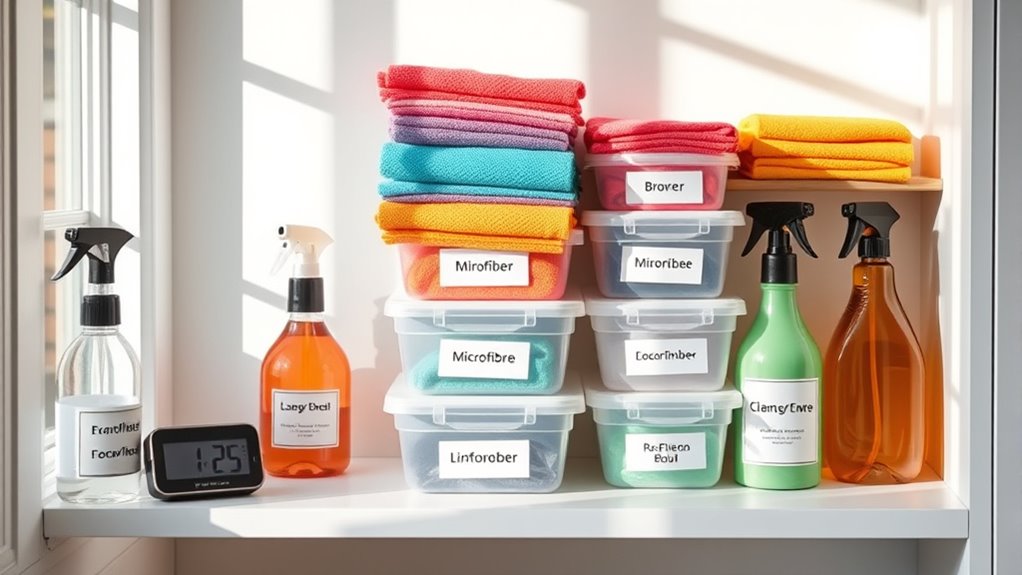
Have you ever wondered why your cleaning efforts often fall short of lasting results? It’s a common frustration, but the key often lies in establishing consistent routines. When you develop a reliable system, cleaning becomes less of a chore and more of a habit. One effective way to do this is by exploring different cleaning schedule options that fit your lifestyle. Whether you prefer daily check-ins or weekly deep cleans, choosing a schedule that works for you helps keep clutter and mess in check. Motivational tips can also play a essential role—setting small, achievable goals can boost your confidence and keep you committed. When you see progress, you’re more likely to stick with your routine, making cleaning feel less burdensome and more rewarding.
Consistent routines turn cleaning into a habit, making home care easier and more rewarding.
To create a sustainable routine, start by breaking down tasks into manageable chunks. Instead of trying to tackle everything at once, assign specific chores to particular days or times. For example, dedicate Mondays to vacuuming, Wednesdays to dusting, and Sundays to laundry. This approach not only simplifies your schedule but also prevents burnout. When you follow a clear plan, you’re less likely to skip tasks or feel overwhelmed. Additionally, mixing in motivational tips—like rewarding yourself after completing a chore or listening to your favorite music—can make cleaning sessions more enjoyable. The idea is to associate cleaning with positive feelings, turning it into a routine you look forward to rather than dread.
Task stacking strategies can further streamline your cleaning routine. This involves combining small tasks to maximize efficiency. For instance, while waiting for your laundry to finish, you could wipe down kitchen counters or sweep the floor. These quick, small actions add up over time, making a noticeable difference without taking up extra time. Incorporating proper technology, such as timers or reminders, can also help you stay on track and maintain consistency in your schedule. When you incorporate task stacking into your schedule options, cleaning becomes a series of small wins throughout your day. Over time, these small wins lead to a cleaner, more organized home without feeling like a constant uphill battle.
The key is consistency. Even if you start with just five minutes a day, sticking to that commitment creates momentum. Use reminders or alarms if needed, and keep your cleaning tools within easy reach to make the process effortless. Remember, the goal isn’t perfection but progress. By choosing the right schedule options, applying motivational tips, and stacking tasks effectively, you’ll build a routine that sticks. Before long, cleaning will become a natural part of your day, giving you a tidier home and a greater sense of accomplishment.
automatic timer for cleaning tasks
As an affiliate, we earn on qualifying purchases.
As an affiliate, we earn on qualifying purchases.
Frequently Asked Questions
How Can I Motivate Myself to Stick to Cleaning Routines?
To stay motivated, try using motivational techniques like rewarding yourself after completing cleaning tasks. Find accountability partners—friends or family—to check in on your progress, which keeps you committed. Break your routines into small, manageable steps so you don’t feel overwhelmed. Visualize the benefits of a clean space, and remind yourself of your goals regularly. These strategies will help you stay consistent and motivated over time.
What Tools Are Best for Efficient Task Stacking?
You’ll want tools that offer effective pairing and high versatility, making your task stacking more efficient. A good example is a cordless vacuum with multiple attachments, allowing you to switch seamlessly between surfaces. Consider multi-use cleaning sprays or microfiber cloths that work on various surfaces. These versatile tools help you combine tasks smoothly, saving time and effort. Prioritize lightweight, easy-to-handle tools that can be used quickly for different cleaning needs.
How Do I Adapt Routines for Busy or Unpredictable Schedules?
To adapt routines for busy or unpredictable schedules, implement flexible scheduling by setting aside short, focused cleaning sessions that fit your day. Prioritize tasks and build in emergency preparedness for unexpected disruptions. Use task stacking to combine quick chores with other activities, like cleaning during breaks or while waiting. This way, you stay consistent and efficient, even when your schedule shifts unexpectedly.
Can Task Stacking Help With Deep Cleaning Projects?
Yes, task stacking can help with deep cleaning projects. By incorporating deep cleaning tasks into your routine planning, you can break the process into manageable steps and stack them with regular chores. This way, you stay consistent and avoid feeling overwhelmed. For example, you might dedicate one day a week to deep cleaning a specific area, stacking this task with your routine chores to maintain a clean and healthy home.
How Do I Track Progress and Maintain Consistency Over Time?
To track your progress and stay consistent, focus on habit formation by setting clear, achievable goals and using a checklist or app to monitor your tasks. Find accountability partners who can encourage you and hold you responsible. Regularly review your routines, celebrate small wins, and adapt your strategies as needed. This approach helps you stay motivated, maintain momentum, and guarantee your cleaning habits become a lasting part of your routine.

USANOOKS Microfiber Cleaning Cloth Grey – 12 Pcs (12.5"x12.5") – High Performance – 1200 Washes, Ultra Absorbent Microfiber Towel Weave Grime & Liquid for Streak-Free Mirror Shine – Car Washing Cloth
- High Absorbency Grip Root Weave: Locks in 8-10x weight in liquids
- Lint-Free and Scratch-Resistant: Ensures streak-free mirror shine
- Durable for 1200+ Washes: Long-lasting reusable microfiber cloths
As an affiliate, we earn on qualifying purchases.
As an affiliate, we earn on qualifying purchases.
Conclusion
By adopting task stacking strategies, you’ll find maintaining a clean home becomes effortless and less overwhelming. Some might think it takes extra time, but in reality, it streamlines your chores, saving you energy in the long run. Stick with your routine, and you’ll notice a more organized space and less stress. Remember, consistency beats perfection—so don’t worry if everything isn’t spotless every day. Just keep stacking those tasks, and cleaning will soon feel like second nature.
cordless handheld vacuum cleaner
As an affiliate, we earn on qualifying purchases.
As an affiliate, we earn on qualifying purchases.
As an affiliate, we earn on qualifying purchases.