

Macro photography allows you to explore tiny worlds by capturing intricate details, textures, colors, and patterns often unnoticed by the naked eye. By choosing the right equipment, like dedicated macro lenses and stabilizers, and mastering lighting techniques, and mastering lighting techniques, you can reveal stunning textures and depth in small subjects. Patience and experimentation are key to unearthing their beauty. Stay tuned to discover how the right tools and techniques can help you create mesmerizing close-up images that showcase nature’s hidden marvels.
Key Takeaways
- Use dedicated macro lenses and stabilization equipment to capture sharp, detailed images of tiny subjects.
- Employ diffused natural light or artificial sources like ring lights to highlight textures and add depth.
- Adjust focus carefully with focus rails and fine-tuning techniques to emphasize minute details.
- Experiment with lighting angles, intensity, and color to enhance textures and set the mood.
- Practice patience and experimentation to reveal the intricate beauty of tiny worlds through careful setup.
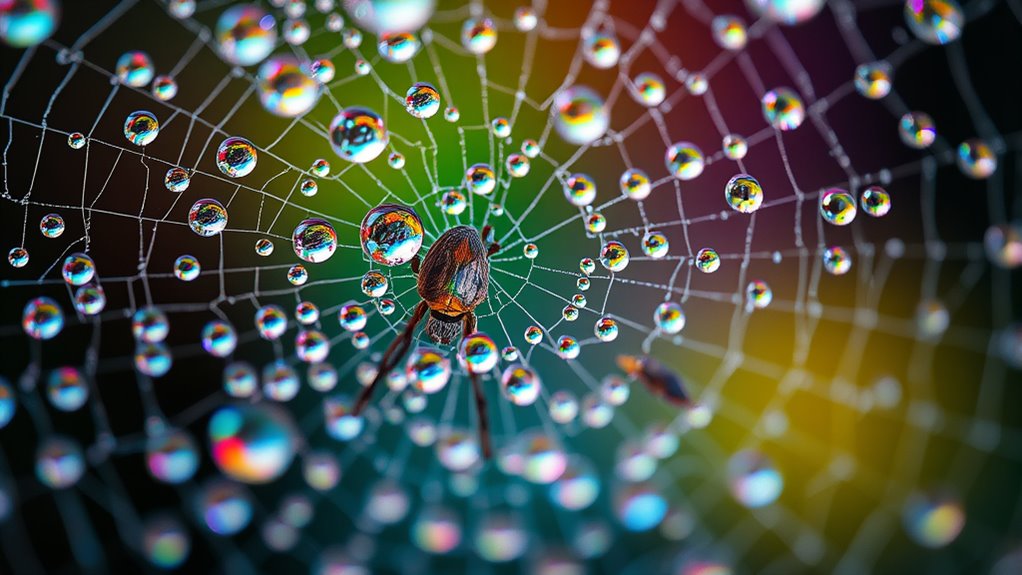
Have you ever wondered how tiny details come to life in stunning clarity? Macro photography unlocks that secret, allowing you to capture the intricate beauty hidden within everyday objects. Achieving this level of detail requires more than just a good camera; it demands an understanding of lighting techniques and the right camera equipment. When you get these elements right, you’ll see the world from a completely new perspective, revealing textures, colors, and patterns that often go unnoticed.
Lighting techniques are crucial in macro photography because they determine how your subject appears and how much detail stands out. Natural light can work beautifully, especially diffused sunlight, which minimizes harsh shadows and highlights textures softly. However, often you’ll need to supplement or control lighting with artificial sources. Using ring lights or macro-specific LED panels helps you evenly illuminate tiny subjects, reducing shadows that can obscure detail. Positioning your light source at different angles can enhance surface textures or add depth, making the tiny world feel vivid and three-dimensional. Experimentation is key—changing the intensity, direction, and color of your lights can dramatically alter the mood and clarity of your shot.
Effective lighting in macro photography highlights textures and adds depth through natural or artificial sources like ring lights and LED panels.
Equally important is having the right camera equipment. A dedicated macro lens is essential; these lenses allow you to focus extremely close to your subject, capturing minute details with sharp precision. Many macro lenses also feature a flat field of focus, ensuring the entire subject remains in sharp detail. Besides a good lens, a sturdy tripod is invaluable. Macro shots often require slow shutter speeds, and even the smallest movement can blur your image. A tripod stabilizes your camera, giving you the chance to fine-tune your focus and exposure. Additionally, consider extension tubes or bellows if you’re using a standard camera body—they can increase magnification without the need for a specialized macro lens.
Another piece of equipment that makes a difference is a focusing rail. It allows precise adjustments to your camera’s position, ensuring perfect focus on tiny details. Employing a remote shutter release or utilizing your camera’s timer minimizes vibrations caused by pressing the shutter button. This careful setup guarantees your images are crisp and clear, highlighting even the smallest features. Moreover, understanding paint spray techniques can help you achieve smooth, consistent backgrounds and textures that enhance the overall composition of your macro shots.
In macro photography, your choice of lighting techniques and camera equipment directly influences the quality of your images. With the right tools and techniques, you can reveal a microscopic universe filled with fascinating textures, vibrant colors, and intricate patterns. It’s about patience, experimentation, and attention to detail—once you master these elements, you’ll be amazed at how much beauty you can unveil in the tiniest of subjects.

2-in-1 Laptop Tablet 2026 with Magnetic Keyboard & 1-Year Office 365, 12" 2K FHD IPS Touchscreen, 12GB RAM 512GB SSD, 6500Y Processor, USB-C, Dual Speakers, Windows 11 Laptop for Home Office Students
START WORKING IMMEDIATELY with a full 1-Year Office 365 Subscription - pre-installed on this versatile 2-in-1 device. Seamlessly...
As an affiliate, we earn on qualifying purchases.
Frequently Asked Questions
What Equipment Is Essential for Macro Photography?
To get started with macro photography, you need a good macro lens selection that allows you to capture fine details up close. Additionally, tripod stability is essential to prevent camera shake and guarantee sharp images. You should also consider a ring light or external flash for proper lighting, and a focusing rail can help with precise adjustments. Combining these elements will help you explore tiny worlds with clarity and precision.
How Do I Prevent Camera Shake at High Magnifications?
Did you know that at high magnifications, camera shake can be as much as 8 times more noticeable? To prevent it, guarantee your tripod stability is solid and use a fast shutter speed—at least 1/250 second or higher. Also, consider using a remote shutter release or timer to avoid vibrations from pressing the shutter button. These steps help you capture crisp, detailed macro images every time.
What Lighting Techniques Work Best for Tiny Subjects?
You should use diffused lighting to soften shadows and evenly illuminate your tiny subjects, making details stand out without harsh glare. Side illumination works well to add depth and texture, highlighting intricate features. Position your light source at an angle to avoid reflections and guarantee even coverage. Using a softbox or diffuser helps spread light gently, giving your macro shots a natural, detailed look.
How Can I Improve Depth of Field in Macro Shots?
You can improve depth of field in macro shots by controlling your aperture; use a smaller f-number to blur the background and keep more of your subject in focus. Adjusting your aperture creates a pleasing background blur, making your tiny subjects stand out sharply. Experiment with different settings to find the perfect balance, ensuring your entire subject is crisp while the background remains beautifully blurred, emphasizing your miniature world.
Are There Ethical Considerations When Shooting Live Insects?
Sure, capturing tiny insects might seem like art, but remember, their welfare comes first. Ethically, you should avoid habitat disturbance and handle insects gently to prevent stress or injury. It’s all about respecting their world, not turning your camera into a tool of invasion. By being mindful, you guarantee your photography remains a celebration of nature’s marvels, not a cause for habitat disruption or insect suffering.

Apple iPad, 10.2-Inch, Wi-Fi, 32GB, Space Gray (Renewed)
Smart Connector. 3.5 mm headphone jack. Stereo speakers. On/Off - Sleep/Wake. Home/Touch ID sensor. Dual microphones. Volume up/down....
As an affiliate, we earn on qualifying purchases.
Conclusion
As you explore macro photography, you unveil a secret universe teeming with wonder, where tiny worlds burst into vivid life. Every leaf, insect, or dewdrop becomes a masterpiece painted with intricate detail, inviting you to see the extraordinary in the ordinary. With each shot, you’re not just capturing images—you’re unfolding a miniature universe that sparks curiosity and ignites your passion for discovery. Embrace this art, and watch your perspective blossom like a delicate flower in full bloom.

Samsung Galaxy Tab A11+ 6GB RAM, 128GB Storage, Optimized Performance, Long Lasting Battery, Expandable Storage, Large Display, Dolby Atmos Speakers, AI Assist, Slim, Light, 2 Year Warranty, Gray
POWER FOR ALL YOU DO: Galaxy Tab A11+ gives your family the optimal performance they need for all...
As an affiliate, we earn on qualifying purchases.

Fusion5 2026 Version 12" 2K Display Windows 11 Tablet PC with Stylus Pen - Built in USA - 12GB DDR5 RAM 512GB SSD, 13th Gen CPU, 12 inch Windows Tablet Computer, Built-in Fan, Fast Charging, Metallic
Proudly Assembled in Florida, USA: Each Fusion5 Helios 12 windows tablet is meticulously assembled in Pasco County, Florida,...
As an affiliate, we earn on qualifying purchases.