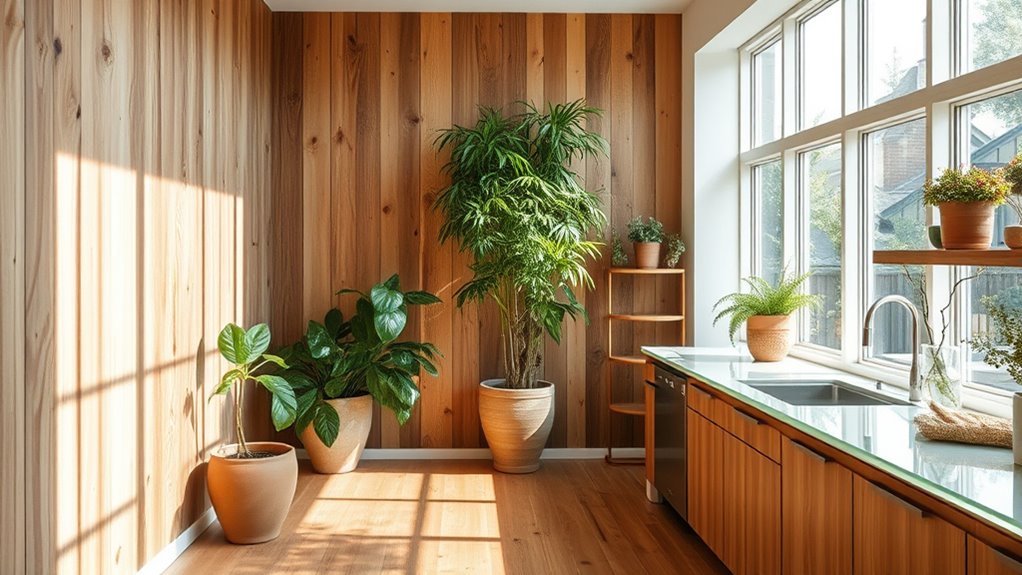

When choosing sustainable materials for your renovations, focus on options like bamboo flooring, recycled metal fixtures, and low-VOC paints to reduce harmful chemicals and waste. These materials support eco-friendly practices, improve indoor air quality, and often earn certifications like LEED. By selecting eco-conscious products, you’ll create a healthier, more durable home that benefits the environment. Keep exploring to discover how these choices can further enhance your project’s sustainability and long-term value.

Turn quiet afternoons into listening time
- Thousands of audiobooks, podcasts and originals
- Listen on your phone, tablet or Echo — also offline
- Cancel anytime
Key Takeaways
- Select materials with eco-certifications like LEED or Green Seal to ensure sustainability.
- Opt for recycled, renewable, or low-VOC materials to reduce environmental impact.
- Prioritize locally sourced materials to minimize transportation emissions and support local economies.
- Use durable, long-lasting products to decrease the need for frequent replacements and waste.
- Incorporate sustainable options such as bamboo flooring and recycled metal fixtures for eco-friendly upgrades.
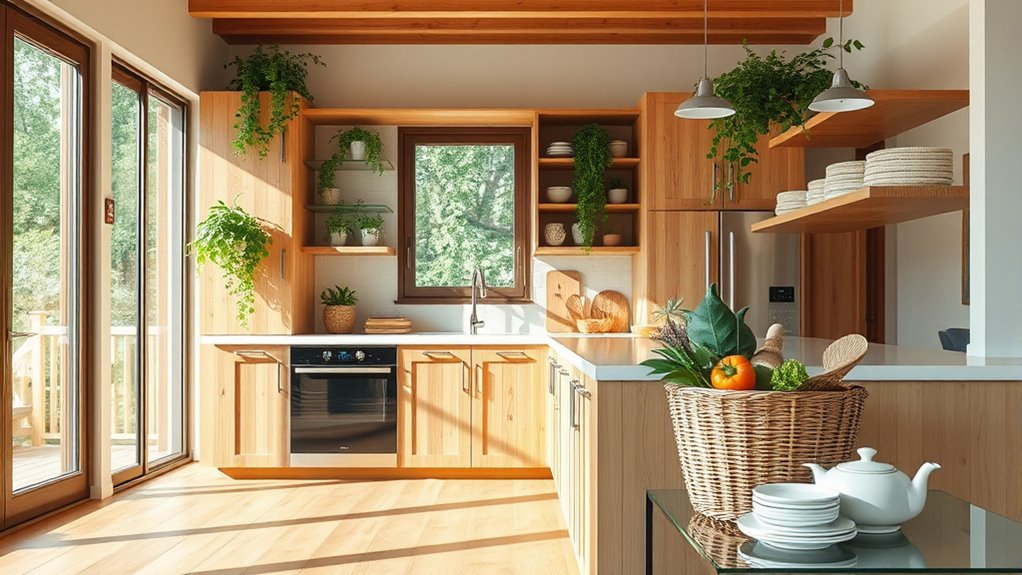
Are you looking for ways to update your home while reducing your environmental impact? Making eco-friendly renovations is a smart move, and choosing sustainable materials plays a significant role in this process. One of the most effective upgrades you can consider is installing solar panels. Not only do they generate clean energy, but they also lower your reliance on fossil fuels, reducing your carbon footprint. With advancements in technology, solar panels are more efficient and affordable than ever, making them a practical addition to any sustainable home. When you install solar panels, you’re harnessing the sun’s power, which is a renewable resource, and helping to decrease greenhouse gas emissions. Plus, many regions offer incentives or tax credits that make this investment even more attractive.
Installing solar panels reduces your carbon footprint and harnesses renewable energy for a greener home.
Another impactful upgrade is green roofing, which involves replacing traditional roofing materials with living plant systems. Green roofs provide excellent insulation, reducing your home’s heating and cooling needs and cutting energy consumption. They also manage stormwater runoff, filtering rainwater naturally and preventing urban flooding. By choosing green roofing, you’re not just improving your home’s energy efficiency—you’re also creating a habitat for wildlife and promoting biodiversity in your neighborhood. Green roofs can extend the lifespan of your roofing system by protecting it from the elements, saving you money on maintenance and replacements over time. *furthermore*, the aesthetic appeal of a lush, green roof can boost your property’s value and make your home stand out in your community. Incorporating sound design techniques such as ambient sounds can enhance the relaxing atmosphere of a green roof space, making it more enjoyable and immersive.
Incorporating sustainable materials like bamboo flooring, recycled metal fixtures, and low-VOC paints further enhances your eco-friendly renovation. These choices reduce the use of harmful chemicals and limit waste, making your home safer for your family and better for the environment. When you select eco-conscious products, you’re supporting manufacturers committed to sustainable practices and minimizing environmental degradation. It’s essential to research and opt for certifications like LEED or Green Seal, which verify the eco-friendly credentials of building materials.
Ultimately, your efforts to select sustainable materials and upgrade with eco-friendly features like solar panels and green roofing contribute to a healthier planet. These choices not only benefit the environment but also improve your home’s efficiency and comfort. By making mindful decisions during your renovation, you’re investing in a more sustainable lifestyle that future-proofs your property and aligns with your values of caring for the Earth.
As an affiliate, we earn on qualifying purchases.
Frequently Asked Questions
How Do Sustainable Materials Compare in Cost to Traditional Options?
Sustainable materials often cost more upfront than traditional options, mainly due to higher installation costs and specialized sourcing. However, you save in the long run through their longer material lifespan, reducing the need for frequent replacements. While initial expenses might seem higher, the durability and eco-friendly benefits can make sustainable choices more cost-effective over time, helping you save money and reduce your environmental impact.
Are Eco-Friendly Materials as Durable as Conventional Ones?
Eco-friendly materials can be just as durable as conventional options, especially when considering their recycling processes and material lifecycle. You might find that recycled materials, like reclaimed wood or recycled metal, often undergo rigorous testing to guarantee longevity. Their lifecycle can extend through multiple uses, making them a sustainable choice. While initial costs may vary, their durability ensures you won’t need frequent replacements, offering long-term value and environmental benefits.
What Certifications Should I Look for in Sustainable Building Materials?
You should look for materials with LEED certification and those that support green building standards. LEED-certified products meet strict environmental and health criteria, ensuring sustainability and quality. Green building materials often carry certifications like FSC for wood or GreenGuard for indoor air quality. These certifications help you choose reliable, eco-friendly options that contribute to a healthier environment and a more sustainable home.
How Can I Verify the Eco-Friendliness of a Product or Supplier?
Ever wonder how to verify if a product is truly eco-friendly? You should look for clear product transparency and check the supplier’s reputation for sustainability practices. Ask for certifications or third-party eco-labels, review their environmental policies, and research their track record. Do they prioritize eco-friendly sourcing and minimize waste? By staying informed and demanding transparency, you guarantee you’re choosing genuinely sustainable materials that align with your eco-conscious goals.
Are There Government Incentives for Using Sustainable Renovation Materials?
Yes, there are government incentives like grants and tax credits available for using sustainable renovation materials. You can take advantage of these by researching programs at local, state, or federal levels. These incentives aim to encourage eco-friendly choices, making your renovation more affordable. To maximize benefits, check eligibility requirements and application deadlines, and consider consulting with a professional to guarantee you qualify and properly claim these incentives.
recycled metal fixtures for home
As an affiliate, we earn on qualifying purchases.
As an affiliate, we earn on qualifying purchases.
Conclusion
By choosing sustainable materials, you not only reduce your environmental impact but also create a healthier home. It’s a balance between style and substance, where eco-friendly options meet modern living. While traditional renovations may seem easier, they often come at a greater ecological cost. Embrace the challenge of green choices, and you’ll find that doing good for the planet can also mean enjoying a more beautiful, durable space—proof that sustainability and sophistication can go hand in hand.
As an affiliate, we earn on qualifying purchases.
solar panels for residential use
As an affiliate, we earn on qualifying purchases.
As an affiliate, we earn on qualifying purchases.
Evergreen bestsellers Picks
bestsellers
As an affiliate, we earn on qualifying purchases.