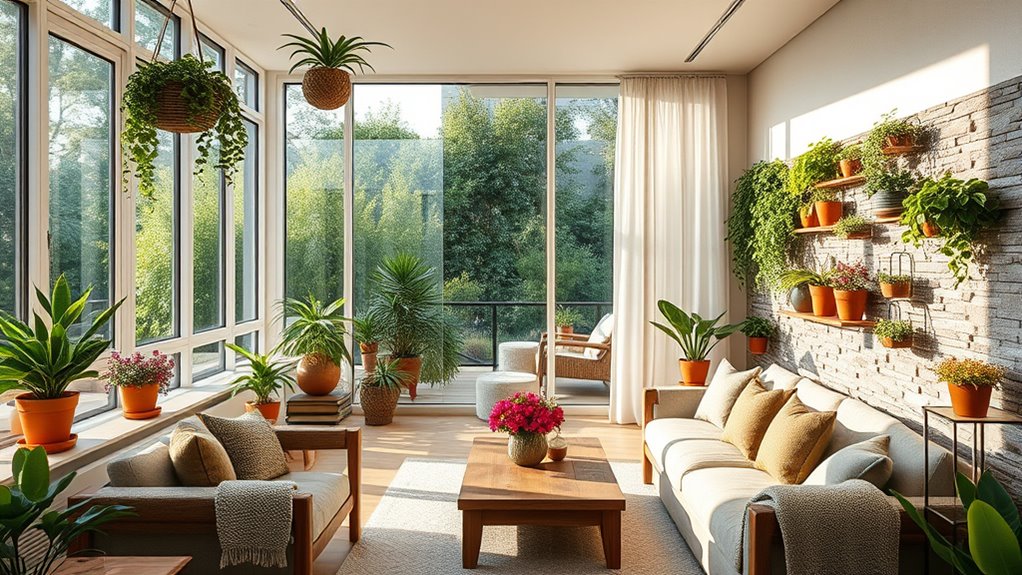

Biophilic design involves adding natural elements like indoor plants and maximizing natural light to your home. These features help purify the air, boost your mood, and reduce stress. Placing plants near windows and using large glass features enhances light and creates a tranquil environment. Incorporating these natural touches makes your space healthier, more inviting, and connected to nature. Explore how combining these elements can transform your home into a calming, revitalizing sanctuary.

Turn quiet afternoons into listening time
- Thousands of audiobooks, podcasts and originals
- Listen on your phone, tablet or Echo — also offline
- Cancel anytime
Key Takeaways
- Incorporate indoor plants near natural light sources to improve air quality and create a calming environment.
- Maximize natural light with large windows, skylights, and reflective surfaces to boost mood and energy.
- Use natural materials and textures, like wood and stone, to mimic outdoor elements indoors.
- Create open, airy spaces with glass walls or partitions that enhance light flow and connect interior to nature.
- Group plants and natural elements to form mini indoor gardens that foster a sense of tranquility and well-being.
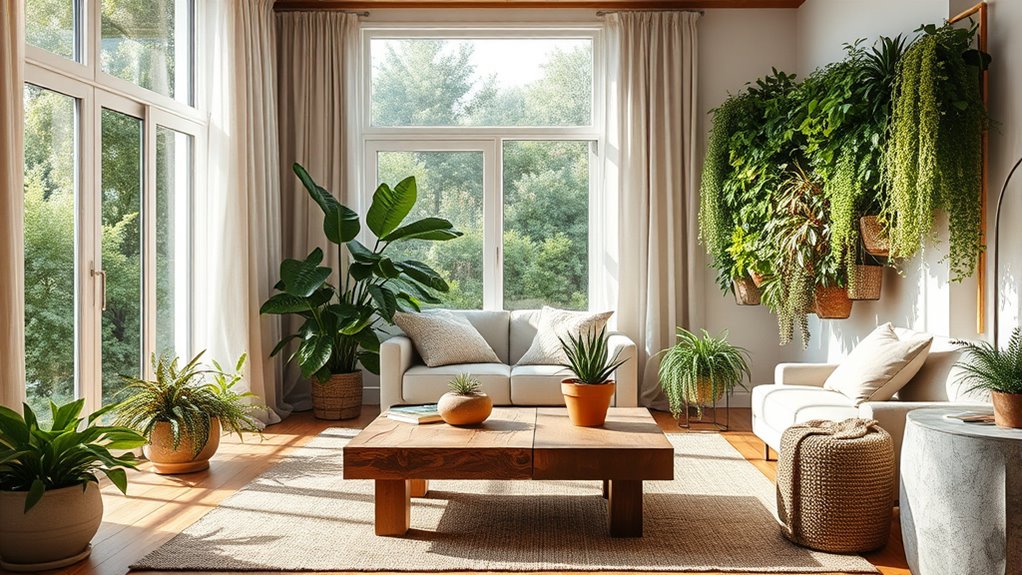
Have you ever wondered how incorporating nature into built environments can boost your well-being? When you bring elements like indoor plants and natural lighting into your home, you’re not just decorating—you’re creating a space that supports your mental and physical health. Indoor plants do more than add a splash of greenery; they purify the air, reduce stress, and improve your mood. Placing a few lush ferns or vibrant succulents on shelves or tables transforms your environment into a calming oasis. These plants connect you to nature, even when you’re indoors, fostering a sense of tranquility and vitality. Additionally, understanding emotional support can help you better appreciate how these natural elements contribute to your overall mental health.
Natural lighting plays an essential role in biophilic design because it influences your circadian rhythms, mood, and overall energy levels. Large windows, skylights, or glass doors allow sunlight to flood your space, making it feel more open and alive. The warmth and brightness of natural light can lift your spirits and enhance your focus, making your home a more inviting place to work, relax, or socialize. When you combine abundant natural lighting with indoor plants, you create a harmonious environment that mimics the outdoors, encouraging a sense of connection with nature.
You might notice that spaces filled with natural light and greenery feel more vibrant and welcoming. It’s not just a coincidence; these elements have a direct impact on your well-being. For example, sunlight boosts vitamin D production, which supports your immune system and mood. Meanwhile, indoor plants can help filter out toxins and increase humidity, making your living space healthier. Incorporating features like large windows, glass walls, or even reflective surfaces can maximize natural light penetration, making your home brighter and more energizing.
To optimize these benefits, think about strategic placement of indoor plants near windows or in well-lit corners. Choose plants that thrive in your environment, and group them together to create mini indoor gardens. Use sheer curtains or light-colored window treatments that allow sunlight to filter through gently, diffusing the light without harsh glare. Small changes like these can make a big difference in how vibrant and alive your home feels. By intentionally integrating indoor plants and natural lighting into your space, you’re not only designing for aesthetics but also cultivating an environment that nurtures your well-being every day.
indoor plant varieties for natural air purification
As an affiliate, we earn on qualifying purchases.
As an affiliate, we earn on qualifying purchases.
Frequently Asked Questions
How Does Biophilic Design Improve Mental Health?
Biophilic design improves your mental health by reducing stress and boosting cognitive function. When you incorporate natural elements like plants, sunlight, and natural textures, you create a calming environment that eases anxiety. These features help you feel more relaxed and focused, enhancing your overall well-being. As a result, you experience less stress and better cognitive enhancement, making your home a healthier, more balanced space to live and work.
What Are Budget-Friendly Ways to Incorporate Nature Into Home Decor?
You can incorporate nature into your home decor with budget-friendly DIY decor projects and natural textures. Create your own wall art using pressed leaves or flowers, or craft simple planters from recycled materials. Use natural textures like jute rugs, woven baskets, or linen curtains to bring a tactile connection to nature. These inexpensive, creative ideas make your space feel more calming and inviting without breaking the bank.
Can Biophilic Design Increase Property Value?
You might be surprised, but biophilic design can boost your property’s market appeal and real estate appreciation. When you bring natural elements into your home, it creates a more inviting and healthier space that buyers love. This subtle upgrade can differentiate your property in a competitive market, making it more attractive and potentially increasing its value over time. So, embracing nature inside could pay off in the long run.
Which Plants Are Best for Indoor Air Purification?
You should choose air purifying plants like snake plants, pothos, and peace lilies because they effectively remove toxins from indoor air. For low light greenery, consider ZZ plants or cast iron plants, which thrive in dim environments. These plants not only improve air quality but also add a calming, natural touch to your space. Make sure to care for them regularly to keep your indoor environment fresh and vibrant.
How to Maintain Indoor Plants Effectively?
Think of your indoor plants as lively dancers in your home’s symphony. To keep them thriving, stick to consistent watering schedules, avoiding over- or under-watering. Check regularly for pests, and use natural pest control methods when needed. Prune dead leaves and ensure they get enough light, making them feel loved and healthy. With these simple steps, your green companions will flourish and brighten your space every day.
large glass windows for natural light
As an affiliate, we earn on qualifying purchases.
As an affiliate, we earn on qualifying purchases.
Conclusion
Remember, a house that’s full of nature feels like home. By incorporating biophilic design, you create a space that nurtures your well-being and reconnects you with the outdoors. Don’t wait to bring the calming influence of nature inside—after all, “Home is where the heart is.” So, take small steps today to transform your living space into a sanctuary that revives your spirit and sharpens your mind.
As an affiliate, we earn on qualifying purchases.
As an affiliate, we earn on qualifying purchases.
Fall Picks
fall essentials
As an affiliate, we earn on qualifying purchases.