The best overall senior fall prevention alarm system in this lineup is the Lunderg Wireless Early Alert Bed and Chair Alarm Set, which covers two common exit points and alerts a caregiver before a resident is fully out of bed or a chair. For a simpler single-location setup, the Smart Caregiver Early Alert Bed Exit Alarm with Wireless Pager stands out for pairing bed monitoring with a remote alert, while the Patient Aid Advanced Bed and Floor Alarm suits caregivers who want bed and floor monitoring in one system. The main tradeoff is between a sensor placed on a bed or chair, which can detect someone leaving that spot, and a floor or motion sensor, which may better suit a room layout but can require more careful placement. Wireless pagers add freedom of movement for caregivers, while simpler alarms may be easier to set up but offer less coverage. Read on for the full breakdown, buying guidance, and picks for different care situations.

Turn quiet afternoons into listening time
- Thousands of audiobooks, podcasts and originals
- Listen on your phone, tablet or Echo — also offline
- Cancel anytime
Complete the kit


Key Takeaways
- The Lunderg Early Alert Bed and Chair Alarm Set ranks first for coverage: its bed-and-chair scope and early-alert approach address more than one common exit point, though it may be more system than a single-location caregiver needs.
- Smart Caregiver’s lineup divides by sensor placement: weight-sensing bed and chair pads monitor a specific surface, while its floor mat alarm detects movement onto a defined area; match the sensor to where the risk occurs.
- Wireless pagers are a caregiver mobility feature, not a fall-prevention guarantee: they can carry alerts beyond the room, but the caregiver still needs to hear or notice the signal and respond in time.
- Bed-and-floor combinations trade simplicity for broader coverage: Patient Aid’s bed and floor alarm can suit rooms with multiple exit routes, while a single bed or chair alarm is less involved when only one transfer needs monitoring.
- Early-alert designs address a different need than basic exit alarms: the Lunderg and Smart Caregiver early-alert options are aimed at warning caregivers during an attempted exit, while other systems focus on detecting pressure release or movement at a sensor.
| Smart Caregiver Bed Alarm for Elderly Adults, Alerts You When They Get Up |  | Best for a Simple In-Room Bed Alert | Power source: Battery powered | Battery: One 9V alkaline battery required | Voltage: 9 volts DC | VIEW LATEST PRICE | See Our Full Breakdown |
| Lunderg Wireless Chair Alarm System for Elderly & Fall Prevention |  | Best for Seated Fall Prevention | Wireless range: Up to 400 feet | Power: Batteries included | Compatible seating: Chairs, wheelchairs, lift chairs, and recliners | VIEW LATEST PRICE | See Our Full Breakdown |
| Smart Caregiver Wireless Bed Alarm System with Cordless Weight-Sensing Pad and Remote Monitor |  | Best for Multi-Device Caregiver Monitoring | Pad size: 10 x 30 inches | Wireless range: Up to 300 feet | Device capacity: Up to six compatible devices | VIEW LATEST PRICE | See Our Full Breakdown |
| Smart Caregiver Wireless Bed Pad Alarm System with Weight Sensor |  | Best for a Quiet, Expandable Bed Setup | Pad dimensions: 10 x 30 inches | Wireless range: Up to 300 feet | Power source: Three C batteries, included | VIEW LATEST PRICE | See Our Full Breakdown |
| Smart Caregiver Wireless Floor Mat Alarm and Pager System, 24 x 48 Inches | 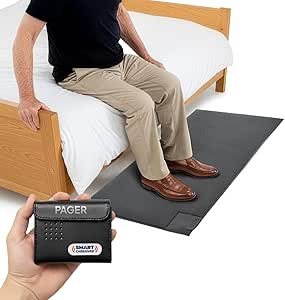 | Best for Bedside or Exit-Zone Alerts | Mat dimensions: 24 x 48 inches | Mat thickness: 0.5 inches | Wireless range: Up to 300 feet | VIEW LATEST PRICE | See Our Full Breakdown |
| Nesthao Wireless Bed Sensor Alarm and Fall Prevention System for Elderly |  | Best for Long-Range Room Monitoring | Sensor technology: Passive infrared | Included components: One caregiver pager and two sensors | Maximum range: 918 feet in open areas | VIEW LATEST PRICE | See Our Full Breakdown |
| Patient Aid Advanced Bed and Floor Alarm for Elderly Dementia Fall and Wander Prevention |  | Best for Simple, Flexible Bedside Setup | Sensor pad size: 10 x 30 inches | Volume levels: 82 dB and 95 dB | Alarm types: Ring chime or music | VIEW LATEST PRICE | See Our Full Breakdown |
| Smart Caregiver Early Alert Bed Exit Alarm with Wireless Pager |  | Best for Pre-Exit Bed Warnings | Model: Early Alert Bed Alarm with Pager | Model number: WPBEA-SYS | Pad dimensions: 36 x 10 x 0.5 inches | VIEW LATEST PRICE | See Our Full Breakdown |
| Smart Caregiver Fall Prevention Monitor with Weight-Sensing Chair Pad |  | Best for a Basic Chairside Alert | Pad size: 10 x 15 inches | Pad material: Soft vinyl | Pad care: Wipe-clean and incontinence resistant | VIEW LATEST PRICE | See Our Full Breakdown |
| Smart Caregiver Chair Exit Alarm System with Wireless Pager | 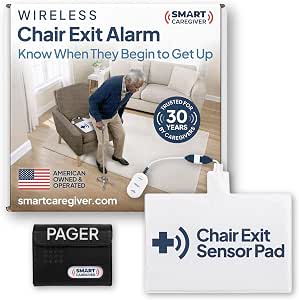 | Best Wireless Pick for Chair Monitoring | Sensor size: 10 x 15 inches | Wireless range: 300 feet | Power source: Two AA batteries, included | VIEW LATEST PRICE | See Our Full Breakdown |
| Smart Caregiver Bed Exit Alarm with Wireless Pager |  | Best for Bedside Wireless Monitoring | Bed pad dimensions: 10 × 30 × 0.5 inches | Sensor technology: Pressure sensor | Pager alerts: Sound and vibration | VIEW LATEST PRICE | See Our Full Breakdown |
| Nesthao Wireless Bed and Motion Sensor Alarm for Caregivers |  | Best for Room-Exit Awareness | Model: KS-SF20R | Sensor technology: Contact sensor | Maximum stated range: 182 meters (918 feet in open areas, as stated) | VIEW LATEST PRICE | See Our Full Breakdown |
| Lunderg Wireless Early Alert Bed and Chair Alarm Set |  | Best for Bed-and-Chair Coverage | Sensor technology: Contact sensor | Bed pad dimensions: 10 × 33 inches | Maximum stated range: 400 feet | VIEW LATEST PRICE | See Our Full Breakdown |
| Smart Caregiver Bed and Chair Exit Alarm System with Sensor Pads |  | Best for Simple, Local Bed-and-Chair Alerts | Bed sensor pad dimensions: 10 × 30 inches | Chair sensor pad dimensions: 10 × 15 inches | Sensor technology: Contact sensor | VIEW LATEST PRICE | See Our Full Breakdown |
| senior fall prevention alarm system | Warranty |
|---|---|
| Smart Caregiver Bed Alarm for | 1 year |
| Lunderg Wireless Chair Alarm S | — |
| Smart Caregiver Wireless Bed A | — |
| Smart Caregiver Wireless Bed P | 1 year |
| Smart Caregiver Wireless Floor | 1 year |
| Nesthao Wireless Bed Sensor Al | — |
| Patient Aid Advanced Bed and F | One-year replacement warranty |
| Smart Caregiver Early Alert Be | — |
| Smart Caregiver Fall Preventio | One year |
| Smart Caregiver Chair Exit Ala | One-year manufacturer warranty |
| Smart Caregiver Bed Exit Alarm | 1 year |
| Nesthao Wireless Bed and Motio | — |
| Lunderg Wireless Early Alert B | — |
| Smart Caregiver Bed and Chair | 1 year |
More Details on Our Top Picks
Smart Caregiver Bed Alarm for Elderly Adults, Alerts You When They Get Up
This is the most direct choice for caregivers who need an alert in the room when someone gets out of bed. Its pressure-sensing vinyl pad sits under a fitted sheet, so setup does not require a wireless monitor or a separate pager. The washable, incontinence-resistant pad and low-battery indicator suit regular daily use. Compared with the Smart Caregiver Wireless Bed Alarm System with Cordless Weight-Sensing Pad, this model keeps the setup simpler but does not include a remote monitor; remote notifications require a separately purchased wireless add-on. Its 80 dB alarm can be useful when a caregiver is nearby, yet may startle the person in bed. Choose it for straightforward room-level alerts, not quiet notification across the house.
Pros:- Pressure pad alerts when the user gets out of bed.
- Washable, incontinence-resistant pad is suited to routine use.
- Low-battery indicator and reset button simplify daily operation.
- Optional wireless add-on allows remote alerts if purchased separately.
Cons:- Remote alerts require a separately purchased wireless add-on.
- The 80 dB audible alarm may startle the user.
- Optional AC adapter is not included.
Best for: Caregivers who sleep or work near the bedroom and want a simple bed-exit alert without a separate pager.
Not ideal for: Caregivers who need quiet alerts from another room; remote notification requires an optional add-on, and the built-in alarm is loud.
- Power source:Battery powered
- Battery:One 9V alkaline battery required
- Voltage:9 volts DC
- Audible level:80 dB
- Sensor type:Contact sensor
- Pad dimensions:30 x 10 x 0.5 inches
- Model:BB45-SYS
- Warranty:1 year
Our verdict“Choose this model for a simple, nearby bed-exit alert, but pick the cordless monitor system if caregivers need remote notification included.”
Lunderg Wireless Chair Alarm System for Elderly & Fall Prevention
For a senior who is at risk when standing from a recliner or wheelchair, this system targets the moment a bed alarm cannot: getting up from a seat. The sensor works with different chairs and sends a wireless alert to a pocket-size pager, with vibration-only and adjustable-volume modes for quieter homes. Unlike the Smart Caregiver floor mat, it does not depend on the person stepping onto a specific spot, and unlike a bed alarm, it addresses chair exits directly. Setup needs no Wi-Fi, app, or tools. The central tradeoff is caregiver attention: the pager has to stay with the person expected to respond, and battery life varies with use. This is a strong fit for one caregiver monitoring a seated senior, less so when no one can keep the pager close.
Pros:- Works with chairs, wheelchairs, lift chairs, and recliners.
- Wireless pager alerts the caregiver rather than sounding an alarm beside the senior.
- Adjustable volume and vibration-only mode suit different environments.
- Setup requires no Wi-Fi, app, or tools.
Cons:- Caregiver must carry or keep the pager within reach.
- Battery life depends on use and batteries need periodic replacement.
Best for: Caregivers assisting a senior who frequently rises from a wheelchair, lift chair, or recliner and need a portable, quiet alert.
Not ideal for: Households where the responding caregiver cannot keep a pager nearby, or where the main concern is bed exits rather than chair exits.
- Wireless range:Up to 400 feet
- Power:Batteries included
- Compatible seating:Chairs, wheelchairs, lift chairs, and recliners
- Pager alerts:Adjustable high or low volume, or vibration only
- Pager format:Pocket-size pager
- Pager attachment:Clip and wall mount
Our verdict“Pick this for portable alerts when a senior rises from a chair; choose a bed alarm or floor mat when the risk occurs elsewhere.”
Smart Caregiver Wireless Bed Alarm System with Cordless Weight-Sensing Pad and Remote Monitor
This bundle suits caregivers who need a bed-exit alert they can hear away from the room, with a monitor that can also connect to other compatible devices. The cordless weight-sensing pad signals when weight is removed, while the remote monitor reaches up to 300 feet and offers adjustable volume and gentle chimes. Capacity for up to six compatible devices gives it more room to grow than a single-purpose room alarm such as the Smart Caregiver Bed Alarm for Elderly Adults. That flexibility is limited to compatible Smart Caregiver products, however, so it is not an open system. The pad also needs careful positioning under the user’s back or buttock area for detection. Cleaning wipes and a pill box add useful extras, but the core buying decision is whether remote monitoring and device expansion matter.
Pros:- Remote monitor works up to 300 feet away.
- Adjustable volume and gentle chime options can reduce startling alerts.
- Monitor supports up to six compatible Smart Caregiver devices.
- Bundle includes individual cleaning wipes and a 7-day pill box.
Cons:- Monitoring expansion is limited to compatible Smart Caregiver products.
- Pad must sit beneath the user’s back or buttock area to detect weight removal.
Best for: Caregivers who need a remote bed alert and expect to monitor several compatible Smart Caregiver sensors from one monitor.
Not ideal for: Buyers seeking a brand-neutral system or a pad that does not need precise placement under the user.
- Pad size:10 x 30 inches
- Wireless range:Up to 300 feet
- Device capacity:Up to six compatible devices
- Sensor:Cordless weight-sensing pad
- Model:BR1-Bundle
- Included accessories:Individual cleaning wipes and 7-day pill box
- Brand:Smart Caregiver Corporation
Our verdict“Choose this bundle when remote bed monitoring and a multi-device Smart Caregiver setup matter more than broad device compatibility.”
Smart Caregiver Wireless Bed Pad Alarm System with Weight Sensor
This is a practical bed-exit system for caregivers who want to move around the home while receiving alerts without sounding an alarm in the senior’s room. Its 10 x 30-inch weight-sensing pad sends a signal to a monitor with a 300-foot range, and the monitor can handle up to six devices. Compared with the bundled BR1-Bundle, it offers similar range and device capacity without the listed pill box and cleaning wipes, making the distinction less about core monitoring than bundle extras. The latex-free vinyl pad has a foam interior, and the monitor can be wall-mounted or carried. Battery operation avoids a cord near the bed, but it also means keeping three C batteries available and replacing them as needed.
Pros:- Wireless monitor has a range of up to 300 feet.
- No alarm sounds in the patient’s room.
- Monitor can support up to six compatible devices.
- Latex-free vinyl pad and portable or wall-mounted monitor offer flexible placement.
Cons:- Monitor requires three C batteries.
- Expansion is limited to compatible devices and a maximum of six per monitor.
Best for: Caregivers who want a quiet bed-exit alert, room-to-room mobility, and the option to add compatible sensors.
Not ideal for: Buyers who prefer plug-in power or need a system that works with devices from multiple brands.
- Pad dimensions:10 x 30 inches
- Wireless range:Up to 300 feet
- Power source:Three C batteries, included
- Sensor type:Weight sensor
- Pad material:Latex-free vinyl with foam interior
- Monitor mounting:Wall mount or portable
- Device capacity:Up to six compatible devices
- Warranty:1 year
Our verdict“Choose this model for quiet, expandable bed monitoring; the BR1-Bundle is the alternative if its included cleaning wipes and pill box are useful.”
Smart Caregiver Wireless Floor Mat Alarm and Pager System, 24 x 48 Inches
This floor mat is designed to alert a caregiver when someone steps into a monitored area, making it a useful option beside a bed or near an exit. Its 24 x 48-inch contact mat covers a defined zone, while the pager can alert by sound or vibration from up to 300 feet away. That differs from the Lunderg chair system, which detects a seated person standing; this model responds once the person steps on the mat, so it may provide less advance notice than a bed pad that detects weight shifting or removal. The pager also works with listed Smart Caregiver accessories, though those devices are sold separately. At 0.5 inches thick, the mat’s placement needs thought so it does not create an obstacle in the very area meant to be safer.
Pros:- Large mat detects when someone steps on a monitored area.
- Pager offers audible or vibration alerts.
- Wireless range reaches up to 300 feet.
- Can be paired with listed call buttons, motion sensors, and wireless pads.
Cons:- Pager requires two AA batteries, which are not included.
- Compatible call buttons and additional sensors are sold separately.
- The mat only alerts after someone steps on it and needs careful placement to avoid creating an obstacle.
Best for: Caregivers who want a remote alert when a senior steps beside a bed or crosses a specific doorway or exit zone.
Not ideal for: Households needing an alert before the senior stands, or where a floor mat could obstruct mobility or wheelchair access.
- Mat dimensions:24 x 48 inches
- Mat thickness:0.5 inches
- Wireless range:Up to 300 feet
- Pager model:TL-2020P
- Floor mat model:PTFM-07C
- Pager batteries:Two AA batteries, not included
- Maximum audible level:70 dB
- Weight:2.81 kg
- Warranty:1 year
Our verdict“Choose this for monitoring a bedside or exit zone, but use a bed or chair sensor when an alert is needed before the senior takes a step.”
Nesthao Wireless Bed Sensor Alarm and Fall Prevention System for Elderly
When the caregiver may be far from the bedroom, the Nesthao’s stated 918-foot open-area range gives it a different role from the room-focused pad alarms in this lineup. Its two passive-infrared sensors can alert when feet touch the floor or someone exits a room, so it can monitor movement rather than relying only on a person leaving a bed or chair. The receiver offers sound, flashing light, and LED alerts, while battery or Micro USB power gives caregivers more placement options. Compared with the Smart Caregiver Early Alert Bed Exit Alarm, Nesthao can cover room-exit movement, but it does not offer that model’s weight-sensing pre-exit alert. The range and sensor direction need manual testing before installation, and setup includes a 20-second self-test. Its 113 dB alarm may also be too loud for some households.
Pros:- Two sensors can monitor foot-to-floor movement and room exits.
- Stated open-area transmission range reaches 918 feet.
- Receiver offers sound, flashing light, and LED alert modes.
- Can run on batteries or Micro USB, with batteries included.
Cons:- Sensor direction and effective range require hands-on testing at the intended location.
- Startup includes a 20-second self-test.
- The 113 dB alarm may be disruptive in a quiet home.
Best for: Caregivers who need to monitor bedroom or doorway movement from another part of a home and can test sensor placement before relying on it.
Not ideal for: People who need a quiet, wearable-style alert or a pad that detects a bed exit before the person stands; the loud alarm and motion-based sensing may not suit those needs.
- Sensor technology:Passive infrared
- Included components:One caregiver pager and two sensors
- Maximum range:918 feet in open areas
- Audible alarm:113 dB
- Power options:Battery or Micro USB
- Battery type:Three AAA batteries included
- Mounting type:Wall mount
Our verdict“Choose Nesthao when room-exit detection and long-distance alerts matter more than a pre-exit bed-pad warning.”
Patient Aid Advanced Bed and Floor Alarm for Elderly Dementia Fall and Wander Prevention
This Patient Aid system suits caregivers who want a physical bed sensor pad with several ways to secure it. Its 10-by-30-inch pad can be attached using a bed-rail U-bracket, wall bracket, or Velcro strips, making placement less dependent on one bed configuration. The choice of ring chime or music and two volume levels, up to 95 dB, lets caregivers tune the alert to the room; silent mode offers a quieter option. Unlike the Nesthao system, it does not monitor room exits with motion sensors, and unlike the Smart Caregiver Early Alert Bed Exit Alarm, its listed features do not describe a pre-exit warning when someone shifts toward the edge. Its water-resistant, latex-free vinyl is practical for routine cleaning, but the stated restriction against use with pacemakers or defibrillators is a major screening point.
Pros:- Multiple mounting methods accommodate different bed and room setups.
- Ring or music alerts and two volume levels provide alert choices.
- Silent mode can reduce nighttime disturbance.
- Tear- and water-resistant, latex-free pad is designed for easier cleaning.
Cons:- Cannot be used with patients who have pacemakers or defibrillators.
- No wireless pager or room-exit motion sensing is listed.
- The listed pad detects bed movement rather than providing a specified pre-exit alert.
Best for: Caregivers seeking a bed-pad alarm with adaptable mounting, selectable chimes, and a silent mode for nighttime routines.
Not ideal for: Households where the monitored person has a pacemaker or defibrillator, or where caregivers need wireless pager alerts or room-exit motion detection.
- Sensor pad size:10 x 30 inches
- Volume levels:82 dB and 95 dB
- Alarm types:Ring chime or music
- Silent mode:Available
- Mounting options:Bed-rail U-bracket, wall bracket with screws, or Velcro strips
- Pad material:Advanced vinyl; latex-free, tear- and water-resistant
- Warranty:One-year replacement warranty
Our verdict“Pick Patient Aid for a mountable, adjustable bed-pad alarm, provided its medical-device restriction does not apply.”
Smart Caregiver Early Alert Bed Exit Alarm with Wireless Pager
For fall prevention, timing can matter: this Smart Caregiver system is designed to alert when a person shifts toward the bed’s edge, before a full stand. That pre-exit weight-sensing pad gives it a distinct advantage over the Patient Aid alarm, whose listed function is a bed-pad alert without a specified early-warning trigger. Its wireless pager adds vibration or adjustable-volume sound, giving caregivers a way to receive alerts without relying on a loud bedside alarm. No programming is required, so setup is comparatively direct. The tradeoff is that the included system is centered on one bed pad and pager; additional chair, floor, or door sensors are sold separately. Unlike the Nesthao, it does not describe room-exit motion coverage or a long stated open-area range. The pager also needs ongoing power management.
Pros:- Weight-sensing pad is designed to alert at the bed edge before a full exit.
- Pager offers vibration and adjustable-volume sound.
- No programming is required for setup.
- Pager can support up to 10 sensors.
Cons:- Additional chair, floor, and door sensors are sold separately.
- Wireless pager requires charging or battery replacement.
- The product data does not specify a transmission range.
Best for: Caregivers who want an alert when a senior moves toward the edge of the bed and prefer receiving notifications on a pager.
Not ideal for: People who need a single system to monitor several rooms or exits without buying separate sensors, or who do not want to maintain a wireless pager.
- Model:Early Alert Bed Alarm with Pager
- Model number:WPBEA-SYS
- Pad dimensions:36 x 10 x 0.5 inches
- Sensor technology:Weight-sensing
- Pager alerts:Vibration and adjustable-volume sound
- Pager capacity:Up to 10 sensors
- Setup:No programming required
Our verdict“Choose this model when an early bed-edge warning and pager-based alerts are more useful than room-exit coverage.”
Smart Caregiver Fall Prevention Monitor with Weight-Sensing Chair Pad
This is the straightforward pick for a caregiver focused on one specific risk: a senior standing up from a chair without help. The 10-by-15-inch weight-sensing pad sits under the user, and the monitor can alert for a chair exit, a low battery, or a disconnected pad. Those fault alerts make it more informative than a simple alarm that only signals movement. Its soft vinyl surface is wipe-clean and incontinence resistant, which helps with routine care. Compared with the wireless Smart Caregiver Chair Exit Alarm System, this model uses a local monitor and does not list a 300-foot pager range or quiet vibration alerts. It is a more limited, chair-specific setup, and power is not fully included: the 9-volt battery is sold separately, as is the AC adapter.
Pros:- Signals chair exit, low battery, and a disconnected pad.
- Soft vinyl pad is easy to wipe clean and incontinence resistant.
- Adjustable monitor volume and reset button support routine operation.
- Monitor and pad carry a one-year warranty.
Cons:- The required 9-volt battery is not included.
- AC adapter is sold separately.
- No wireless pager or remote alert range is listed.
Best for: Caregivers monitoring one frequently used chair who want a wipe-clean pad and alerts for low battery or a disconnected sensor.
Not ideal for: Caregivers who need wireless alerts while away from the chair, a broader multi-device system, or power accessories included in the box.
- Pad size:10 x 15 inches
- Pad material:Soft vinyl
- Pad care:Wipe-clean and incontinence resistant
- Alerts:Chair exit, low battery, and disconnected pad
- Monitor controls:Reset button and adjustable volume
- Power:One 9-volt battery, not included, or AC-02 adapter, sold separately
- Warranty:One year
Our verdict“Choose this chair-specific monitor for local alerts and pad-status warnings, not for remote caregiver notification.”
Smart Caregiver Chair Exit Alarm System with Wireless Pager
When a caregiver needs to leave the room but still wants to know when someone rises from a chair, this system’s wireless pager and 300-foot stated range make it a stronger fit than the local-monitor Smart Caregiver Fall Prevention Monitor. Its pager also has a quiet vibration mode, useful when an audible alert could startle the senior or disturb others. The system is described as supporting multiple devices at once, offering room to add monitoring beyond one chair. Setup is helped by included AA batteries. The main compromise is the fixed 10-by-15-inch sensor pad, which may not fit every chair or seating arrangement; the product data also does not describe a pre-exit warning like the Smart Caregiver Early Alert Bed Exit Alarm. Battery replacement is part of ongoing upkeep.
Pros:- Wireless pager has a stated range of 300 feet.
- Quiet vibration mode can limit disturbance.
- Can monitor multiple devices simultaneously through the pager.
- Two AA batteries are included for setup.
Cons:- Sensor pad is limited to a 10-by-15-inch size.
- AA batteries need periodic replacement.
- No pre-exit alert feature is specified.
Best for: Caregivers who monitor a senior’s chair from another room and want pager alerts with a silent vibration option.
Not ideal for: Buyers needing a larger or differently shaped sensor pad, or an early warning before the person begins standing.
- Sensor size:10 x 15 inches
- Wireless range:300 feet
- Power source:Two AA batteries, included
- Audible noise:70 dB
- Pager mode:Quiet vibration mode available
- Multi-device monitoring:Supported
- Warranty:One-year manufacturer warranty
Our verdict“Choose this model for remote chair-exit alerts and pager vibration, if its fixed pad size suits the chair.”
Smart Caregiver Bed Exit Alarm with Wireless Pager
I’d choose this model when the main concern is a senior getting out of bed and a caregiver needs an alert without staying in the room. Its 10 × 30-inch pressure pad sends a wireless alert to a pager, which can use sound or vibration; vibration is useful when a loud alert could disturb the person being monitored. The stated 300-foot range offers room to move around, though walls and layout may affect coverage. Compared with the Lunderg Wireless Early Alert Bed and Chair Alarm Set, this is narrower in scope: it monitors the bed rather than providing separate bed and chair pads. It also supports up to six compatible sensors, but those sensors are additional needs, not included coverage. Pressure pads can trigger false alarms, so placement and routine checking matter.
Pros:- Wireless pager alerts when pressure is removed from the bed pad
- Sound and vibration modes let caregivers choose a less disruptive alert
- Supports up to six compatible sensors for possible expanded monitoring
- Two AA alkaline batteries are included
Cons:- The included pad monitors the bed only; other areas require additional compatible sensors
- Pressure-pad false alarms may occur
Best for: Caregivers who need a portable alert for bed exits and prefer sound or vibration notification.
Not ideal for: Households that need included chair coverage or want to avoid false alerts from a pressure-sensitive pad.
- Bed pad dimensions:10 × 30 × 0.5 inches
- Sensor technology:Pressure sensor
- Pager alerts:Sound and vibration
- Maximum stated range:300 feet
- Maximum supported sensors:6
- Power:Battery powered; 2 AA alkaline batteries included
- Maximum audible noise:70 dB
- Warranty:1 year
Our verdict“Choose this for straightforward wireless bed-exit alerts, but pick the Lunderg set if you need bed and chair pads in one package.”
Nesthao Wireless Bed and Motion Sensor Alarm for Caregivers
Rather than detecting weight on a pad, this Nesthao kit is aimed at caregivers who want to know when someone moves out of bed or passes a monitored doorway. The motion sensor’s flexible placement can cover a bed area or room exit, while the remote pager provides adjustable volume and LED alerts. That makes it a different fit from the Smart Caregiver Bed Exit Alarm with Wireless Pager, which responds to pressure leaving a bed pad and is more directly focused on bed exits. Nesthao lists a longer open-area range of up to 918 feet, but the description advises checking direction and range before relying on installation. The sensor also runs a 20-second self-test at startup, so it is not an instant set-and-forget alert. Battery or Micro USB power gives the pager useful flexibility.
Pros:- One motion sensor can be positioned for bed-area or room-exit monitoring
- Pager offers five volume levels and LED alerts
- Pager can use alkaline batteries or Micro USB power
- Remote alerts can notify caregivers without sounding an alarm beside the monitored person
Cons:- Sensor range and direction need testing in the actual room
- The sensor runs a 20-second self-test when switched on
Best for: Caregivers who need to monitor either a bed area or doorway and want pager alerts with adjustable volume and LEDs.
Not ideal for: Buyers who want a pressure pad that detects a person’s weight shifting or who need dependable coverage without testing sensor placement.
- Model:KS-SF20R
- Sensor technology:Contact sensor
- Maximum stated range:182 meters (918 feet in open areas, as stated)
- Sensor power:3 AAA batteries included
- Pager power:3 AA batteries included or Micro USB
- Pager alerts:Adjustable volume and LED alerts; five volume levels
- Included items:Pager, motion sensor, batteries, Micro USB cable, mounting supplies, and manual
- Item weight:10.24 ounces
Our verdict“Pick Nesthao for flexible room or doorway motion alerts; choose a pressure-pad system if bed-weight removal is the signal you need.”
Lunderg Wireless Early Alert Bed and Chair Alarm Set
This is the most complete choice here for caregivers who need alerts at both a bed and a chair without adding a second sensor purchase. Its two pressure-sensitive pads send alerts to a handheld pager, and sound or vibration settings let caregivers adapt notification to the household. Compared with the Smart Caregiver Bed Exit Alarm with Wireless Pager, Lunderg includes chair coverage as well as bed monitoring; compared with the Smart Caregiver Bed and Chair Exit Alarm System with Sensor Pads, it avoids a cord between pads and monitor. The tradeoff is that the caregiver must keep the pager nearby, and the pads have a stated 15-month lifespan, so replacement is part of ongoing use. It also requires no Wi-Fi, app, or tools, making setup less dependent on household technology.
Pros:- Includes separate bed and chair pads for coverage in both locations
- Wireless pager offers adjustable volume and vibration alerts
- No Wi-Fi, app, or tools are required
- Batteries and pager mounting accessories are included
Cons:- Caregiver needs to carry or keep the pager within range
- Both pads have a stated lifespan of 15 months and may need replacement
Best for: Caregivers who need wireless monitoring at both a bed and chair, with no Wi-Fi or app setup.
Not ideal for: Caregivers who cannot keep a pager nearby or prefer not to replace pressure pads periodically.
- Sensor technology:Contact sensor
- Bed pad dimensions:10 × 33 inches
- Maximum stated range:400 feet
- Pager alerts:Adjustable volume or vibration
- Pager noise level:48 dB
- Pad lifespan:15 months for bed pad and chair pad
- Power:Battery powered; 2 AA batteries included
- Included items:Bed pad, chair pad, handheld pager, batteries, clip, and wall mount bracket
Our verdict“Choose Lunderg when wireless bed-and-chair coverage matters more than avoiding periodic pad replacement or carrying a pager.”
Smart Caregiver Bed and Chair Exit Alarm System with Sensor Pads
For a caregiver who wants one monitor and both bed and chair pads, this Smart Caregiver set keeps the alert system simple: the monitor has adjustable volume, a reset button, and indicators for low battery and sensor status. Its sealed soft-vinyl pads are designed to protect against incontinence, a practical distinction from the wireless Lunderg set, whose main advantage is freeing the pads from a monitor cord. This model’s corded connection can limit where the monitor sits, and the monitor must be moved between bed and chair unless another monitor is purchased. That makes it less suited to simultaneous, separate-area monitoring than Lunderg, but it avoids relying on a wireless pager connection. I’d favor it where a fixed, direct setup and easy status checks matter more than caregiver mobility.
Pros:- Includes both bed and chair sensor pads
- Soft-vinyl pads are sealed for incontinence protection
- Monitor has adjustable volume, a reset button, and battery and sensor indicators
- Uses an included 9V alkaline battery
Cons:- Pads connect to the monitor by cord, limiting placement flexibility
- Monitor must be moved between bed and chair unless an additional monitor is purchased
Best for: Caregivers who want bed and chair pads with a direct monitor and need pads sealed for incontinence protection.
Not ideal for: Households that need wireless caregiver alerts, simultaneous monitoring from a single monitor, or flexible placement away from the pads.
- Bed sensor pad dimensions:10 × 30 inches
- Chair sensor pad dimensions:10 × 15 inches
- Sensor technology:Contact sensor
- Power:Battery powered; 1 included 9V alkaline battery
- Pad material:Soft vinyl with foam interior
- Monitor features:Adjustable volume, reset button, low-battery and sensor-status indicators
- Compatible systems:Nurse call systems and Smart Caregiver systems
- Warranty:1 year
Our verdict“Choose this for a direct, incontinence-protected bed-and-chair setup, but select Lunderg if wireless monitoring from both locations is the priority.”
How We Picked
I compared these 14 systems by how directly their sensor setup addresses a common fall-risk moment: getting out of bed, rising from a chair, or moving through a room. I gave greater weight to clear use cases, useful alert delivery, and the flexibility to monitor more than one relevant location than to a long feature list. A wireless pager can help a caregiver who is not always beside the resident; a floor mat or motion sensor can make more sense when surface-based pads are a poor fit. I also considered likely setup effort, how precisely a sensor must be positioned, and whether the system’s scope seems proportionate to its intended use.
The ranking favors systems with a clear advantage for a defined care need and a practical balance of coverage and usability. That puts the Lunderg early-alert bed-and-chair set first for broader coverage, while single-sensor Smart Caregiver options remain better matches for targeted monitoring. Bed-and-floor systems rank well for rooms with multiple exit points, but they are not automatically preferable: more sensor types can mean more setup and placement decisions. These devices alert caregivers; they do not physically stop a fall or replace supervision, clinical guidance, or an appropriate mobility plan.
Factors to Consider When Choosing Senior Fall Prevention Alarm Systems
Choosing among senior fall prevention alarm systems starts with the moment you need to monitor, not the number of accessories in the box. I would map the resident’s usual movements, the caregiver’s location, and the home’s layout before settling on a sensor type. These broader factors can help prevent a mismatch that a product comparison alone cannot resolve.
Match the Sensor to the Risk Moment
Start by identifying whether the concern is an unassisted bed exit, standing from a chair, or walking through a doorway or room. A weight-sensing pad is tied to a specific bed or seat, while a floor mat or motion sensor detects activity in a particular area. A common mistake is buying a bed alarm when the resident mainly rises from a recliner, or expecting a floor mat to detect an exit before the person reaches it. Think through the resident’s usual route and where a caregiver could still respond to an alert. If risk changes by time of day or location, a multi-sensor set may be useful; if it is limited to one spot, a single sensor may be easier to manage.
Choose Alert Timing and Delivery for the Care Routine
An alert is useful only if it reaches someone who can act on it. A bedside alarm may suit a caregiver who sleeps nearby, while a wireless pager can help someone working elsewhere in the home. Early-alert systems are intended to signal during an attempted exit, whereas many basic sensors alert after pressure changes or movement is detected. Ask whether the caregiver can hear, feel, or notice the alert in the places they spend time, and whether another person can cover when they are unavailable. Do not treat an alert as a substitute for direct observation when a person needs hands-on assistance. The right alert method depends as much on caregiver routines as on the sensor itself.
Check Fit, Placement, and Daily Handling
Sensor placement can affect whether a system fits the resident’s bed, chair, and movement habits. Before choosing, check the product’s stated pad or mat dimensions and consider where the resident is likely to sit or step. A pad that shifts, a mat placed outside the person’s path, or a motion sensor aimed at the wrong area can weaken its usefulness. Also think about who will reset, reposition, and check the system during ordinary care. Simpler single-location options generally mean fewer placement decisions, while combined bed-and-floor systems can cover more routes at the cost of extra setup. If several caregivers share duties, agree on a consistent placement and response routine.
Plan for False Alerts and Missed Alerts
No sensor arrangement captures every movement perfectly, and an alarm that frequently sounds at the wrong time may be ignored. Residents who shift in bed, sit briefly on a chair, or walk around a sensor area may trigger alerts that do not signal an unsafe exit. On the other hand, a sensor can miss a risky movement if the person leaves by a route it does not cover or does not activate the sensing area. Review the room setup and the resident’s routines rather than assuming one device will suit every behavior. A short adjustment period can help caregivers learn which alerts are meaningful and whether placement needs changing. If the person’s condition or mobility changes, reassess the setup instead of relying on an old arrangement.
Decide When Broader Coverage Is Worth the Extra Setup
Bed-and-chair or bed-and-floor systems can make sense when a resident moves between locations or has more than one likely exit path. Wider coverage may reduce blind spots, but it also creates more components to place, check, and incorporate into the care routine. For a person whose primary risk occurs during one specific transfer, a focused alarm may be easier to maintain and less distracting. Consider how often the resident uses each monitored area and whether a caregiver can respond to alerts from all of them. More coverage is useful only when each sensor has a clear purpose and can be kept in the right place. Choose breadth for a real coverage gap, not just because a bundle includes more sensors.
Treat Alarm Systems as One Part of Fall Prevention
An alarm can notify a caregiver about movement, but it cannot steady a person, clear a path, or replace an individualized care plan. Check whether the bed and chair height, lighting, footwear, mobility aids, and route to the bathroom also contribute to risk. Families may overestimate what an alert can do if no caregiver is close enough to respond promptly. Discuss the setup with the resident’s care team when falls, confusion, or mobility changes are involved. These systems are best used as one layer of support alongside supervision and environmental changes suited to the individual. A device that fits the care plan is more useful than one chosen on alert features alone.
Frequently Asked Questions
Should I choose a bed pad alarm, a floor mat, or a motion sensor?
Choose based on where the movement you want to detect happens. A bed pad or chair pad is tied to a specific surface and can alert when the person leaves it, while a floor mat detects someone stepping onto a defined area and a motion sensor monitors activity in its detection zone. A mat may miss a route that goes around it, and a motion sensor’s usefulness depends on placement and room traffic. If the main concern is a particular transfer, a surface pad is often the more direct fit; if the concern involves movement through a room, consider area-based sensing. Map the person’s usual path before deciding.
Can a wireless pager alert me if I am in another room?
A wireless pager is intended to carry an alert away from the sensor, which can help a caregiver who moves around the home. Its practical usefulness depends on the system’s stated range, the building layout, and whether the pager remains with the caregiver. Walls and other obstacles can affect signal reach, so check the manufacturer’s guidance and verify reception in the places where care happens. A pager does not help if it is set down, out of range, or its alert is missed. If multiple caregivers rotate, agree on who carries it and who responds.
Will a fall alarm prevent every fall?
No. These systems detect certain exits or movements and alert a caregiver; they do not stop a person from standing or physically prevent a fall. A sensor may not cover every route, and an alert only helps if someone receives it and can respond. Pair alarm use with suitable supervision, safe room layout, mobility supports, and advice from the person’s care team. If a resident has repeated falls or needs hands-on help to transfer, a sensor should not be treated as a replacement for that support.
Is an early-alert system worth choosing over a basic exit alarm?
It may be a better fit when the goal is to give a caregiver more warning during an attempted exit rather than alerting only after a sensor registers that the person has left a surface. That extra warning can matter when a resident needs assistance before standing or moving away. However, the benefit depends on correct placement, the resident’s movement pattern, and a caregiver being able to act promptly. A basic alarm may be enough for a lower-complexity setup or when the caregiver is already nearby. Compare the alert timing and instructions for each model rather than assuming all exit alarms signal at the same point.
When should I choose a system that monitors both a bed and a chair?
A bed-and-chair system can make sense when the resident has meaningful fall risk during both transfers and regularly uses both locations. It can reduce the chance that monitoring stops when the person moves from one place to another, but it also adds setup and routine checks. If the concern is limited to nighttime bed exits, a focused bed alarm may be simpler. Consider whether caregivers can tell which sensor triggered and respond appropriately to each alert. A broader system is worthwhile when it closes a real coverage gap, not merely because the resident has both a bed and a chair.
Conclusion
For most households needing coverage across common bed and chair exits, I would start with the Lunderg Wireless Early Alert Bed and Chair Alarm Set as the best overall. The best value for a focused need is a single-location Smart Caregiver alarm that matches the bed or chair being monitored; it avoids extra sensors when broader coverage is unnecessary. For caregivers new to these systems, the Smart Caregiver Early Alert Bed Exit Alarm with Wireless Pager is a straightforward bed-focused starting point with a remote alert. I would treat the Patient Aid Advanced Bed and Floor Alarm as the best premium-style choice for broader room coverage among these options, provided its extra setup suits the care routine. For a resident who uses both bed and chair, choose a combined system; for movement along a room route, look at a floor mat or motion sensor instead. Whichever you select, match the sensor to the risk point and keep a caregiver response plan in place.