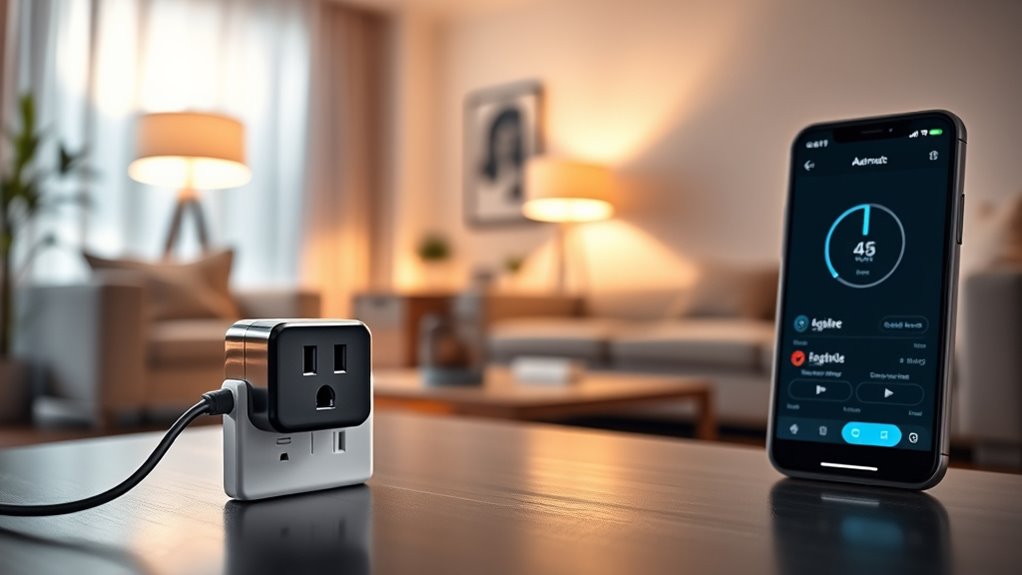

For smart plugs for automation, the Shelly Plug US Gen4 stands out as the best overall pick for buyers who want several connection options, while the Eve Energy adds power monitoring and the TP-Link Tapo Matter Smart Plug Mini suits shoppers who want compact plugs in a multipack. The main choice is between broad smart-home compatibility, straightforward app-and-voice control, and extras such as energy data or multiple outlets. Matter support can make cross-platform setup easier, but it does not remove the need to check which automations your chosen hub or app supports. Multipacks can simplify outfitting several rooms, though their features may be less specialized than a single premium plug. Read on for the full comparison and guidance on matching a plug to your devices and automation setup.

Turn quiet afternoons into listening time
- Thousands of audiobooks, podcasts and originals
- Listen on your phone, tablet or Echo — also offline
- Cancel anytime
Complete the kit


Key Takeaways
- Shelly Plug US Gen4 ranks first for flexibility: Wi-Fi, Bluetooth, Zigbee, and Matter give it more connection paths than the voice-assistant-focused plugs in this group.
- Matter support is not the whole automation story: Shelly, Linkind, Tapo, and Eve list Matter compatibility, but buyers still need to check hub support and which controls their platform exposes.
- Eve Energy is the specialized monitoring pick: its power meter makes it more informative than basic on/off plugs, while adding less value if energy tracking is not part of the plan.
- Multipacks favor coverage over specialization: Govee, EIGHTREE, KMC, and GHome offer several plugs per pack, while options such as Eve focus more on capabilities per plug.
- Outlet layout can matter as much as connectivity: the Govee Dual Smart Plug provides two controlled outlets in one unit, which can suit a crowded socket better than two separate plugs.
| Shelly Plug US Gen4 Smart Plug – UL Certified, WiFi, Bluetooth, Zigbee, Matter Compatible, White | 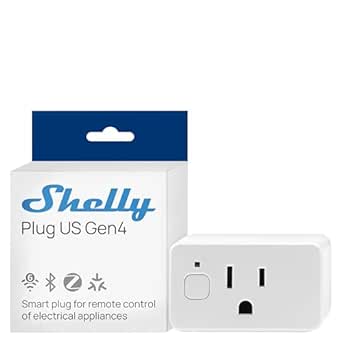 | Best for Multi-Protocol Automation | Connectivity: WiFi, Bluetooth, Zigbee, Matter | Certification: UL Certified | Power monitoring: Real-time | VIEW ON AMAZON | See Our Full Breakdown |
| Linkind Matter Smart Plug – Works with Apple Home, Alexa, Siri, Google Home | 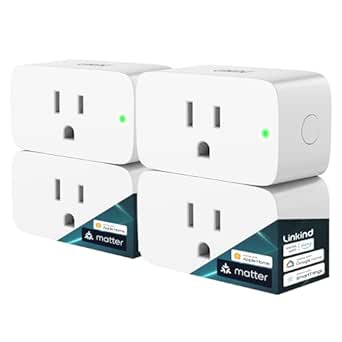 | Best for Cross-Platform Matter Setups | Connectivity: Matter, 2.4GHz WiFi | Smart-home compatibility: Apple Home, Alexa, Siri, Google Home, SmartThings | Local control: Offline LAN communication | VIEW ON AMAZON | See Our Full Breakdown |
| TP-Link Tapo Matter Supported Smart Plug Mini, 15A/1800W, Compact, White (3-Pack) |  | Best Three-Pack for Matter Routines | Pack size: 3 plugs | Connectivity: Bluetooth, Matter, WiFi | Smart-home compatibility: Apple Home, Alexa, Google Home, Samsung SmartThings | VIEW ON AMAZON | See Our Full Breakdown |
| Govee Smart Plug, WiFi Outlet Compatible with Alexa & Google Assistant, 4 pcs |  | Best for Alexa and Google Group Control | Pack size: 4 plugs | Connectivity: WiFi, Bluetooth | Voice assistant compatibility: Alexa, Google Assistant | VIEW ON AMAZON | See Our Full Breakdown |
| Philips Smart Lighting Smart Plug with Automations and Voice Control |  | Best for Simple Scheduled Automations | App: WiZ | Smart-home compatibility: Alexa, Google Home, Apple Home | Voltage: 125 volts | VIEW ON AMAZON | See Our Full Breakdown |
| Eve Energy (Matter) 2-Pack – Smart Plug & Power Meter |  | Best for Cross-Platform Automation | Connectivity: Matter, Thread; Wi-Fi listed in supplied specs | Control: App and voice | Compatibility: Alexa, Android, Google Assistant, SmartThings, iOS | VIEW ON AMAZON | See Our Full Breakdown |
| GHome Smart Plug, WiFi Smart Outlet Compatible with Alexa and Google Home | 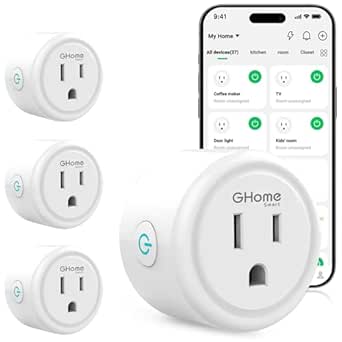 | Best for Multi-Device Scheduling | Connectivity: Wi-Fi, 2.4GHz only | Control: App, remote, touch, voice | Voice compatibility: Alexa and Google Assistant | VIEW ON AMAZON | See Our Full Breakdown |
| EIGHTREE 15A Smart Plug Works with Alexa & Google Home, 4 Pack | 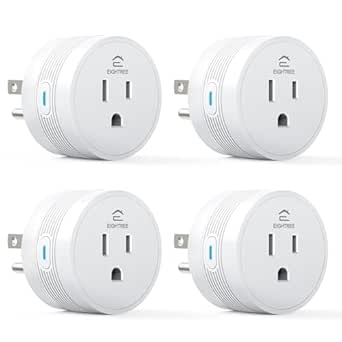 | Best Compact Four-Pack | Connectivity: Wi-Fi, 2.4GHz required | Control: App and voice | Compatibility: Alexa, Google Home, SmartThings | VIEW ON AMAZON | See Our Full Breakdown |
| Amazon Smart Plug (2-Pack) |  | Best for Alexa Beginners | Network: 2.4GHz, 802.11 b/g/n | Compatibility: Alexa only; not compatible with other voice assistants or smart hubs | Use: Indoor | VIEW ON AMAZON | See Our Full Breakdown |
| KMC Smart Plug Mini 4-Pack, Wi-Fi Outlets for Smart Home, Remote Control Lights and Devices from Anywhere, No Hub Required, ETL Certified, Works with Alexa and Google Home |  | Best Value for Basic Routines | Connectivity: Wi-Fi, 2.4GHz required | Control: Remote via app; voice compatibility listed | Compatibility: Amazon Alexa, Google Assistant, Android, iOS | VIEW ON AMAZON | See Our Full Breakdown |
| GHome Smart Plug Mini, WiFi Smart Outlet Plug (4 Pack) | 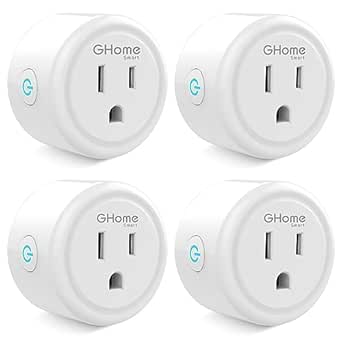 | Best Compact Value Pack | Pack count: 4 | Voltage: 120 V | Amperage: 10 A | VIEW ON AMAZON | See Our Full Breakdown |
| Govee Dual Smart Plug 4 Pack, 15A WiFi Bluetooth Outlet |  | Best for Controlling Two Devices per Outlet | Pack count: 4 | Outlet design: Dual, two outlets per plug | Operating voltage: 120 V | VIEW ON AMAZON | See Our Full Breakdown |
| Govee Smart Plug with Energy Monitoring (4 Pack) |  | Best for Energy-Aware Automation | Pack count: 4 | Operating voltage: 120 V | Maximum wattage: 1800 W | VIEW ON AMAZON | See Our Full Breakdown |
| Kasa Smart Plug HS103P2 2-Pack |  | Best for Straightforward 15A Automation | Pack count: 2 | Connectivity: 2.4GHz Wi-Fi | Maximum load: 15A resistive at 120VAC | VIEW ON AMAZON | See Our Full Breakdown |
| Wyze Plug, 2.4GHz WiFi Smart Plug (Two-Pack) |  | Best for Group and Vacation Routines | Pack count: 2 | Operating voltage: 110 V | Maximum wattage: 1650 W | VIEW ON AMAZON | See Our Full Breakdown |
| smart plugs for automation | Connectivity |
|---|---|
| Shelly Plug US Gen4 Smart Plug | WiFi, Bluetooth, Zigbee, Matter |
| Linkind Matter Smart Plug | Matter, 2.4GHz WiFi |
| TP-Link Tapo Matter Supported | Bluetooth, Matter, WiFi |
| Govee Smart Plug | WiFi, Bluetooth |
| Philips Smart Lighting Smart P | — |
| Eve Energy | Matter, Thread; Wi-Fi listed in supplied specs |
| GHome Smart Plug | Wi-Fi, 2.4GHz only |
| EIGHTREE 15A Smart Plug Works | Wi-Fi, 2.4GHz required |
| Amazon Smart Plug | — |
| KMC Smart Plug Mini 4-Pack | Wi-Fi, 2.4GHz required |
| GHome Smart Plug Mini | 2.4GHz Wi-Fi |
| Govee Dual Smart Plug 4 Pack | Wi-Fi, Bluetooth |
| Govee Smart Plug with Energy M | Wi-Fi |
| Kasa Smart Plug HS103P2 2-Pack | 2.4GHz Wi-Fi |
| Wyze Plug | 2.4GHz Wi-Fi |
More Details on Our Top Picks
Shelly Plug US Gen4 Smart Plug – UL Certified, WiFi, Bluetooth, Zigbee, Matter Compatible, White
I’d put the Shelly Plug US Gen4 first for buyers building automations across more than one smart-home system. Its mix of WiFi, Bluetooth, Zigbee, and Matter gives it more ways to join a setup than the WiFi-and-Bluetooth Govee four-pack, while real-time power monitoring can help trigger routines based on an appliance’s energy use. Local schedules and app control add useful automation paths, and UL certification plus a protective socket cover are practical safety details. The tradeoff is a more involved setup: full configuration runs through the Shelly app, and Zigbee may depend on a compatible hub or bridge. I’d choose it over the Linkind Matter plug when power data and protocol flexibility matter more than a straightforward Matter-first setup.
Pros:- Supports WiFi, Bluetooth, Zigbee, and Matter for flexible ecosystem integration.
- Real-time power monitoring can inform energy-focused routines.
- UL certification and a protective socket cover add useful safety features.
- Three-year warranty is longer than the Philips plug’s two-year warranty.
Cons:- Full configuration and management require the Shelly Smart Control app.
- Zigbee integration may require a compatible hub or bridge.
- More connectivity options may be unnecessary complexity for basic on/off schedules.
Best for: Smart-home owners who want power-monitoring automations and the flexibility to connect through Matter, Zigbee, or WiFi.
Not ideal for: Buyers who want the simplest app setup or do not have a compatible Zigbee hub and would not use the extra protocols.
- Connectivity:WiFi, Bluetooth, Zigbee, Matter
- Certification:UL Certified
- Power monitoring:Real-time
- Additional features:Ambient light sensor, multicolor LED, protective socket cover
- App:Shelly Smart Control
- Color:White
- Warranty:3 years
Our verdict“Choose the Shelly Plug US Gen4 if your automations benefit from power monitoring and multiple connectivity options; skip it for simple, app-light control.”
Linkind Matter Smart Plug – Works with Apple Home, Alexa, Siri, Google Home
The Linkind Matter Smart Plug is a practical pick when the main automation goal is controlling one outlet from different smart-home platforms. Matter support brings Apple Home, Alexa, Google Home, and SmartThings into the picture, while offline LAN communication can keep local control available when internet access drops. That makes it a more direct fit for a Matter-centered home than the Govee four-pack, which lists Alexa and Google Assistant compatibility instead. Its compact, fire-resistant design also suits crowded outlet areas. The compromises are its 2.4GHz WiFi requirement, the need for a Matter-certified hub or controller for full functionality, and a 15A/1800W ceiling. Compared with the Shelly Gen4, it gives up power monitoring and protocol breadth in favor of a simpler Matter-oriented role.
Pros:- Matter support connects the plug with several major smart-home platforms.
- Offline LAN communication supports local control without internet access.
- Compact, fire-resistant design helps save outlet space.
- Rated for up to 15A and 1800W.
Cons:- Full functionality requires a Matter-certified hub or controller.
- Works with 2.4GHz WiFi only.
- Does not list power monitoring, unlike the Shelly Plug US Gen4.
Best for: Households using a Matter-certified controller that want one compact plug to work across Apple Home, Alexa, Google Home, or SmartThings.
Not ideal for: People without a Matter controller, users whose WiFi is 5GHz-only, or anyone automating appliances above 1800W.
- Connectivity:Matter, 2.4GHz WiFi
- Smart-home compatibility:Apple Home, Alexa, Siri, Google Home, SmartThings
- Local control:Offline LAN communication
- Power capacity:1800W
- Plug type:Type A
- Material:Copper
- Color:White
Our verdict“Pick the Linkind for cross-platform Matter control with local LAN operation, but choose another model if you need energy data or higher capacity.”
TP-Link Tapo Matter Supported Smart Plug Mini, 15A/1800W, Compact, White (3-Pack)
The TP-Link Tapo P125M three-pack makes sense when automation means adding several lamps or small household devices at once. Bluetooth onboarding can simplify initial setup, and Matter support connects the plugs with Apple Home, Alexa, Google Home, and SmartThings. Scheduling and remote control cover the everyday routines most buyers want, while the compact design helps avoid blocking a neighboring outlet. Unlike the single Linkind plug, this bundle offers three outlets for spreading routines across rooms; unlike the four Govee plugs, it lists Matter compatibility and UL certification. The limits are a 2.4GHz WiFi-only connection and a 15A/1800W rating, so these are for typical electronics rather than high-demand appliances. Full functionality also depends on a compatible app or smart-home hub.
Pros:- Three plugs make it easier to automate multiple devices in one purchase.
- Matter compatibility covers several major smart-home platforms.
- Bluetooth onboarding can make setup more convenient.
- UL certification and flame-retardant design provide safety credentials.
Cons:- Supports 2.4GHz WiFi only.
- A compatible hub or app is needed for full functionality.
- The 15A/1800W rating rules out some high-power appliances.
Best for: Buyers setting up Matter-compatible schedules for several lamps or household electronics and who value a compact three-plug bundle.
Not ideal for: People with 5GHz-only WiFi, no compatible app or hub, or appliances that exceed the 1800W limit.
- Pack size:3 plugs
- Connectivity:Bluetooth, Matter, WiFi
- Smart-home compatibility:Apple Home, Alexa, Google Home, Samsung SmartThings
- Operating voltage:120 volts
- Wattage:1800 watts
- Operation mode:ON-OFF
- Certification:UL certified
- Color:White
Our verdict“Choose the Tapo three-pack for compact, Matter-enabled schedules across several rooms, not for high-power devices or 5GHz-only networks.”
Govee Smart Plug, WiFi Outlet Compatible with Alexa & Google Assistant, 4 pcs
For buyers automating several outlets with Alexa or Google Assistant, the Govee four-pack offers a straightforward setup path: connect through the Govee Home app, create schedules, and group plugs for shared control. Its WiFi and Bluetooth connectivity gives the set another connection method, while ETL and FCC certifications add documented safety and compliance details. Compared with the Tapo three-pack, Govee supplies one more plug, but it does not list Matter or Apple Home compatibility; compared with the Linkind, it is better suited to a multi-room Alexa or Google setup than a cross-platform Matter home. The capacity information needs care: the product data lists 11A, while the supplied drawback notes a 1200W limit. I’d reserve these for lower-demand devices and check appliance requirements before automating them.
Pros:- Four-plug set supports automation across multiple locations.
- Scheduling and group control simplify routines for several devices.
- Works with Alexa and Google Assistant.
- ETL and FCC certifications are listed.
Cons:- Does not list Matter or Apple Home compatibility.
- Requires setup through the Govee Home app.
- Supplied product data gives conflicting capacity details: 11A in specs and a 1200W limit in drawbacks.
Best for: Alexa or Google Assistant users who want to group and schedule several lower-demand devices across rooms.
Not ideal for: Matter or Apple Home households, buyers who want energy monitoring, or anyone needing a plug for high-power appliances.
- Pack size:4 plugs
- Connectivity:WiFi, Bluetooth
- Voice assistant compatibility:Alexa, Google Assistant
- Voltage:120 volts
- Plug type:Type B
- Certification:ETL, FCC
- Control features:Scheduling, group control
Our verdict“Choose the Govee set for Alexa or Google schedules and group control across several lower-demand devices, after checking each device’s load.”
Philips Smart Lighting Smart Plug with Automations and Voice Control
The Philips Smart Lighting Smart Plug is aimed at buyers who want familiar scheduling and voice control without building a more elaborate automation system. Setup runs through the WiZ app, and the plug works with Alexa, Google Home, and Apple Home. Its ability to keep operating after initial setup even without WiFi can suit routines that should not depend on a live internet connection. Compared with the Matter-focused Linkind and Tapo plugs, this model’s appeal is its stated offline reliability rather than listed Matter support. It also lacks the Shelly Gen4’s energy monitoring and multi-protocol range, so it is a simpler control point, not an energy-automation tool. Philips Hue owners should note that it is not compatible with Hue products; its stated rating is 125V.
Pros:- WiZ app supports schedules and automations.
- Compatible with Alexa, Google Home, and Apple Home.
- Can operate without WiFi after initial setup.
- Two-year warranty is specified.
Cons:- Not compatible with Philips Hue products.
- No Matter support or power-monitoring feature is listed.
- The product data specifies 125V, so buyers should check appliance requirements.
Best for: Buyers who want WiZ-app scheduling and voice control for ordinary residential devices, with operation that can continue after WiFi setup.
Not ideal for: Philips Hue households, buyers seeking Matter or energy monitoring, and anyone whose appliance is not suitable for the stated 125V rating.
- App:WiZ
- Smart-home compatibility:Alexa, Google Home, Apple Home
- Voltage:125 volts
- Plug type:Type B
- Product grade:Residential
- Offline operation:Works without WiFi after initial setup
- Warranty:2 years
- Color:White
Our verdict“Choose the Philips plug for straightforward WiZ schedules and voice control, but not for Hue integration, Matter routines, or energy tracking.”
Eve Energy (Matter) 2-Pack – Smart Plug & Power Meter
The Eve Energy Matter 2-Pack is the strongest fit here for households that want routines to work across more than one smart-home platform. Matter support broadens compatibility with Alexa, Google, Apple, and SmartThings, while Thread can provide a responsive local network when the right hub is in place. Unlike the Alexa-only Amazon Smart Plug, this pair is less tied to one ecosystem. Its privacy-focused approach is another point of difference for buyers who prefer local smart-home control.
The tradeoff is setup complexity: a compatible hub is needed for full functionality, so it is not as straightforward as the hub-free GHome or KMC plugs. The product title mentions power metering, but the supplied details say energy-use information is limited, so I would not choose it for detailed consumption tracking. It also works with standard 120V outlets only.
Pros:- Matter support works across several major smart-home ecosystems
- Thread support can enable responsive local automation with a compatible hub
- Privacy-focused design avoids cloud and data tracking, according to the product details
- Two-plug set provides more automation points than a single-plug option
Cons:- A compatible hub is needed for full functionality
- Energy monitoring details are limited in the supplied product information
- Limited to 120V outlets
Best for: Households using multiple smart-home platforms that want Matter-based routines and are prepared to add a compatible hub.
Not ideal for: Alexa-only beginners seeking the simplest hub-free setup, or buyers who need detailed appliance energy reports.
- Connectivity:Matter, Thread; Wi-Fi listed in supplied specs
- Control:App and voice
- Compatibility:Alexa, Android, Google Assistant, SmartThings, iOS
- Voltage:120V
- Wattage:1800 watt-hours listed
- Pack size:2 plugs
- Dimensions:2.36 x 2.76 x 1.52 inches
- Warranty:2 years
Our verdict“Choose Eve Energy if cross-platform Matter automation and privacy matter more than hub-free setup or detailed energy reporting.”
GHome Smart Plug, WiFi Smart Outlet Compatible with Alexa and Google Home
The GHome four-pack suits buyers who want to automate several lamps, fans, or humidifiers through schedules and shared control. Its group-control feature helps coordinate multiple plugs, making it a more practical fit for room-level routines than the two-plug Amazon Smart Plug, especially when a household has both Alexa and Google Assistant users. App and voice control also let people manage devices remotely rather than relying on a local switch.
That convenience depends on a 2.4GHz Wi-Fi network and app setup before linking Alexa or Google, so it is not the most direct route for voice-first beginners. Its 1200-watt rating is lower than the EIGHTREE plug’s listed 1100 watts and advertised 1800-watt capacity, though those supplied figures are inconsistent; buyers should verify the device’s load requirements before connecting higher-power appliances. The IP40 rating limits this pick to indoor use.
Pros:- Four plugs support automation across several devices
- Group control can coordinate multiple outlets in one routine
- App scheduling and remote control are available
- Works with Alexa and Google Assistant after app setup
Cons:- Requires 2.4GHz Wi-Fi
- App setup is required before linking voice assistants
- 1200-watt rating and indoor-only IP40 use limit suitable devices and locations
Best for: Alexa or Google households automating several indoor lights and small appliances with shared schedules.
Not ideal for: People with only a 5GHz network, outdoor automation needs, or appliances whose load exceeds the plug’s stated 1200-watt rating.
- Connectivity:Wi-Fi, 2.4GHz only
- Control:App, remote, touch, voice
- Voice compatibility:Alexa and Google Assistant
- Voltage:120V
- Wattage:1200 watts
- Pack size:4 plugs
- Dimensions:2.1 x 2.1 x 1.1 inches
- Certifications:ETL, FCC
Our verdict“Pick GHome for coordinated indoor schedules across several modest-load devices, but check its 1200-watt limit before automating appliances.”
EIGHTREE 15A Smart Plug Works with Alexa & Google Home, 4 Pack
For buyers adding automation in tight spaces, the EIGHTREE four-pack combines a compact 1.9-inch-square body with Alexa, Google Home, and SmartThings compatibility. That makes it easier to place plugs behind furniture or in crowded outlet areas than the larger KMC four-pack, while still covering several devices. App and voice control support the usual useful routines, such as scheduled lighting or switching a fan off at bedtime, without a separate hub.
The advertised 15A/1800W capacity would make this more flexible than the GHome plug for higher-load devices, but the supplied wattage spec lists 1100 watts. I would treat that discrepancy as a reason to verify the label and appliance requirements rather than assume the higher figure. It also relies on 2.4GHz Wi-Fi and offers no stated energy monitoring, so it is not the choice for load tracking or a 5GHz-only network.
Pros:- Compact dimensions suit narrow outlets and placements behind furniture
- Four-plug set supports automation in multiple rooms
- Works with Alexa, Google Home, and SmartThings
- Hub-free app and voice control support schedules
Cons:- Supplied wattage data conflicts with the advertised 1800-watt capacity
- Requires a 2.4GHz Wi-Fi network
- No energy monitoring is specified
Best for: People automating several indoor devices in crowded outlets who need a compact plug and use Alexa, Google Home, or SmartThings.
Not ideal for: Buyers needing confirmed high-load capacity, energy-use reports, or connectivity without 2.4GHz Wi-Fi.
- Connectivity:Wi-Fi, 2.4GHz required
- Control:App and voice
- Compatibility:Alexa, Google Home, SmartThings
- Voltage:120V
- Wattage:1100 watts listed; description advertises up to 1800W
- Pack size:4 plugs
- Dimensions:1.9 x 1.9 x 1.2 inches
- Hub requirement:No hub required
Our verdict“Choose EIGHTREE for compact multi-room automation, but confirm its actual wattage limit before using it with higher-load appliances.”
Amazon Smart Plug (2-Pack)
The Amazon Smart Plug two-pack is the easiest match for an Alexa-centered home: it needs no hub, supports schedules and routines, and can reconnect automatically after outages. That makes it a clear beginner alternative to the Eve Energy Matter pair, which offers broader platform support but calls for a compatible hub for full functionality. The compact design is also intended to leave the neighboring outlet available, useful when a plug is going behind a sofa or beside a lamp.
The limitation is its Alexa-only ecosystem. Unlike the EIGHTREE and GHome options, it does not support Google Assistant, and it is not compatible with other smart-home platforms or hubs. It also works on 2.4GHz Wi-Fi only and is rated for indoor use. I would choose this for simple Alexa routines, not for a mixed-platform household or a more expandable automation setup.
Pros:- Simple Alexa setup without a separate hub
- Supports scheduling and Alexa routines
- Automatic reconnection after outages is specified
- Compact form is designed to leave a second outlet free
Cons:- Works only with Alexa, not other voice assistants or smart hubs
- Requires a 2.4GHz Wi-Fi network
- Indoor use only
Best for: Alexa users who want straightforward schedules and routines for indoor lights, fans, and household devices without adding a hub.
Not ideal for: Google, Apple, or mixed-platform households, and anyone seeking outdoor use or smart-hub integration.
- Network:2.4GHz, 802.11 b/g/n
- Compatibility:Alexa only; not compatible with other voice assistants or smart hubs
- Use:Indoor
- Pack size:2 plugs
- Dimensions:3.2 x 1.5 x 2.2 inches
- Weight:3.1 oz
- Warranty:1-year limited
Our verdict“Choose the Amazon Smart Plug for uncomplicated Alexa routines, but skip it if your automation needs to extend beyond Amazon’s ecosystem.”
KMC Smart Plug Mini 4-Pack, Wi-Fi Outlets for Smart Home, Remote Control Lights and Devices from Anywhere, No Hub Required, ETL Certified, Works with Alexa and Google Home
The KMC Smart Plug Mini four-pack is a straightforward way to spread scheduled on/off control across several rooms. It works over Wi-Fi without a hub, supports the KMC app, and connects with Alexa and Google Assistant, so basic routines for lights or fans do not require a more involved Matter setup like the Eve Energy pair. Its 1875-watt listed capacity is also higher than the GHome plug’s 1200-watt rating, giving buyers more stated headroom for compatible devices.
KMC is less suited to automation that depends on detailed energy data or broad platform flexibility: neither is listed here. It also requires 2.4GHz Wi-Fi, and its product details warn that some users may experience connection issues. The plug’s listed 15A limit means it is not a fit for loads beyond that rating, despite the higher wattage figure. This is a practical basic-routine set, not a premium network or monitoring choice.
Pros:- Four plugs provide several automation points in one set
- Works with Alexa and Google Assistant
- No hub required; control is available through the KMC app
- 1875-watt rating is higher than the supplied GHome rating
Cons:- Requires a 2.4GHz Wi-Fi network
- Product details note possible connectivity issues
- No energy monitoring or Matter support is specified
Best for: Alexa or Google users who want hub-free schedules for several lights and ordinary household devices.
Not ideal for: Buyers needing Matter, energy monitoring, confirmed compatibility with demanding appliances, or a connection that avoids 2.4GHz Wi-Fi.
- Connectivity:Wi-Fi, 2.4GHz required
- Control:Remote via app; voice compatibility listed
- Compatibility:Amazon Alexa, Google Assistant, Android, iOS
- Voltage:125V
- Wattage:1875 watts
- Pack size:4 plugs
- Dimensions:5.35 x 2.24 x 2.09 inches listed
- Certification:ETL certified
- Hub requirement:No hub required
Our verdict“Choose KMC for basic Alexa or Google schedules across several devices, not for advanced ecosystem features or energy tracking.”
GHome Smart Plug Mini, WiFi Smart Outlet Plug (4 Pack)
For automations that need to fit around other plugs, the GHome Smart Plug Mini has a notably small 2-by-2-inch footprint. Its app scheduling and auto-off timers can handle routines such as switching lamps or small appliances on and off without adding a hub. Alexa and Google Home support also gives it a straightforward voice-control path once setup is complete. Compared with the Kasa Smart Plug HS103P2, this four-pack emphasizes compactness and quantity, while Kasa supports a higher stated load. The tradeoff is the GHome’s 10A limit, which makes it a poor match for some higher-draw devices. It also requires 2.4GHz Wi-Fi and initial setup through the GHome app before linking a voice assistant, so it suits basic, low-load routines better than demanding automation setups.
Pros:- Compact 2-by-2-inch body can help preserve access to nearby outlets.
- Four plugs support automation across multiple devices.
- App scheduling and auto-off timers cover common timed routines.
- Works with Alexa and Google Home without a hub.
Cons:- 10A/1200W capacity is lower than the 15A rating stated for the Kasa HS103P2.
- Requires a 2.4GHz Wi-Fi network.
- Must be configured in the GHome app before linking Alexa or Google Home.
Best for: Households automating several lamps or small appliances that need plugs compact enough to leave neighboring outlets accessible.
Not ideal for: Buyers automating higher-draw appliances or seeking a plug rated above 10A; this model is limited to 10A/1200W.
- Pack count:4
- Voltage:120 V
- Amperage:10 A
- Connectivity:2.4GHz Wi-Fi
- Voice assistants:Alexa, Google Home
- Automation:App control, scheduling, auto-off timers
- Dimensions:2 × 2 × 1 in
- Certification:ETL, FCC
Our verdict“Choose this four-pack for compact, low-load schedules across several rooms, but pick the Kasa HS103P2 for a higher stated load limit.”
Govee Dual Smart Plug 4 Pack, 15A WiFi Bluetooth Outlet
The Govee Dual Smart Plug is the lineup’s space-saving pick for automating two devices from one wall outlet. Its two-in-one design gives each plug two controllable outlets, so a lamp and another small device can share a timed routine without occupying separate receptacles. App, voice, Wi-Fi, and Bluetooth control offer more ways to reach the plugs than the GHome Smart Plug Mini, which lists Wi-Fi and voice features but not Bluetooth. Govee also supports schedules and timers, though the supplied data does not specify independent outlet control, so buyers should verify that detail if separate routines matter. This model is rated at 15A/1800W, but it still operates at 120V and requires 2.4GHz Wi-Fi for its network setup. Its Govee Home account requirement adds an extra setup step.
Pros:- Two-in-one design provides four controllable outlets across the four-pack.
- Wi-Fi and Bluetooth connectivity add control flexibility.
- Supports app and voice operation with Alexa and Google Assistant.
- 15A/1800W rating exceeds the GHome Mini’s stated 10A/1200W limit.
Cons:- Requires 2.4GHz Wi-Fi and does not support 5GHz networks.
- Govee Home app account is required for setup.
- 120V operation does not suit higher-voltage applications.
Best for: People automating pairs of modest household devices from one wall outlet who value app, voice, and Bluetooth control options.
Not ideal for: Buyers who need confirmed independent schedules for each outlet, higher-voltage operation, or a setup that avoids a Govee Home account.
- Pack count:4
- Outlet design:Dual, two outlets per plug
- Operating voltage:120 V
- Maximum wattage:1800 W
- Connectivity:Wi-Fi, Bluetooth
- Voice assistants:Alexa, Google Assistant
- Automation:Timers and schedules
- Safety standards:ETL, FCC
Our verdict“Pick this Govee set when fitting two devices per wall outlet matters more than avoiding app-account setup.”
Govee Smart Plug with Energy Monitoring (4 Pack)
When an automation plan includes tracking what devices consume, the Govee Smart Plug with Energy Monitoring offers a capability the other listed models here do not specify: real-time energy monitoring. That can help buyers identify which appliances are driving use and decide when schedules or shutoff routines may be useful. It also supports Alexa, Google Assistant, IFTTT, scheduling, and group control, giving it more stated automation routes than the Kasa HS103P2, whose supplied features do not include energy data or IFTTT. The four-pack is rated for 1800W at 120V, making it suitable for compatible household devices within that limit. Its appeal depends on the monitoring feature, however; buyers who only need basic timed switching may find the simpler GHome Mini a better fit. It needs app setup and 2.4GHz Wi-Fi, and the listing does not specify Bluetooth connectivity for this model.
Pros:- Real-time energy monitoring adds usage information to automation routines.
- Supports Alexa, Google Assistant, and IFTTT.
- Scheduling and group control can coordinate multiple plugs.
- Four-pack provides coverage for several devices.
Cons:- Requires 2.4GHz Wi-Fi and app setup.
- The supplied specifications list Wi-Fi but not Bluetooth connectivity.
- Energy-monitoring functions may be unnecessary for buyers who only need basic timers.
Best for: Automation-minded households that want to monitor device energy use alongside schedules, group control, and voice commands.
Not ideal for: Buyers seeking only simple on/off schedules, or those who require 5GHz Wi-Fi or Bluetooth connectivity.
- Pack count:4
- Operating voltage:120 V
- Maximum wattage:1800 W
- Connectivity:Wi-Fi
- Voice and automation platforms:Amazon Alexa, Google Assistant, IFTTT
- Control methods:App, touch, voice
- Automation:Energy monitoring, scheduling, group control
- Model:H5086
Our verdict“Choose this Govee set if energy data will shape your routines; for straightforward timed switching, the GHome Mini is the simpler alternative.”
Kasa Smart Plug HS103P2 2-Pack
The Kasa Smart Plug HS103P2 makes a strong case for buyers who want familiar scheduled and voice-controlled routines without extra features to manage. Its stated 15A resistive rating is higher than the GHome Smart Plug Mini’s 10A limit, so it offers more headroom for compatible devices—while remaining a 120VAC plug, not a solution for every appliance. Kasa supports Alexa and Google Assistant, remote app control, schedules, and timers; those cover common automations such as setting lights to switch at chosen times. The two-pack is less useful for outfitting several rooms than the four-plug Govee sets, and the supplied product data does not list energy monitoring, Bluetooth, or IFTTT. A 2.4GHz Wi-Fi network is required. This is a focused choice for core routines rather than buyers building a more data-rich or multi-platform setup.
Pros:- 15A resistive load rating offers more stated capacity than the GHome Mini.
- Works with Alexa and Google Assistant voice control.
- Supports remote app control, scheduling, and timers.
- Two-pack suits a small starter setup.
Cons:- Requires 2.4GHz Wi-Fi.
- Only two plugs are included, fewer than the Govee and GHome four-packs.
- Energy monitoring is not listed among the supplied features.
Best for: Buyers who want a two-plug starter set for scheduled lights or compatible household devices and need a stated 15A resistive rating.
Not ideal for: People outfitting many rooms at once, monitoring energy use, or relying on a listed 5GHz, Bluetooth, or IFTTT connection.
- Pack count:2
- Connectivity:2.4GHz Wi-Fi
- Maximum load:15A resistive at 120VAC
- Voice assistants:Alexa, Google Assistant
- Automation:Remote control, scheduling, timers
- Certification:UL
Our verdict“Choose the Kasa HS103P2 for uncomplicated schedules and a 15A resistive rating, but look to Govee if energy monitoring matters.”
Wyze Plug, 2.4GHz WiFi Smart Plug (Two-Pack)
The Wyze Plug stands out for automation that coordinates devices rather than treating every outlet as a separate task. Its group control can help manage several plugs together, while scheduling and vacation mode support routines that continue when nobody is home. Alexa, Google Assistant, and IFTTT compatibility give it broader stated platform reach than the Kasa HS103P2, which lists Alexa and Google Assistant but not IFTTT. Wyze is a two-pack, so the four-plug Govee options cover more devices in one purchase; the Govee energy-monitoring model also adds usage data that Wyze does not list. Wyze’s stated 1650W capacity and 110V operating voltage call for checking device requirements before connection. It needs Wi-Fi, and some buyers may find setup less direct than a basic plug routine.
Pros:- Group control can coordinate multiple plugs for room-wide routines.
- Vacation mode adds an away-from-home automation option.
- Works with Alexa, Google Assistant, and IFTTT.
- Supports remote control and schedules through the app.
Cons:- Two plugs provide less coverage than the four-pack Govee options.
- Wi-Fi is required for the listed remote and automation features.
- Stated 110V and 1650W limits require checking appliance requirements.
Best for: People who want to coordinate multiple plugs in groups or set vacation-style schedules across lights and other compatible devices.
Not ideal for: Buyers who need energy monitoring, a four-plug bundle, or a setup that does not depend on Wi-Fi.
- Pack count:2
- Operating voltage:110 V
- Maximum wattage:1650 W
- Connectivity:2.4GHz Wi-Fi
- Platforms:Amazon Alexa, Google Assistant, IFTTT, vera
- Automation:Scheduling, group control, vacation mode
Our verdict“Choose Wyze for grouped and vacation routines across compatible devices, but select Govee’s monitoring model if energy tracking is a priority.”

How We Picked
I ranked these plugs by how well they support dependable, useful automation rather than by the length of their feature lists. I weighed stated ecosystem compatibility and connection options alongside setup requirements, rated electrical capacity where supplied, outlet design, energy-monitoring features, and whether a pack makes sense for automating several devices. I also treated certification claims and clear limitations—such as 2.4GHz-only Wi-Fi—as buyer-relevant details, not automatic signs of quality.
The Shelly Plug US Gen4 leads because its combination of Wi-Fi, Bluetooth, Zigbee, and Matter gives it the broadest stated connection flexibility in this lineup. Picks with Matter or energy monitoring follow when those features address a distinct need; simple voice-controlled plugs and multipacks rank lower because they trade broader control or specialized data for accessible everyday switching. A lower position does not mean a plug cannot work well: it reflects a narrower fit for automation buyers comparing this particular group.
Factors to Consider When Choosing Smart Plugs For Automation
Choosing a plug for automation is less about adding another remote control and more about deciding where routines should run, what they should respond to, and how much detail you need from them. These broader checks can prevent compatibility surprises and help you avoid buying features your setup will not use.
Match the Plug to the Automation Platform You Actually Use
Start with the hub or voice-assistant platform that will run your routines, not the number of logos on a product listing. A plug may connect to several assistants but still expose different controls or triggers in each app. Matter can make cross-platform pairing easier, yet it does not promise that every platform offers identical schedules, power data, or advanced routines. Check whether the plug needs a compatible hub, and confirm that the devices you want to automate can be controlled from the same system. Mixing platforms can work, but it may leave you maintaining routines in more than one place. If a routine must keep working when an internet connection drops, check where that automation is processed before buying.
Choose Triggers Before You Choose Extra Features
Write down what should cause each plug to switch: a time, a voice command, a sensor event, or a change in another device. Basic schedules and timers cover many lights and small appliances, but sensor-driven or conditional routines may depend on a hub or platform rather than the plug itself. Buyers sometimes mistake remote control for automation; controlling an outlet from an app is not the same as creating a routine that runs without a prompt. Check the automation app’s capabilities and any required subscription or hub before assuming a feature is included. For a simple dawn-and-dusk lamp schedule, a complex device may add little. For multi-step routines, platform compatibility usually matters more than the plug’s individual app.
Check the Load and the Physical Outlet Layout
Match the plug’s electrical rating to the appliance, and follow the manufacturer’s guidance for the specific kind of load. The 15A and 1800W figures listed for some models describe stated capacity, not permission to use any appliance with them. High-power heating devices, motors, and equipment that must not lose power can have requirements that make a standard smart plug unsuitable. Also inspect the wall outlet: a bulky plug may block the neighboring socket, while a dual-outlet design may offer a better fit if both devices can be controlled as intended. Do not assume two sockets mean independent control unless the product says so. When in doubt, use an outlet and plug combination rated for the appliance and its operating conditions.
Decide Whether Energy Monitoring Will Change Your Choices
Power monitoring is most useful when you have a specific question, such as which always-on device draws the most electricity or whether an appliance has finished running. It can add context to an automation, but readings are not automatically a complete household energy audit. Check whether data is displayed in the app or platform you plan to use, and whether it can serve as a routine trigger rather than just a report. If your goal is only to switch a lamp on a schedule, monitoring may not justify choosing a more specialized plug. Avoid treating an energy reading as proof that an appliance is safe to leave unattended. Use monitoring to inform decisions, not as a substitute for appliance safety guidance.
Balance Pack Size Against Control and Long-Term Flexibility
Multipacks are useful when you already know which outlets need automation, but buying more units can lock you into one app or ecosystem before you have tested how it fits your home. A lower-feature plug can be a sensible choice for several lamps, while a more flexible model may be worth reserving for an outlet central to cross-platform routines. Compare pack contents with the number of independently controlled devices you need; bundled quantity does not guarantee separate schedules or outlet controls. Also think about future changes, such as switching assistants or adding a hub. A mix of plug types can work, but too many apps can make troubleshooting and routine editing harder. Choose a common platform first, then expand in batches.
Frequently Asked Questions
Will a Matter smart plug work with every smart-home platform?
No. Matter is designed to improve cross-platform compatibility, but the plug and the platform still need to support the relevant Matter features, and some setups require a compatible hub or controller. A device may pair successfully while offering different controls in different apps. Check the manufacturer’s compatibility details and your platform’s requirements before buying. If you rely on a specific routine or trigger, confirm that it is supported there rather than assuming Matter guarantees it.
Can I use a smart plug to automate any appliance?
No. A plug only controls the power reaching an appliance, so it works best with devices that safely resume their intended state after power returns. Some appliances require a physical button press, lose settings, or should not be switched remotely. Check the appliance instructions and the plug’s electrical rating, especially for devices with motors or heating elements. Avoid using a plug as a safety control for equipment that needs continuous power or supervised operation.
Do I need a smart-home hub for routines?
Not always: some plugs can be scheduled through their own app or controlled through a compatible voice-assistant app without a separate hub. More advanced routines, local operation, or certain connection types may need a hub or platform controller. The answer depends on the plug, the connection method, and where you plan to build the automation. Before choosing, map out whether you need only time-based schedules or routines involving sensors and other devices. Then confirm that the required controller is already in your home or included in your plan.
Is energy monitoring worth choosing over a basic plug?
It is worth prioritizing if you want to compare device consumption, spot unexpected standby use, or use power information in a routine. If your only goal is to automate a lamp or seasonal decoration, monitoring may add data you rarely use. Check how the readings are presented and whether your preferred platform can use them in automations. Also remember that monitoring measures electrical use; it does not confirm an appliance is operating correctly or safely. Buy the feature for a clear task, not just because it appears on the box.
Should I buy a multipack or test one plug first?
A multipack makes sense when you have several known targets and have already settled on a compatible app or platform. Starting with one plug is safer when you are unsure about Wi-Fi coverage, setup steps, outlet fit, or the routines your system supports. Test the exact kind of automation you plan to use before expanding, especially if it depends on a hub or multiple brands. Once the workflow is clear, matching plugs can reduce app clutter and simplify troubleshooting. The best choice depends less on the number of outlets and more on how confident you are in the setup.
Conclusion
For the best overall fit, choose the Shelly Plug US Gen4 if connection flexibility across Wi-Fi, Bluetooth, Zigbee, and Matter is your priority. For value across multiple outlets, compare the Tapo Matter Smart Plug Mini and the listed multipacks, choosing based on platform fit and the number of devices you need to automate. For a premium, data-focused option, pick Eve Energy when power monitoring matters to your routines. For beginners, Amazon Smart Plug or Kasa HS103P2 make more sense when you want familiar voice-assistant control without a long feature checklist. For a crowded outlet, consider the Govee Dual Smart Plug; for broad multi-platform flexibility, favor Shelly or a Matter-compatible model. The right pick is the one that supports your intended routines, fits your outlet and appliance, and works in the platform you plan to keep using.