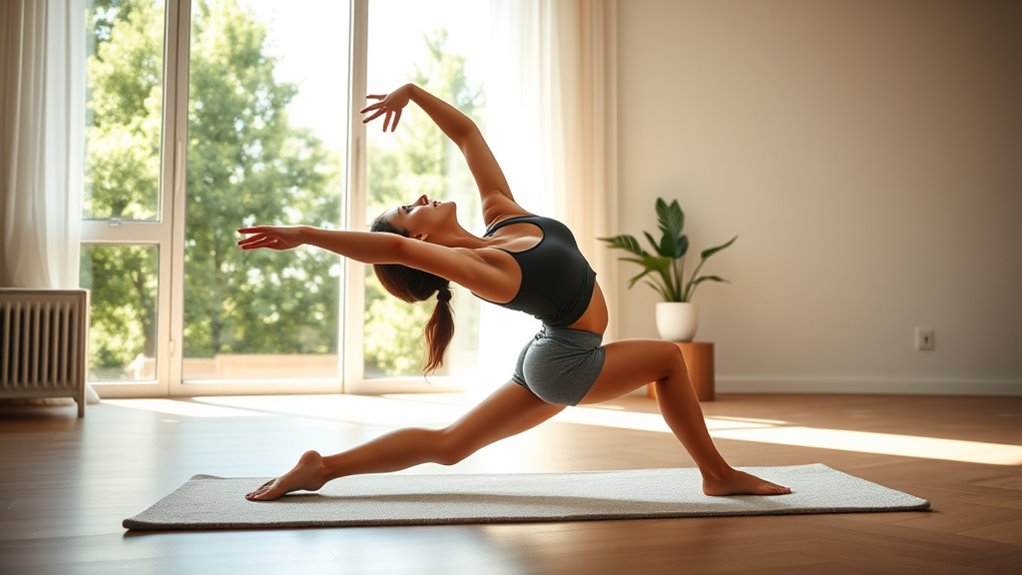

In just 10 minutes a day, you can boost your flexibility, improve posture, and lower injury risk with a simple, structured stretching routine. Focus on slow, controlled movements, hold each stretch for 15-30 seconds, and breathe deeply throughout. Warm up first with light activity, then target all major muscle groups for balanced gains. Stick with it consistently, and you’ll notice lasting improvements—discover more tips to maximize your stretching success.
Key Takeaways
- Warm up with light cardio for 3-5 minutes before stretching to prevent injuries.
- Focus on slow, controlled stretches for all major muscle groups, holding each for 15-30 seconds.
- Breathe steadily during stretches to enhance relaxation and effectiveness.
- Avoid bouncing or overstretching to reduce risk of muscle strains.
- Maintain consistency daily for noticeable improvements in flexibility over time.
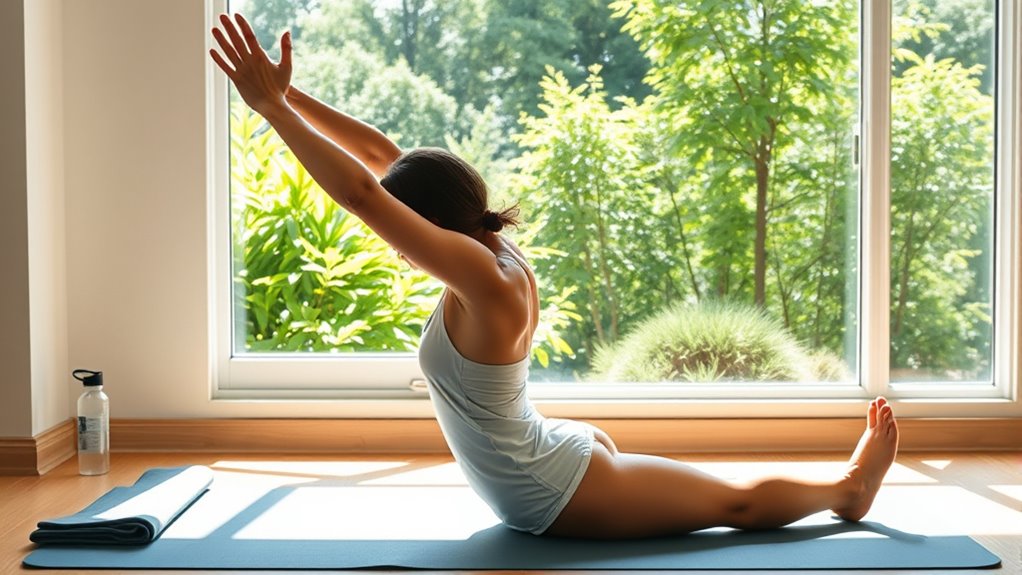
Incorporating a daily stretching routine can considerably boost your flexibility, reduce stress, and improve overall mobility. When you stretch regularly, you unlock a host of benefits of stretching that go beyond just touching your toes. Enhanced circulation, better posture, decreased muscle tension, and a lower risk of injury are just a few perks. However, it’s equally important to be aware of common stretching mistakes that can undermine your efforts or even cause injury. Avoid these pitfalls, and you’ll maximize the effectiveness of your routine.
One of the most common stretching mistakes is bouncing or using jerky movements. This can cause overstretching or muscle strains, especially if you push too hard too quickly. Instead, focus on slow, controlled stretches, holding each position for about 15-30 seconds. This allows your muscles to relax and elongate safely. Another mistake is neglecting to breathe properly. Holding your breath during stretches increases tension and diminishes the benefits of stretching. Remember to breathe deeply and steadily, inhaling as you prepare to stretch and exhaling as you deepen into the stretch.
Avoid bouncing or jerky movements to prevent overstretching and muscle strains during stretching.
Many people also overlook the importance of warming up before stretching. Stretching cold muscles can lead to strains or tears. A brief warm-up, like walking or light cardio for five minutes, prepares your muscles for a more effective session. Additionally, some tend to stretch only specific areas, ignoring others that might be equally tense. A thorough routine targets all major muscle groups, including neck, shoulders, back, hips, hamstrings, and calves, ensuring balanced flexibility and reducing compensation patterns that could cause discomfort later.
Another common mistake is holding stretches for too short a time or not holding them long enough for the muscles to relax and lengthen. Conversely, overstretching or forcing a stretch can cause injury. Be patient, and listen to your body. You don’t need to push to pain; mild discomfort is okay, but sharp pain is a signal to ease off. Also, consistency is key. Skipping days or doing inconsistent stretches diminishes the progress you could achieve. Incorporating a passive voice detection tool can help ensure your writing remains active and clear, making your instructions more engaging.
Incorporating a few minutes into your daily routine can lead to significant improvements in flexibility and mobility over time. Keep your stretches gentle, controlled, and mindful of your body’s signals. Remember, the benefits of stretching extend beyond physical flexibility—reducing stress and enhancing mental clarity are just as valuable. By avoiding common stretching mistakes and sticking to a regular, balanced routine, you’ll set yourself up for long-term success in achieving greater flexibility and overall well-being.

Trideer Stretching Strap Yoga Strap Physical Therapy for Home Workout, Exercise, Pilates and Gymnastics, 10 Loops Non-Elastic Stretch Bands with Aesthetic Packaging for Women & Men (Black)
- Durable Material: Made of sturdy polypropylene with reinforced stitching
- Versatile Use: Suitable for yoga, Pilates, therapy, and warmups
- Therapeutic Benefits: Enhances flexibility, recovery, and reduces injury risk
As an affiliate, we earn on qualifying purchases.
As an affiliate, we earn on qualifying purchases.
Frequently Asked Questions
How Long Should I Hold Each Stretch for Optimal Results?
When considering the ideal hold for each stretch, you should aim for about 15 to 30 seconds. This stretch duration allows your muscles to relax and lengthen effectively without risking overstretching. To maximize flexibility gains, focus on maintaining steady, gentle tension during the stretch. If you’re working on deeper flexibility, gradually increase the hold time, but always listen to your body to avoid injury.
Can Stretching Replace Regular Strength Training?
You might think stretching replaces strength training, but it doesn’t. Flexibility gains improve your range of motion and injury prevention, yet they don’t build muscle or boost strength. While stretching keeps your muscles limber and reduces injury risk, strength training is essential for muscle growth and overall fitness. Combining both offers a balanced approach, ensuring you stay flexible and powerful, rather than relying solely on stretching.
Is It Better to Stretch Before or After Workouts?
You should stretch after your workout, not before, to avoid falling for stretching myths that suggest stretching warms up muscles. Warm-up routines involve light activity first, then stretching to improve flexibility. Stretching before exercise can sometimes cause injuries if done incorrectly. By focusing on post-workout stretching, you help muscles relax and recover, making your routine safer and more effective.
Are There Any Stretches to Avoid if I Have Joint Issues?
Imagine delicate flowers in a gentle breeze—sensitive joints need similar care. If you have joint pain, avoid stretches that feel overly intense or forceful, like deep bends or twists. Instead, opt for gentle stretch modifications that keep your joints cozy and supported. Always listen to your body, and consult a professional for personalized advice. This way, you nurture your flexibility without risking discomfort or injury.
How Does Stretching Impact Overall Athletic Performance?
Stretching boosts your overall athletic performance by enhancing flexibility, which can improve muscle recovery and reduce injury risk. When you incorporate regular stretching, you keep your muscles limber, making movements more efficient and less prone to strain. This proactive approach helps prevent injuries, allowing you to train harder and longer. Consistent stretching not only optimizes performance but also supports quicker recovery, keeping you at your best for every workout or competition.

TriggerPoint Grid 1.0 Foam Roller – 13" Multi-Density Massage Roller for Deep Tissue & Muscle Recovery – Relieves Tight, Sore Muscles & Kinks, Improves Mobility & Circulation – Targets Key Body Parts
- Enhances Muscle Recovery: Promotes tissue aeration and blood flow
- Comfortable Foam Construction: Distrodensity Zones for sore muscles and soft tissue
- Customizable Massage Feel: Varying ridges and nodules for targeted relief
As an affiliate, we earn on qualifying purchases.
As an affiliate, we earn on qualifying purchases.
Conclusion
Sticking to this 10-minute routine transforms your flexibility like a tree gently swaying in the breeze. Just last week, I watched a friend who struggled with back pain suddenly bend and stretch with ease after just a few days of consistent practice. Remember, every stretch is a step toward a stronger, more flexible you. Keep moving daily—your body’s potential is like a seed waiting to bloom, and this routine is your sunlight.

CAP Barbell Folding Exercise Mat – Durable, Anti-Tear, Thick Padding for Fitness, Aerobics, Gymnastics & Home Workouts. 72"L x 24"W x 2"Thick. BLACK
- Extra Thick High-Density Foam: 2-inch cushioning for impact absorption
- Safe Non-Toxic Materials: Free from 10 harmful phthalates, lead, and mercury
- Foldable Design with Handles: Easy to transport and store
As an affiliate, we earn on qualifying purchases.
As an affiliate, we earn on qualifying purchases.

Resistance Bands for Working Out, Physical Therapy, Exercise, Pilates, Yoga
- Resistance Levels: Five resistance levels for varied workouts
- Color-Coded Resistance: Different colors indicate different resistance strengths
- Unisex Design: Suitable for both women and men
As an affiliate, we earn on qualifying purchases.
As an affiliate, we earn on qualifying purchases.