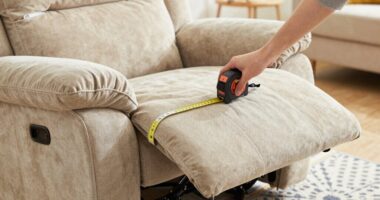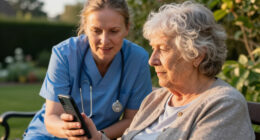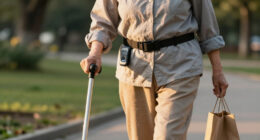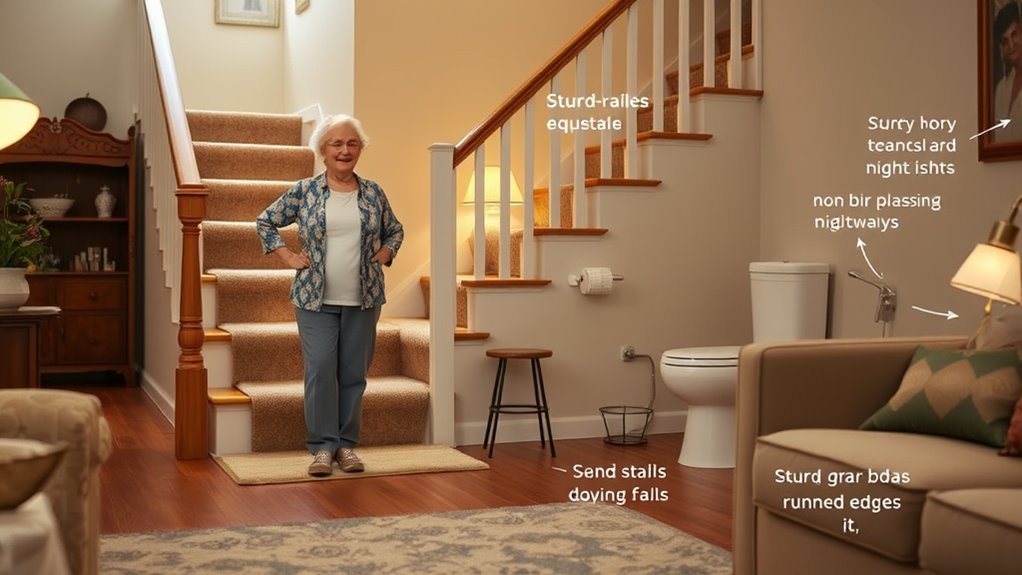
To prevent falls at home, you should make simple modifications like installing grab bars near toilets and in showers, securing rugs with double-sided tape, and keeping pathways clear of clutter. Improve lighting in hallways and staircases, and replace loose or uneven flooring. Using non-slip mats in wet areas and adding handrails along stairs also help boost safety. These easy steps can make a big difference; keep going to discover more ways to protect yourself.

Turn quiet afternoons into listening time
- Thousands of audiobooks, podcasts and originals
- Listen on your phone, tablet or Echo — also offline
- Cancel anytime
Key Takeaways
- Install grab bars near toilets and in showers to provide stable support and prevent slips.
- Use non-slip mats in bathrooms and high-risk areas to reduce fall hazards.
- Improve lighting in hallways, stairways, and bathrooms for better visibility.
- Keep walkways clear of clutter, cords, and loose rugs to prevent tripping.
- Add handrails along staircases and consider stair lifts or ramps for safer mobility.
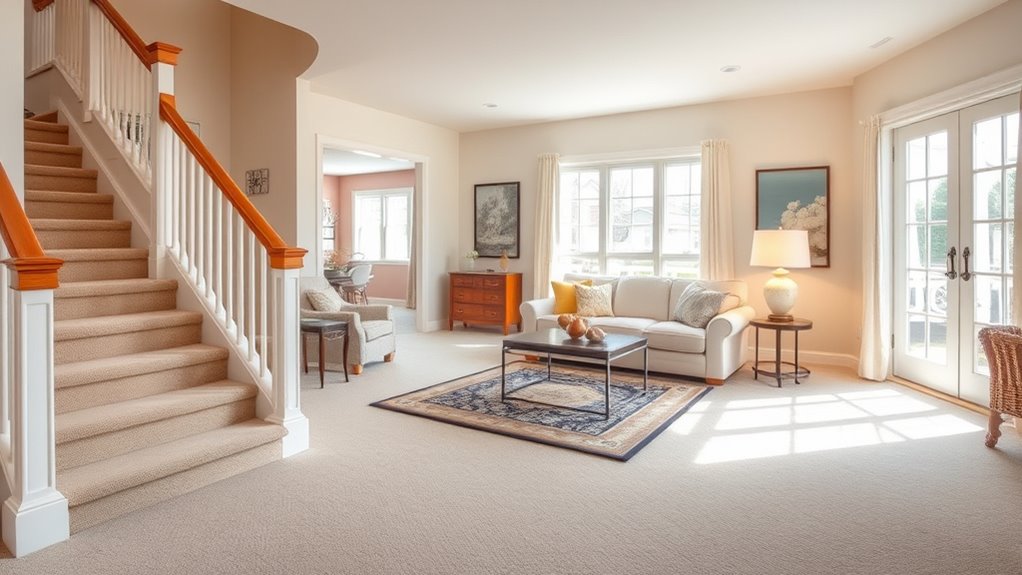
Are you aware of the simple steps you can take to make your home safer as you age? Small modifications can greatly reduce the risk of falls, which are a leading cause of injuries among seniors. One of the most effective strategies is to incorporate assistive devices into your daily routine. These devices, like grab bars, handrails, and non-slip mats, provide extra support where you need it most, especially in bathrooms and stairways. Installing grab bars near the toilet and in the shower makes it easier to get up and down safely, reducing the chance of slipping. Handrails along staircases give you added stability as you ascend or descend. Keep in mind that assistive devices aren’t just about convenience; they’re vital safety tools that can prevent serious injuries.
Another key aspect of home safety is emergency preparedness. No one wants to think about emergencies, but being ready can make a considerable difference. Keep a list of emergency contacts in a visible spot, and ensure your phone is always within reach. Consider installing a medical alert system or a personal emergency response system (PERS), so you can call for help quickly if you fall or experience a sudden health issue. Make sure your home is well-lit, especially in hallways, staircases, and bathrooms, to minimize the risk of accidents. Keep pathways clear of clutter, cords, or throw rugs that could cause you to trip. It’s also wise to have a flashlight and extra batteries handy in case of a power outage. Regularly check smoke alarms and carbon monoxide detectors to verify they’re working properly—these safety devices can alert you to dangers early, giving you time to respond. Understanding home safety technology can also help you stay connected and protected in your daily life.
You should also consider how your home layout can support your safety. Remove loose rugs or secure them with double-sided tape, and keep frequently used items within easy reach to avoid unnecessary bending or stretching. If stairs are unavoidable, consider installing stair lifts or ramps to make movement easier and safer. Being proactive about emergency preparedness means planning for situations like falls or health emergencies, so you know exactly what to do and how to get help fast.
As an affiliate, we earn on qualifying purchases.
Frequently Asked Questions
How Can I Assess My Home for Fall Hazards Effectively?
To assess your home for fall hazards effectively, start with hazard identification through thorough home walkthroughs. Look for uneven flooring, loose rugs, clutter, and poor lighting. Check staircases and bathroom areas for safety issues. During your walkthrough, be mindful of potential tripping points and areas needing better support. Taking these steps helps you spot risks early and make simple modifications to create a safer environment.
Are There Affordable Options for Home Modifications?
You’re wondering if affordable options exist for home modifications. Fortunately, there are budget-friendly upgrades you can do yourself, like installing grab bars, adding non-slip mats, or improving lighting with simple DIY safety tips. These small changes don’t have to break the bank but can substantially reduce fall risks. By prioritizing these easy, cost-effective modifications, you create a safer environment without overspending, helping you stay independent and secure at home.
What Are the Best Lighting Solutions for Seniors?
Imagine your home becomes a constellation guiding you safely through the night. Smart lighting and motion sensors work like gentle lanterns, automatically illuminating your path. You don’t have to fumble for switches or stumble in the dark. These solutions provide seamless, energy-efficient light that adapts to your movements, making your space safer and more comfortable. With smart lighting, you’ll enjoy a brighter, safer home that feels like a guiding star.
How Often Should Safety Checks Be Performed?
You should perform safety checks regularly, ideally every three to six months, to guarantee your home remains safe. During these checks, review medication management to prevent errors and ensure emergency preparedness by keeping emergency numbers accessible and safety supplies in place. Regular inspections help catch hazards early, reducing fall risks and ensuring you’re always ready for unexpected situations. Consistent safety checks are key to maintaining a secure and comfortable living environment.
Can Technology Help Prevent Falls at Home?
Technology can definitely help prevent falls at home. A smart home system allows you to monitor movement and alert someone if you fall or need help. Wearable devices can track your activity and detect falls, notifying caregivers immediately. These tools give you added safety and peace of mind, enabling quick assistance if needed. Embracing smart home technology and wearable devices makes your environment safer and helps you stay independent longer.
As an affiliate, we earn on qualifying purchases.
Conclusion
So, with these simple tweaks, your home becomes your fortress—minus the dragons and flaming arrows, of course. Think of your safety upgrades as installing invisible guards, turning your living space into Fort Knox for falls. Who knew that a few well-placed grab bars and clutter-free zones could transform your home into a fall-proof paradise? Remember, falling’s only fun in cartoons—stay cautious, stay comfy, and keep those adventures safely on the ground!
As an affiliate, we earn on qualifying purchases.
home safety lighting for seniors
As an affiliate, we earn on qualifying purchases.
As an affiliate, we earn on qualifying purchases.
Evergreen bestsellers Picks
bestsellers
As an affiliate, we earn on qualifying purchases.