
To create a quieter, more peaceful home, start by installing soundproof curtains and sealing gaps around doors and windows to block external noise. Use rugs, wall hangings, and acoustic panels to absorb sound reflections inside your space. Consider adding a white noise machine to mask irregular sounds like traffic or chatter. Combining physical barriers with auditory solutions enhances noise reduction efforts. Keep exploring more tips to turn your home into a tranquil retreat.

Turn quiet afternoons into listening time
- Thousands of audiobooks, podcasts and originals
- Listen on your phone, tablet or Echo — also offline
- Cancel anytime
Key Takeaways
- Install soundproof curtains and seal gaps around doors and windows to block external noise effectively.
- Use white noise machines to mask irregular sounds and create a soothing background environment.
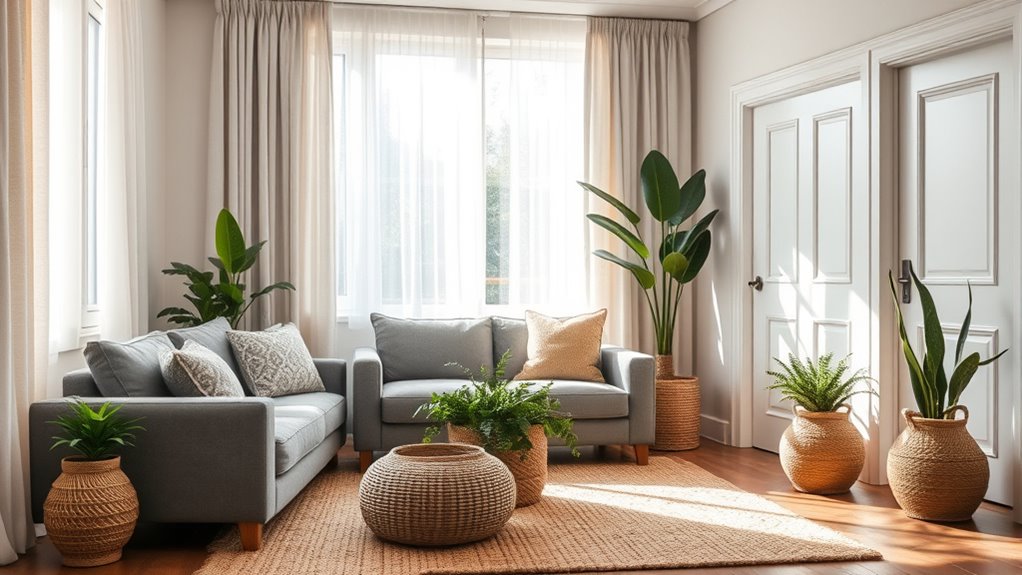
- Incorporate rugs, wall hangings, and other soft furnishings to absorb sound reflections within rooms.
- Opt for quieter electric vehicles or bikes to reduce noise pollution during commutes.
- Combine physical barriers with auditory solutions for a comprehensive approach to achieving a peaceful home.
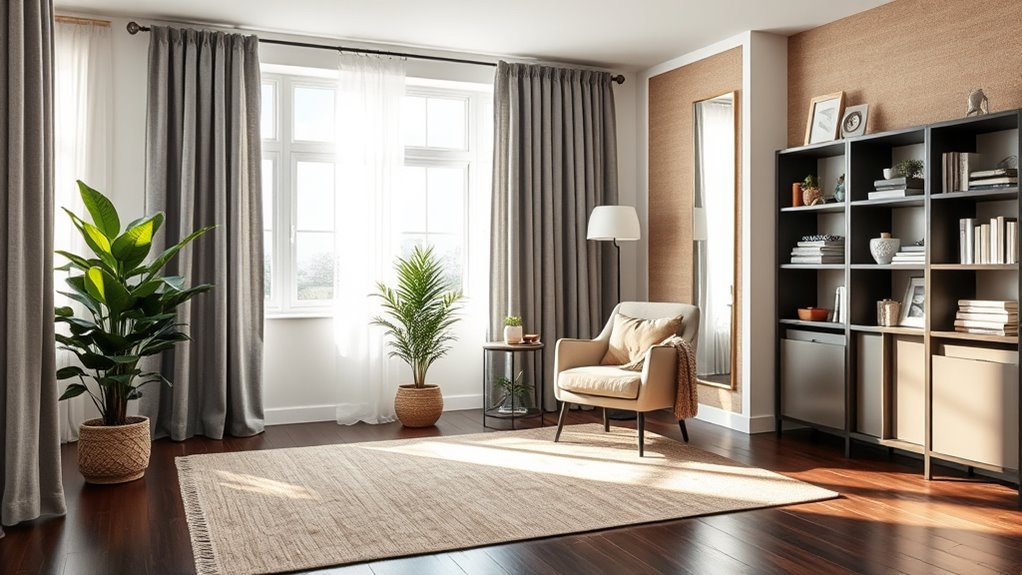
Reducing noise in your environment can substantially improve your comfort and focus. If you’re tired of unwanted sounds disrupting your daily activities or sleep, implementing effective noise reduction strategies can make a real difference. One simple yet powerful solution is to invest in soundproof curtains. These heavy, densely woven drapes are designed to block out noise from outside or noisy appliances within your home. When properly installed, soundproof curtains can greatly diminish the amount of sound that enters or exits a room, creating a quieter, more peaceful space. They’re especially useful in bedrooms, living rooms, or home offices where tranquility is essential. Pairing soundproof curtains with other sound-absorbing materials, like rugs or wall panels, can further enhance their effectiveness.
Soundproof curtains effectively reduce noise and create a peaceful, comfortable environment in your home.
Another way to diminish distracting sounds is to use white noise machines. These devices generate a consistent, soothing background sound that masks irregular noises like traffic, barking dogs, or household chatter. White noise machines are particularly helpful if you struggle to fall asleep or need better concentration during work or study sessions. By providing a steady audio backdrop, they help your brain filter out disruptive sounds, making your environment feel calmer and more controlled. You can find models with customizable sound profiles or adjustable volume levels to suit your preferences. Positioning the machine strategically in your room ensures the sound evenly spreads, maximizing its noise-masking benefits.
In addition, choosing quieter electric bikes or electric dirt bikes can significantly reduce noise pollution, especially if you commute or ride regularly in quiet neighborhoods. Combining soundproof curtains and white noise machines offers a thorough approach to noise reduction. While curtains physically block sound waves from entering your space, the white noise creates an auditory mask, making external noises less noticeable. This synergy can be especially effective in urban areas or busy households where noise pollution is unavoidable. Additionally, consider sealing gaps around doors and windows with weatherstripping or draft stoppers to prevent sound leaks. Using rugs or wall hangings can absorb sound reflections within a room, further damping noise.
Keep in mind that consistency is key. Regularly using these tools and making small modifications to your environment can lead to noticeable improvements in your peace and comfort. Whether it’s a quiet morning or a restful night’s sleep you’re after, combining physical barriers like soundproof curtains with auditory solutions like white noise machines empowers you to create a quieter, more serene home. By taking these steps, you’re actively reducing distractions and fostering an atmosphere conducive to relaxation, productivity, and well-being.
As an affiliate, we earn on qualifying purchases.
Frequently Asked Questions
How Can I Reduce Noise From Nearby Traffic Effectively?
To effectively reduce noise from nearby traffic, you should consider installing traffic barriers or noise barriers around your property. These barriers absorb and block sound waves, preventing noise from reaching your home. Planting dense shrubs or trees can also help, but barriers are more reliable. Make certain they are tall and sturdy enough to shield your windows and outdoor spaces, creating a much quieter, more peaceful environment inside your home.
What Are the Best Materials for Soundproofing Walls?
Did you know that walls can block up to 60% of noise? To soundproof effectively, you should use high-density drywall insulation, which absorbs sound vibrations. Acoustic panels are also great for reducing echo and noise transfer. Combining these materials creates a more peaceful environment. Installing acoustic panels on your walls and upgrading to better drywall insulation will considerably cut down noise from outside or adjoining rooms.
Can Plants Help in Reducing Indoor Noise Levels?
Plants can help reduce indoor noise levels by enhancing natural sound absorption and improving indoor air quality. As you place more greenery in your space, they absorb sound waves and create a softer environment. Additionally, plants filter out pollutants, boosting your indoor air quality. Keep in mind, while plants contribute to noise reduction, combining them with other soundproofing methods will give you the best results for a quieter, more peaceful home.
How Does Furniture Placement Affect Noise Reduction?
Your furniture arrangement plays a key role in acoustic optimization, affecting how sound travels and echoes in your space. By strategically placing bookshelves, sofas, and rugs, you can absorb and block noise effectively. Avoid cluttering your room with open space that reflects sound. Instead, position furniture to create barriers and zones that dampen noise, making your home quieter and more peaceful. Proper furniture placement enhances your overall noise reduction strategy.
Are There Any DIY Solutions for Soundproofing Windows?
You can try DIY window insulation by applying clear plastic film or bubble wrap over your windows to create an extra barrier. Seal gaps around the frame with weatherstripping or caulk to prevent drafts and noise leaks. These simple solutions help reduce sound transmission and improve your home’s quietness without expensive professional help. Just guarantee you properly secure the insulation and seal all gaps for the best noise reduction results.
As an affiliate, we earn on qualifying purchases.
Conclusion
By applying these noise reduction tips, you can transform your home into a peaceful sanctuary. Did you know that studies show reducing noise levels can improve your sleep quality by up to 25%? That’s a huge boost to your well-being! So, take action today—seal those gaps, add soft furnishings, and consider soundproofing solutions. A quieter home isn’t just more relaxing; it’s better for your health and happiness. Start creating your peaceful space now!
acoustic wall panels for sound absorption
As an affiliate, we earn on qualifying purchases.
As an affiliate, we earn on qualifying purchases.
draft stopper for doors and windows
As an affiliate, we earn on qualifying purchases.
As an affiliate, we earn on qualifying purchases.
Fall Picks
fall essentials
As an affiliate, we earn on qualifying purchases.