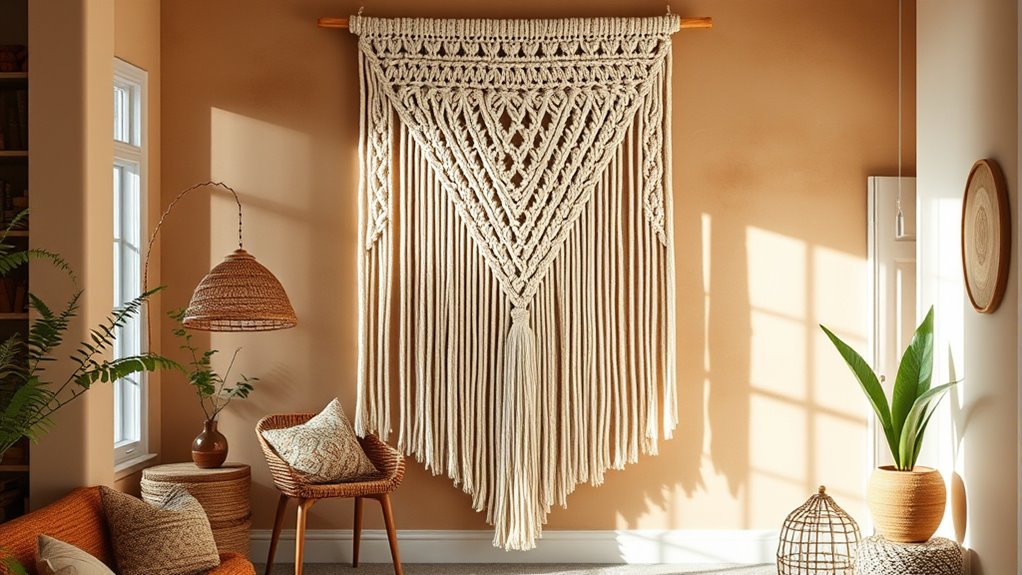

Macramé wall hangings are a fantastic way for beginners to add boho chic style to your space with simple knots like square, half hitch, and spiral knots. Using natural fibers such as cotton, jute, or hemp, you can create textured, eye-catching designs that suit any room. Start with easy patterns and practice your tension to perfect your piece. Keep exploring, and you’ll soon master techniques to craft stunning, personalized decor.
Listen free for 30 days with Audible
Thousands of audiobooks and originals — cancel anytime.
As an affiliate, we earn on qualifying purchases.
Key Takeaways
- Start with simple knot patterns like square knots to build a foundational understanding.
- Use natural fibers such as cotton for a soft, boho aesthetic and easy handling.
- Experiment with different textures and lengths to create personalized, trendy wall hangings.
- Organize your workspace and practice tension control for neat, professional-looking results.
- Combine various knots and materials to achieve diverse, boho-chic designs suited for beginners.

Macramé wall hangings have become a popular way to add texture and bohemian charm to any space. Whether you’re decorating a cozy corner or a large wall, they instantly elevate the vibe with their intricate designs and natural appeal. To get started, you’ll want to understand the basics of knot patterns and material choices, as these are the foundation of any successful project. Once you grasp these elements, creating your own boho chic piece becomes both fun and rewarding.
First, let’s talk about knot patterns. These are the building blocks of your wall hanging, and mastering a few simple knots will give you endless design possibilities. The most common knots include the square knot, half hitch, and spiral knot. The square knot is straightforward and versatile, perfect for creating symmetrical sections or borders. The half hitch allows for more flowing, linear patterns, while the spiral knot adds a textured, rounded element to your piece. As you practice, you’ll notice how combining these knots in different sequences creates unique textures and visual interest. You don’t need to become an expert overnight—start with simple patterns and gradually experiment with more complex arrangements as your confidence grows.
Master simple knots like square, half hitch, and spiral for endless macramé design possibilities.
Material choices are just as essential as knot patterns. For beginners, natural fibers like cotton, jute, or hemp are ideal because they’re easy to work with and have a soft, authentic look. Cotton cord, in particular, is popular for its smooth texture and availability in various thicknesses, allowing you to choose the right weight for your design. If you want a more rustic, earthy feel, jute or hemp adds that organic touch. Synthetic fibers are also an option if you prefer brighter colors or more durability. When selecting materials, consider the weight and drape you want your wall hanging to have. Thinner cords are great for delicate, intricate designs, while thicker cords provide a bold, statement look. Additionally, think about color—neutral tones create a calm, minimalist aesthetic, whereas vibrant hues can make your piece pop and become a focal point.
As you gather your materials and familiarize yourself with knot patterns, you’ll see that creating a macramé wall hanging isn’t complicated. It’s about experimenting, adjusting tension, and finding your rhythm. Keep your workspace organized, and don’t be afraid to try different combinations of knots and materials. With a little patience and practice, you’ll be able to craft stunning, personalized wall hangings that bring boho charm into your home. The process is as much about enjoying the creative journey as it is about the finished piece, so have fun exploring the endless possibilities macramé offers. Understanding knot patterns is essential for creating intricate and appealing designs.
macrame wall hanging kit for beginners
As an affiliate, we earn on qualifying purchases.
As an affiliate, we earn on qualifying purchases.
Frequently Asked Questions
What Are the Best Types of Cords for Beginners?
For beginners, the best types of cords are cotton and jute because they’re easy to work with and affordable. Opt for medium thickness cords, around 3-4mm, as they’re sturdy yet manageable for knotting. Fiber options like hemp or nylon are also good, but might be more challenging for new crafters. Start with these, and you’ll find knotting easier and your wall hangings will look beautiful.
How Long Does It Take to Complete a Wall Hanging?
It typically takes beginners around 4 to 8 hours to complete a wall hanging, depending on the complexity and your familiarity with techniques for beginners. Simple designs might take just a few hours, while more intricate patterns could require multiple sessions. Planning your project with common project timelines helps you stay motivated and realistic about your progress. Break it into manageable steps, and you’ll enjoy creating your boho chic wall art without feeling overwhelmed.
Can Macramé Be Customized for Different Room Sizes?
Your macramé can be perfectly customized for different room sizes—no project is too big or small! You can use scaling techniques to adjust the length and width, ensuring it fits just right. Plus, color customization allows you to match your decor effortlessly. With some planning, you’ll create a stunning piece that transforms any space into a boho paradise—your wall hangings will be the envy of everyone!
Are There Eco-Friendly or Sustainable Materials Available?
Yes, you can find eco-friendly and sustainable materials for your macramé projects. Look for recycled fibers, which help reduce waste, or biodegradable options like organic cotton or jute. These materials not only support environmental conservation but also add a natural, authentic touch to your boho chic wall hangings. Choosing eco-conscious supplies allows you to craft beautiful decor while minimizing your ecological footprint.
How Do I Fix Mistakes Without Starting Over?
Think of fixing mistakes in your macramé as untangling a knot in a delicate web. You can use quick fix techniques like gently loosening or tightening specific knots. For knot correction methods, carefully undo the problematic knot and re-tie it correctly, or work backward to where the error occurred. Patience is key, and with practice, you’ll master these fixes, turning imperfections into part of your art.
As an affiliate, we earn on qualifying purchases.
Conclusion
Now that you know the basics, it’s time to create your own boho chic masterpiece. Imagine decorating your living room with a stunning, handcrafted macramé wall hanging that reflects your style. For instance, Sarah started with a simple pattern and now has a gallery wall of colorful designs. With a little practice, you’ll turn your space into a cozy, artistic retreat. So grab your cords, get creative, and let your unique style shine!
As an affiliate, we earn on qualifying purchases.
natural fiber jute rope for macrame
As an affiliate, we earn on qualifying purchases.
As an affiliate, we earn on qualifying purchases.
Flea & tick season Picks
flea and tick prevention
As an affiliate, we earn on qualifying purchases.