To start your first quilt today, choose soft, durable fabrics in colors and patterns you love, planning your design beforehand. Use sharp scissors or rotary cutters, a cutting mat, and accurate rulers for precise cuts. Sew pieces together with consistent seams, pinning or clipping for alignment. Wash and iron fabrics first to prevent shrinking later. As you follow these steps, you’ll get the hang of quilting basics and create a beautiful quilt—keep exploring to master each step.
Key Takeaways
- Select high-quality, coordinated fabrics and plan your design before cutting.
- Use precise tools like rotary cutters, acrylic rulers, and cutting mats for accurate measurements.
- Wash and iron fabrics beforehand to prevent shrinking and color bleeding.
- Secure fabric pieces with pins or clips before sewing to ensure proper alignment.
- Sew with consistent seam allowances and press seams for a professional, polished finish.
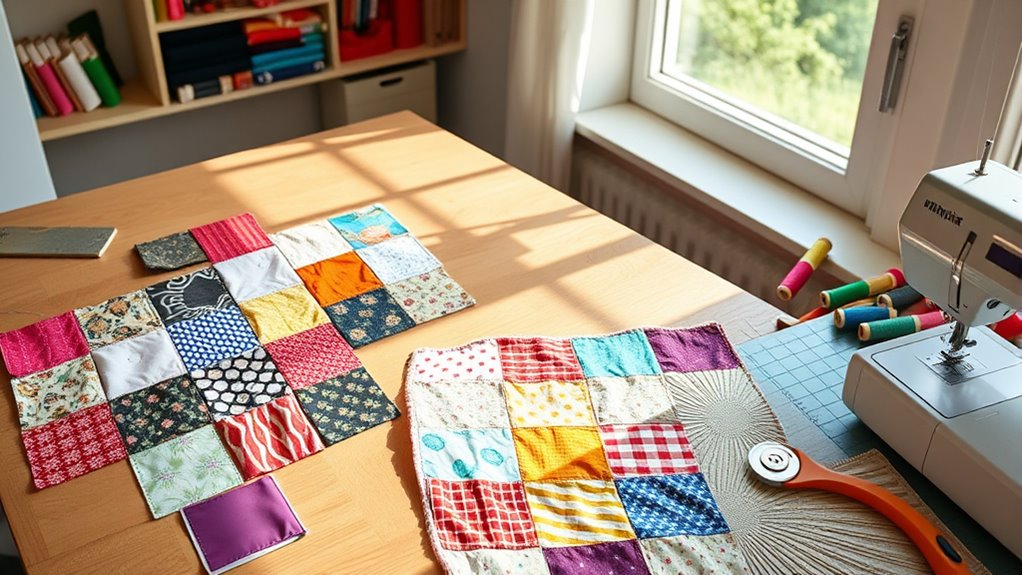
Have you ever wondered how to create a beautiful quilt from scratch? The first step is understanding the significance of fabric selection. Choosing the right fabrics can make or break your project. Look for high-quality cottons that are soft yet durable, as these will hold up well over time and washings. Pick a color palette that inspires you, whether it’s a harmonious blend of pastels or bold, contrasting shades. Think about how the fabrics will work together in your design, considering patterns and textures that add visual interest. When selecting fabrics, it’s also wise to buy a little extra—about 10% more than your estimated yardage—to account for mistakes or future repairs.
Once you’ve gathered your fabrics, the next essential step is assembling your quilting tools. Having the right tools makes the process smoother and more enjoyable. Invest in a good pair of fabric scissors or rotary cutters for clean, precise cuts. A cutting mat will protect your surfaces and help you measure accurately, especially when using a rotary cutter. You’ll also need a clear acrylic ruler to ensure straight, even lines. Pins and clips are necessary to hold your fabric pieces securely in place during sewing, preventing shifting that could distort your design. A sewing machine is vital for stitching your quilt pieces together efficiently, but hand sewing supplies like needles and thimbles are handy for detail work or finishing touches.
Before you start sewing, it’s helpful to have a design plan or pattern. This will guide your fabric choices and cutting layout, saving you from unnecessary mistakes. Preparing your fabrics by washing and ironing them beforehand will prevent shrinking or color bleeding later on. Once you’re ready to sew, lay out your pieces and double-check their placement against your pattern. Using your quilting tools effectively will ensure that your seams are straight and your pieces align perfectly. Take your time to pin or clip pieces securely before sewing, and always sew with a consistent seam allowance—usually 1/4 inch for quilting projects.
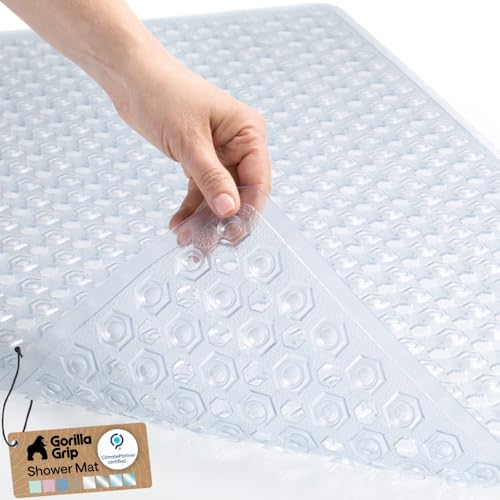
GORILLA GRIP Patented Bath Tub Shower Mat, Machine Washable Bathtub Floor Liner Mats, Suction Cups and Drain Holes to Keep Tubs Clean, Soft on Feet, Bathroom Essentials, 35x16 Inch, Clear
- Patented Design with Suction Cups: Securely stays in place with powerful suction
- Easy Water Drainage: Drain holes prevent water pooling
- BPA-Free and Textured: Soft, pebble-textured surface for comfort
As an affiliate, we earn on qualifying purchases.
Frequently Asked Questions
What Are the Best Beginner-Friendly Quilting Patterns?
When choosing beginner-friendly patterns, focus on simple designs like squares, nine-patch, or patchwork quilts. These patterns make it easy to practice sewing straight lines and managing fabric color combinations. Stick to easy-to-mix fabric colors and avoid complex shapes. Starting with these beginner-friendly patterns helps you build confidence and skills quickly, making the quilting process enjoyable and less overwhelming as you learn the fundamentals.
How Do I Choose the Right Fabric for My Quilt?
When choosing fabric for your quilt, focus on fabric selection and pattern coordination. Pick fabrics that complement each other in color and style, ensuring they match the overall theme or mood you want. Consider the weight and texture to make sewing easier and achieve a professional look. Test your fabric combinations by laying them out to see how they work together before cutting, so your quilt turns out beautifully coordinated.
What Tools Are Essential for Quilting at Home?
Imagine building a house—you need the right tools for a sturdy foundation. For quilting at home, essential quilting tools include a rotary cutter, cutting mat, quilting ruler, pins, and a sewing machine. These tools help you with precise fabric selection and seamless stitching. Without them, your project might feel like trying to build without a hammer. Invest in quality quilting tools to make your quilting journey smooth and enjoyable.
How Long Does It Typically Take to Complete a Quilt?
When considering quilt finishing times, it varies based on your quilting project duration and complexity. You might spend a few days on a small wall quilt or several weeks on a large, detailed one. Your pace, available time, and skill level influence how long it takes. Typically, completing a quilt can take anywhere from a weekend to a few months, so plan accordingly to enjoy the process and stay motivated.
Can I Quilt Without Sewing Experience?
Sure, you can quilt without sewing experience—if you enjoy a little chaos! Machine quilting makes it easier for beginners, letting your machine do most of the work. Hand quilting? Well, that’s like learning ballet to walk—beautiful but demanding. So, plunge into it! With patience and practice, you’ll master machine quilting or hand quilting, turning your novice status into quilting prowess faster than you can say “patchwork.”

TEESHLY Bath Tub and Shower Mats, Non Slip 40 x 16 Inch Extra Large Bathtub Mat, Machine Washable Bathmat with Drain Holes, Suction Cups for Bathroom Floor, Gray
- Large Non-Slip Bath Mat: 40 x 16 inches with 362 suction cups
- Massage-Style Pebbled Design: Provides a massage-like shower experience
- Optimized Drainage Holes: 327 large holes for water flow
As an affiliate, we earn on qualifying purchases.
Conclusion
Now that you’ve learned the basics, you’re ready to start quilting your own masterpiece. Think of quilting as planting a garden; each stitch is a seed that, with patience and care, will grow into a beautiful, cozy creation. Don’t be afraid to experiment and let your creativity blossom. With every stitch, you’re weaving together not just fabric, but your own story. So pick up your tools and watch your quilt come to life, one thread at a time.

homerella Bathtub Mat Non Slip 35x16 Shower Mat Non Slip Anti Mold BPA Free
- Non-Slip Design: 250+ anti-slip suction cups for secure grip
- Mold & Mildew Resistant: Machine washable with optimal water drainage
- Skin-Friendly Material: Odorless, BPA-free, eco-friendly vinyl
As an affiliate, we earn on qualifying purchases.

Flipper Big Button TV Remote for Seniors, Dementia - Easy Setup
- Designed for Seniors and Dementia: Helps seniors regain TV independence
- Large Color-Coded Buttons: Easy to see and press for all users
- Simple 4-Button Layout: Reduces confusion with essential controls only
As an affiliate, we earn on qualifying purchases.