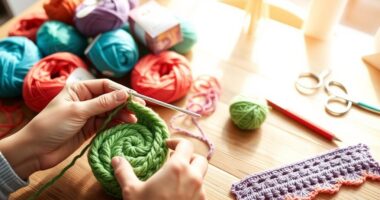
Eco-friendly crafting involves using sustainable materials like recycled supplies, natural dyes, and biodegradable tools to create beautiful art while minimizing environmental impact. By repurposing everyday items, choosing organic fabrics, and processing dyes responsibly, you can reduce waste and pollution. Incorporating eco-conscious practices in your workspace helps promote resourcefulness and sustainability. Interested in discovering practical tips and inspiring ideas to make your craft projects greener? Keep exploring to learn how you can make a positive difference through your creativity.
Key Takeaways
- Use recycled materials like magazines, fabric scraps, and cardboard to give new life to waste items.
- Choose natural dyes from plants such as beetroot, turmeric, or indigo for eco-friendly coloring.
- Source sustainable materials like organic cotton, hemp, and recycled paper for crafting projects.
- Opt for biodegradable, bamboo, or wooden tools and practice responsible waste disposal.
- Incorporate eco-conscious habits to reduce environmental impact and promote sustainability in crafting.

Eco-friendly crafting is a rewarding way to express your creativity while minimizing environmental impact. When you choose to work with recycled supplies, you’re giving new life to materials that might otherwise end up in a landfill. Think of old magazines, scrap fabric, glass jars, or cardboard as potential canvases for your projects. Using recycled supplies not only reduces waste but also inspires you to see everyday items in a new light. You might turn discarded paper into beautiful greeting cards or repurpose tin cans into planters. This approach encourages resourcefulness and helps cut down on the demand for new raw materials, making your craft projects more sustainable.
In addition to recycled supplies, selecting biodegradable dyes can considerably lessen your ecological footprint. Traditional dyes often contain synthetic chemicals that pollute waterways and take centuries to decompose. Instead, opt for biodegradable dyes made from natural ingredients like beetroot, turmeric, or indigo. These dyes are not only safer for the environment but also produce vibrant, earthy hues that add a rustic charm to your creations. When working with biodegradable dyes, you can experiment with different plant extracts to achieve a range of colors, making every project uniquely yours. Using natural dyes also reduces your exposure to harmful chemicals, creating a healthier crafting environment. Sustainable sourcing of materials further enhances the eco-friendliness of your projects and supports responsible practices.
Another key aspect of eco-friendly crafting is being mindful of your materials’ lifecycle. Before starting a project, consider whether your supplies are sourced sustainably. For instance, choose recycled paper or fabrics made from organic cotton or hemp. When possible, buy in bulk to minimize packaging waste, and always reuse or upcycle leftover scraps. This not only reduces waste but also encourages a mindset of conservation and creativity. If you’re dyeing fabrics, process any leftover dye solutions responsibly by composting or using them in your garden, if appropriate. Small adjustments like these can make a big difference over time.
Furthermore, embracing eco-friendly crafting means paying attention to your workspace. Use eco-conscious tools, such as bamboo scissors or wooden paintbrushes, which are biodegradable and sourced sustainably. When you finish a project, clean your tools with biodegradable soaps to prevent chemical runoff into the environment. Share your knowledge with others by demonstrating how to craft with recycled supplies and biodegradable dyes, inspiring a community centered around sustainability. Over time, your efforts can contribute to a broader movement that values environmental responsibility and creativity hand in hand.
In essence, eco-friendly crafting with recycled supplies and biodegradable dyes empowers you to make beautiful, meaningful art while taking care of the planet. Every small step you take—repurposing materials, choosing natural dyes, and practicing mindful consumption—adds up. Your creative pursuits can become a powerful statement about sustainability, proving that you don’t need to compromise style or originality to protect the environment. Instead, you’re shaping a future where craft and conservation go hand in hand, inspiring others to follow suit.

The Organic Artist for Kids: A DIY Guide to Making Your Own Eco-Friendly Art Supplies from Nature
As an affiliate, we earn on qualifying purchases.
As an affiliate, we earn on qualifying purchases.
Frequently Asked Questions
How Can I Identify Truly Sustainable Crafting Materials?
You can identify truly sustainable crafting materials by checking certification labels like FSC, Fair Trade, or GOTS, which verify eco-friendly practices. Also, ask about material sourcing—prefer suppliers that prioritize renewable resources and ethical labor. Look for transparent information about how materials are produced and sourced. By paying attention to these details, you guarantee your crafting choices support sustainability and reduce environmental impact.
Are Eco-Friendly Crafting Supplies More Expensive Than Traditional Ones?
You might find eco-friendly crafting supplies a bit more of an investment initially, but the cost comparison often balances out over time. While sustainable materials can sometimes be pricier due to limited availability, many eco-conscious options are becoming more accessible and affordable. By choosing wisely, you can enjoy eco-friendly crafting without stretching your budget, all while supporting a healthier planet. It’s a small price for a sustainable and stylish craft.
What Are Some Beginner-Friendly Sustainable Crafting Projects?
You can start with beginner-friendly sustainable crafting projects like making reusable tote bags from old T-shirts or creating decor from recycled paper. Use simple recycling techniques such as turning scrap fabric into patchwork or repurposing jars for storage. These projects rely on reusable resources, reducing waste and environmental impact. They’re easy to learn, cost-effective, and fun, making them perfect for getting started with eco-friendly crafting while helping the planet.
How Do I Dispose of or Recycle Eco-Friendly Craft Waste Properly?
Oh, because throwing your eco-friendly craft waste in the trash is obviously the best idea, right? Actually, you should recycle biodegradable packaging and compost organic scraps to minimize waste. Use composting methods to break down paper, fabric scraps, or plant-based packaging naturally. This way, you’re ensuring your craft efforts stay eco-friendly, instead of ending up in a landfill. Proper disposal keeps your eco mission truly sustainable.
Can Sustainable Materials Be Used for Commercial Crafting Products?
Yes, you can definitely use sustainable materials for commercial crafting products. Incorporate biodegradable plastics to make eco-friendly packaging or components, and use recycled textiles for clothing or accessories. These materials appeal to environmentally conscious consumers and reduce your carbon footprint. By choosing sustainable options, you’ll not only create unique, eco-friendly products but also demonstrate your commitment to sustainability, helping your brand stand out in the market.

Honey Oak Natural Tie Dye Kit | 3 Color Extract Set – Olive Green, Sunflower Yellow, Turkey Red | Plant-Based Fabric Dyes for Shibori & DIY Fabric Art | Easy to Use Craft Kit
Natural & Non-Toxic Dye – Made from 100% natural sources, Honey Oak’s dye is safe, chemical-free, and perfect…
As an affiliate, we earn on qualifying purchases.
As an affiliate, we earn on qualifying purchases.
Conclusion
By choosing sustainable materials, you’re planting seeds of change that grow into a greener future. Every eco-friendly craft you create is like watering a tiny sprout, helping it flourish into a thriving plant. Remember, your small efforts ripple outward, transforming the world one mindful project at a time. Keep nurturing your passion for eco-friendly crafting, and watch as your creativity blooms into a beautiful, sustainable garden that benefits everyone.

Carrot Design Newspaper Pot Maker – Wooden Seed Starter Tool for DIY Biodegradable Paper Pots – Mold for Seedlings & Gardening – 2 Inch
Make Your Own Biodegradable Seed Starter Pots: Create eco-friendly paper pots using newspaper or scrap paper, ideal for…
As an affiliate, we earn on qualifying purchases.
As an affiliate, we earn on qualifying purchases.
recycled paper for crafts
As an affiliate, we earn on qualifying purchases.
As an affiliate, we earn on qualifying purchases.