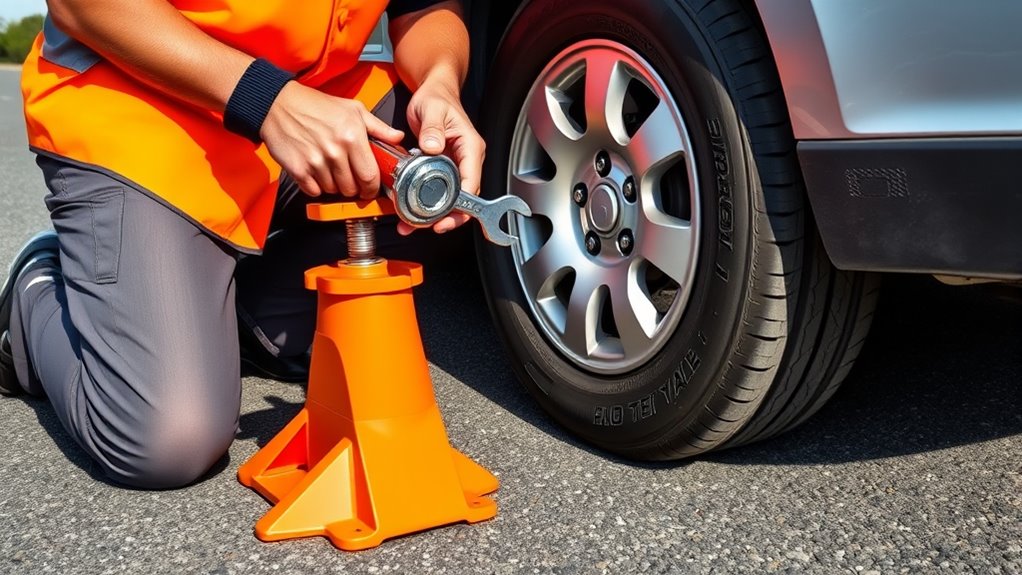

When a flat tire happens, pull over to a safe, flat spot away from traffic and turn on your hazard lights. Loosen the lug nuts slightly, then lift your vehicle with a jack at the proper jacking point. Remove the flat tire, place the spare on the hub, and tighten the nuts in a star pattern before lowering your car. Double-check everything and verify the spare is properly inflated. For a smooth change and more helpful tips, keep going.

Turn quiet afternoons into listening time
- Thousands of audiobooks, podcasts and originals
- Listen on your phone, tablet or Echo — also offline
- Cancel anytime
Key Takeaways
- Find a safe, level location away from traffic to pull over and turn on hazard lights.
- Loosen lug nuts slightly before lifting the vehicle, and then jack it up at the designated jacking point.
- Remove lug nuts completely and carefully take off the flat tire.
- Mount the spare tire, tighten lug nuts by hand, then lower the vehicle and tighten nuts in a star pattern.
- Confirm all tools are collected, check spare pressure, and drive cautiously to the nearest service station.

Getting a flat tire can be frustrating, but knowing how to change it quickly and safely can save you time and hassle. Before you even hit the road, it’s essential to guarantee your vehicle has the proper tire pressure. Proper tire pressure helps prevent flats and ensures your car handles correctly, making the process of changing a tire smoother if the need arises. Regularly check your tires with a pressure gauge and keep an eye on the recommended PSI listed in your vehicle’s manual or on the door frame. Being proactive can reduce the chances of sudden flats and keep you prepared for emergencies.
Regularly check your tire pressure to prevent flats and ensure safe driving.
When a flat occurs, first find a safe spot to pull over, away from traffic. Turn on your hazard lights immediately to alert other drivers. Before you get out of your vehicle, make sure it’s on a flat, stable surface. If you have an emergency kit in your trunk or glove compartment, now’s the time to get it out. Essential items like a jack, lug wrench, spare tire, gloves, and reflective triangles are your best friends in this situation. Stash these supplies in an easily accessible spot so you can grab them quickly when needed. Familiarize yourself with their locations so you’re not fumbling around in the dark or in bad weather.
Once you’re ready, loosen the lug nuts slightly before lifting the vehicle. Use the lug wrench to turn them counterclockwise, but don’t remove them completely yet. Next, position the jack under the vehicle’s jacking point—consult your owner’s manual if you’re unsure where this is. Carefully lift the car until the flat tire is off the ground. Now, remove the lug nuts completely and set them aside in a safe place. Carefully pull the flat tire straight off and set it aside. Mount the spare tire onto the hub, aligning the holes with the studs, then screw the lug nuts back on by hand as tightly as you can.
Additionally, understanding the importance of tire technology can help you choose the best replacement for your vehicle, enhancing safety and performance. Lower the vehicle slowly until the spare touches the ground, then use the lug wrench to tighten the nuts in a star pattern. This pattern ensures even pressure, securing the wheel properly. Once everything’s tight, double-check the lug nuts for firmness. Remember, a properly inflated spare tire—whether full-size or space saver—must be checked for proper tire pressure as soon as possible. Having an emergency kit with a tire pressure gauge can help confirm this. Afterward, gather your tools, dispose of the flat tire safely, and drive carefully to the nearest service station to get your regular tire repaired or replaced.
Frequently Asked Questions
Do I Need to Call Roadside Assistance After Changing My Tire?
After changing your tire, you might wonder if you need roadside help. If the flat was caused by a simple issue like a nail or puncture, a tire repair could suffice, and you might not need roadside assistance. However, if you’re unsure about the damage or if the tire is severely damaged, it’s safer to contact roadside help. They can ensure your tire is properly repaired or replaced for safe driving.
How Do I Dispose of the Damaged Tire Properly?
You might think disposing of a damaged tire is complicated, but it’s straightforward. First, check local disposal regulations and recycling options—many areas accept tires at designated facilities or recycling centers. Avoid throwing it in the trash, as tires aren’t biodegradable and can harm the environment. By following proper disposal regulations, you help reduce pollution and support recycling efforts. Call your local waste management for specific guidelines, and you’ll be doing your part responsibly.
Can I Drive on a Spare Tire for Long Distances?
You shouldn’t drive long distances on a spare tire because of its limitations. Spare tires are designed for short-term use only and typically have reduced speed and distance capabilities. Ignoring these limitations can lead to tire failure or damage to your vehicle. Always check the manufacturer’s guidelines, usually found on the spare, and plan to replace or repair the tire as soon as possible to guarantee safe long-distance driving.
What Precautions Should I Take if Changing a Flat in Bad Weather?
Did you know that over 70% of accidents happen during poor weather conditions? When changing a flat tire in bad weather, you should prioritize safety by ensuring good visibility and avoiding traffic. Turn on your hazard lights, wear reflective clothing, and stay clear of passing vehicles. If visibility concerns arise or conditions worsen, consider waiting for help or moving to a safer location before attempting to change the tire.
Is It Safe to Change a Tire on a Busy Highway?
Changing a tire on a busy highway can be risky, but you can stay safe by prioritizing traffic safety and following emergency procedures. Pull over to a safe spot, turn on your hazard lights, and set up reflective triangles if available. Keep your distance from moving traffic, stay alert, and don’t rush. If you’re unsure, calling roadside assistance is the safest choice to avoid accidents or injuries.
Conclusion
Changing a flat tire might seem intimidating, but remember, it’s just a bump in the road, not the end of the journey. Follow these simple steps, stay calm, and you’ll be back on your wheels in no time. Think of it as a mini adventure—a moment where you take control and turn a flat tire into a quick fix. So, keep your cool, and you’ll have that spare on and ready to roll again before you know it.
Fall Picks
fall essentials
As an affiliate, we earn on qualifying purchases.