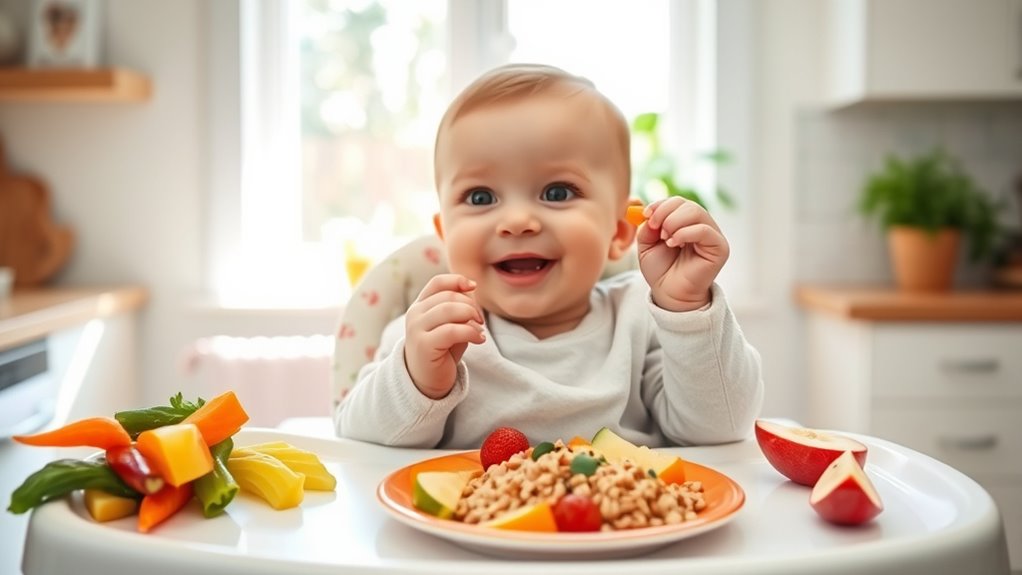

Baby-led weaning helps your little one explore solid foods at their own pace, promoting independence, self-regulation, and confidence during meals. It encourages sensory exploration with different textures and tastes, which can reduce fussiness and foster healthy eating habits. As your baby practices grasping and self-feeding, their motor skills and coordination improve naturally. To do this safely, offer easy-to-manage foods and supervise mealtimes. Continue exploring these tips to set your child on a path of confident, enjoyable eating.
Key Takeaways
- Promotes self-feeding skills, independence, and confidence in infants during mealtime.
- Encourages sensory exploration, improving food acceptance and reducing fussiness.
- Supports motor development through grasping and manipulating a variety of textures.
- Emphasizes safety with appropriate food sizes and supervision to prevent choking.
- Enhances long-term healthy eating habits by offering diverse, nutritious foods in a relaxed environment.

Baby-led weaning is an approach that allows your infant to explore solid foods at their own pace, encouraging independence and self-regulation. Instead of spoon-feeding purees, you let your baby choose what to eat from appropriately sized pieces of food. This method promotes mealtime independence, meaning your child learns to feed themselves and develop a sense of control over their eating. As they grasp and manipulate different textures, they gain confidence and become more willing to try new foods. This natural progression helps your baby develop fine motor skills and hand-eye coordination while fostering a positive attitude toward eating.
Baby-led weaning fosters independence and confidence through self-selected, textured foods that promote motor skills and positive eating habits.
One of the key benefits of baby-led weaning is sensory exploration. When your baby handles different foods, they experience a variety of textures, shapes, and tastes. This sensory engagement not only stimulates their developing senses but also helps them become comfortable with a wide range of foods, which can lead to better acceptance later on. For example, touching and tasting crunchy vegetables, soft fruits, or chewy proteins allows your infant to learn about food through multiple senses. This hands-on approach makes mealtime more engaging and can reduce fussiness, as your baby learns to listen to their body’s hunger and fullness cues through direct experience.
To support successful sensory exploration and mealtime independence, choose foods that are easy for your baby to grasp and chew. Offer a variety of textures—soft, mashed, and slightly firmer pieces—so they can practice different oral skills. Always supervise your infant closely during meals to prevent choking and ensure safety. Keep in mind that your baby might play with their food, drop pieces, or make messes—that’s part of the learning process. Patience is essential; avoid pressuring your little one to eat and instead focus on creating a relaxed, positive environment. Additionally, understanding the importance of projector technology can help you create an optimal mealtime setting, such as choosing well-lit areas that mimic a comfortable dining environment.
Incorporate a wide range of nutritious foods to expose your baby to different flavors and nutrients. Offer vegetables, fruits, grains, and proteins in manageable sizes. Remember, mealtime is as much about exploration and enjoyment as it is about nutrition. Encouraging your infant to explore foods actively helps them become confident eaters and sets the stage for healthy eating habits later in life. With consistent practice, your baby will gain mealtime independence, develop their palate, and enjoy the process of discovering new foods through sensory exploration.

TEESHLY Bath Tub and Shower Mats, Non Slip 40 x 16 Inch Extra Large Bathtub Mat, Machine Washable Bathmat with Drain Holes, Suction Cups for Bathroom Floor, Gray
- Large Non-Slip Bath Mat: 40 x 16 inches with 362 suction cups
- Massage-Style Pebbled Design: Provides a massage-like shower experience
- Optimized Drainage Holes: 327 large holes for water flow
As an affiliate, we earn on qualifying purchases.
Frequently Asked Questions
When Should I Start Baby-Led Weaning?
You should start baby-led weaning around six months, when your baby reaches feeding milestones like sitting up unassisted and showing interest in foods. The introduction timing is key—wait until they can grasp food and manage their mouth movements. Starting at the right moment helps guarantee your baby develops healthy eating habits, encourages self-feeding, and supports their independence while reducing choking risks.
How Do I Ensure Nutritional Balance?
Like a modern-day chef, you guarantee nutritional balance by focusing on nutritional variety and smart meal planning. Offer a mix of fruits, vegetables, proteins, and grains to cover all essential nutrients. Observe your baby’s cues, introduce new foods gradually, and include iron-rich options. This approach helps promote healthy growth while making mealtimes engaging, ensuring they get the nutrients they need without the fuss of traditional spoon-feeding.
What Safety Precautions Are Necessary?
To keep your baby safe during baby-led weaning, always supervise mealtime closely. Make certain foods are cut into manageable, age-appropriate pieces to prevent choking hazards. Be aware of potential food allergies by introducing new foods one at a time and watching for reactions. Keep small, hard foods away from your baby’s reach, and avoid foods that pose choking risks. Follow these safety precautions to make mealtime both safe and enjoyable.
How Do I Handle Gagging Incidents?
When gagging occurs, stay calm and encourage your baby to cough, which helps clear the airway. Remember, gagging is a normal part of gag reflex development and differs from choking. To prevent choking, always supervise your baby during meals, offer appropriately sized pieces, and cut food into manageable shapes. Avoid rushing or forcing food, and learn to recognize the difference between gagging and choking to respond effectively.
Can I Combine Spoon-Feeding With Baby-Led Weaning?
Think of feeding as a dance—you lead with your choices. Yes, you can combine spoon-feeding with baby-led weaning, blending puree alternatives and finger foods. Start with smoother feeding consistency, then gradually introduce more textured foods. This approach allows your baby to explore flavors and develop skills at their own pace, like a gentle waltz where both partners move in harmony. Flexibility creates a confident, joyful eating experience.

YINENN Bath and Shower Safety Mats 40x16 inch, Non Slip with Suction Cups for Bathroom Stall and Tub Floor, Extra Large and Machine Washable, Drain Holes Keep Bathtub Clean, Clear
- Large Size for Full Coverage: 40x16 inch non-slip bath mat
- Secure Suction Cups: 200 powerful suction cups for stability
- Safe and Slip-Resistant: 360-degree anti-slip protection on smooth surfaces
As an affiliate, we earn on qualifying purchases.
Conclusion
By embracing baby-led weaning, you give your little one a head start in exploring new tastes and developing essential skills. It’s a journey that requires patience and trust, but the rewards are worth it. Remember, Rome wasn’t built in a day—so don’t expect overnight perfection. Keep offering a variety of healthy foods, stay flexible, and enjoy watching your baby grow more confident with each meal. The key is to take it one step at a time.

homerella Bathtub Mat Non Slip 35x16 Shower Mat Non Slip Anti Mold BPA Free
- Non-Slip Design: 250+ anti-slip suction cups for secure grip
- Mold & Mildew Resistant: Machine washable with optimal water drainage
- Skin-Friendly Material: Odorless, BPA-free, eco-friendly vinyl
As an affiliate, we earn on qualifying purchases.