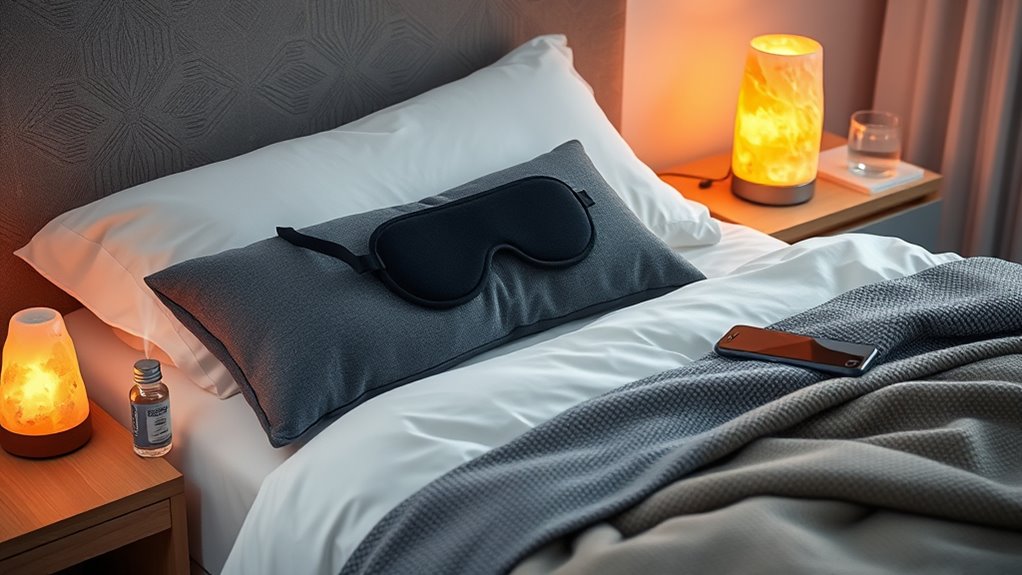

To improve your sleep, create a calm, consistent environment by keeping your bedroom cool, dark, and quiet. Stick to a regular sleep schedule and get natural light during the day, especially in the morning. Limit blue light exposure in the evening and develop relaxing pre-sleep habits like gentle stretching or reading. Simple tweaks like these support your body’s natural rhythms and hormonal balance. Keep going to uncover more easy ways to enjoy restful nights.
Key Takeaways
- Maintain a cool, dark, and quiet sleep environment to enhance restfulness.
- Stick to a consistent sleep schedule and get morning sunlight to support your circadian rhythm.
- Limit blue light exposure in the evening using filters or glasses to promote melatonin production.
- Establish relaxing pre-sleep routines like reading or gentle stretching to signal your body to wind down.
- Adjust light exposure and environmental factors to naturally support hormonal balance and improve sleep quality.

Getting quality sleep is essential for your overall health, yet many people struggle to rest well despite their efforts. One of the simplest ways to improve your sleep is by optimizing your sleep environment. Your room’s temperature, light, and noise levels directly impact how well you sleep. Keep your bedroom cool—around 60 to 67°F (15.5 to 19.5°C)—since a cooler environment promotes better sleep. Make sure your room is dark; use blackout curtains or an eye mask to block out light, which can interfere with melatonin production—the hormone that helps regulate your sleep-wake cycle. Minimize noise with earplugs or white noise machines, creating a peaceful space that signals your body it’s time to rest. Creating a calming, consistent environment helps your brain associate your bedroom with sleep, making it easier to drift off and stay asleep. Additionally, understanding the chemistry behind melatonin synthesis can help you better support your natural sleep hormones by adjusting light exposure.
Another critical aspect is aligning your sleep schedule with your circadian rhythm. Your circadian rhythm is the internal clock that governs your sleep-wake cycle, influenced by natural light exposure. To support this, try to go to bed and wake up at the same time every day, even on weekends. Consistency trains your body to expect sleep at certain times, making it easier to fall asleep and wake up refreshed. Getting sunlight during the day, especially in the morning, helps reinforce your circadian rhythm by signaling that it’s daytime, which suppresses melatonin production. Conversely, in the evening, dim the lights and avoid screens emitting blue light, which can trick your brain into thinking it’s still daytime, delaying melatonin release. You might also consider using blue light filters or glasses in the evening to reduce disruption.
In addition, establishing a pre-sleep routine helps your body shift into rest mode. Consistent habits like reading, gentle stretching, or practicing relaxation techniques signal to your brain that it’s time to wind down. Avoid caffeine and heavy meals close to bedtime, as they can throw off your circadian rhythm and make it harder to fall asleep. By intentionally adjusting your sleep environment and respecting your body’s natural clock, you can greatly enhance your chances of experiencing restful, uninterrupted sleep. These simple tweaks may seem small, but they have a profound impact on the quality of your nights and the energy you bring into each new day.
Top picks for "biohack better sleep"
Open Amazon search results for this keyword.
As an affiliate, we earn on qualifying purchases.
Frequently Asked Questions
Can Biohacks Replace Medical Treatment for Sleep Disorders?
Imagine Galileo tinkering with his telescope—just like that, you might try natural sleep aids and herbal remedies to improve your rest. However, biohacks can’t replace medical treatment for sleep disorders, especially if underlying issues exist. While lifestyle tweaks can help, they’re not a substitute for professional care. Always consult a healthcare provider before relying solely on biohacks, as they’re meant to complement, not replace, medical advice.
Are There Risks Associated With Specific Sleep Biohacks?
You’re wondering if there are dangers involved with specific sleep biohacks. While many are safe, some can have unintended consequences, like disrupting your natural sleep cycle or causing dependency. It’s important to research thoroughly and consult a healthcare professional before trying new methods. Rushing into biohacks without understanding potential risks might lead to adverse effects, so approach them cautiously and prioritize proven, safe strategies for better rest.
How Long Before Sleep Should I Implement These Biohacks?
When considering timing considerations for implementing sleep biohacks, you should start about 30 to 60 minutes before your usual bedtime. This allows your body to adapt gradually and maximizes the benefits. Use clear implementation strategies like turning off screens, dimming lights, or practicing relaxation techniques. Consistency is key, so integrate these tweaks into your nightly routine to promote better sleep over time.
Do Age or Gender Affect Biohacks’ Effectiveness?
Imagine your body as a finely tuned instrument. Age differences and gender variations are like different strings needing unique tuning. You may find that certain biohacks work better depending on your age or gender, much like adjusting strings for perfect harmony. So, pay attention to how your body responds, and tailor your sleep tweaks accordingly. Your personal rhythm is key to achieving the restful nights you seek.
Can Biohacks Improve Sleep for Shift Workers?
Absolutely, you can improve sleep as a shift worker by focusing on light exposure and meal timing. Limit bright light during your sleep hours to help your body recognize rest time, and get natural light when you’re awake. Adjust your meal schedule to support your circadian rhythm, eating at consistent times. These biohacks can help regulate your internal clock, making it easier to rest despite your unconventional schedule.
Conclusion
Ready to transform your nights? By implementing these simple biohacks, you can enjoy deeper, more restful sleep and wake up feeling refreshed. Imagine ending each day feeling truly relaxed, with your body and mind ready for a rejuvenating rest. Why settle for restless nights when a few easy tweaks can make all the difference? Start today, and give yourself the gift of truly restorative sleep—you deserve it.