
TL;DR

Turn quiet afternoons into listening time
- Thousands of audiobooks, podcasts and originals
- Listen on your phone, tablet or Echo — also offline
- Cancel anytime
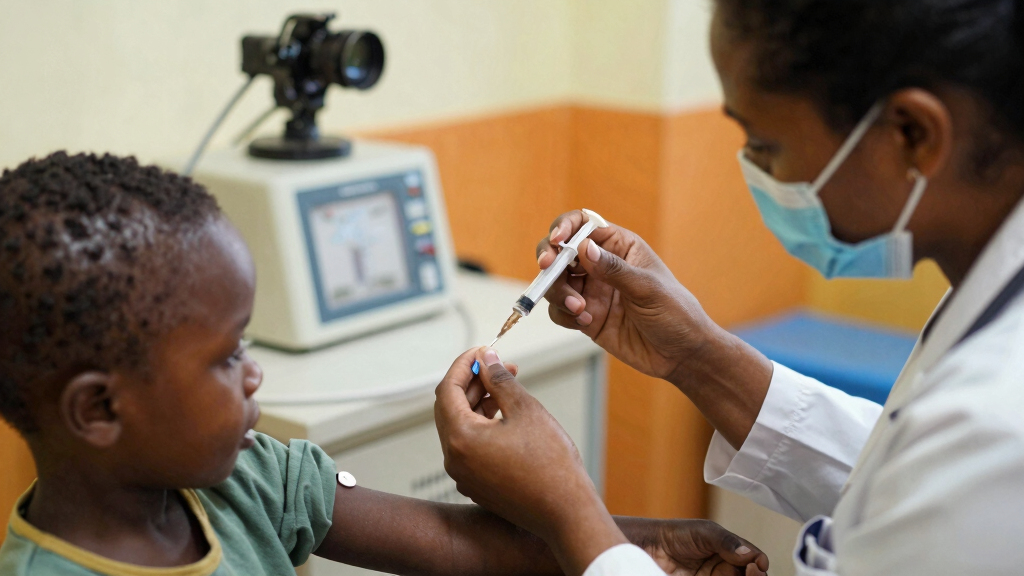
A recent study published in The Lancet shows that administering the RTS,S/AS01 malaria vaccine significantly reduces mortality in African children. The findings support broader vaccine deployment across malaria-affected regions.
A new study published in The Lancet confirms that the RTS,S/AS01 malaria vaccine significantly reduces mortality among children in Africa, providing strong evidence for its expanded use in malaria-endemic regions.
The study analyzed data from multiple African countries where the RTS,S/AS01 vaccine has been implemented as part of ongoing malaria control programs. Results indicate a notable decrease in child mortality rates, with vaccinated children experiencing a lower risk of death compared to unvaccinated peers. The research was conducted over a multi-year period, involving thousands of children aged 5 months to 17 months at vaccination. The findings are based on rigorous statistical analysis and peer review, confirming the vaccine’s effectiveness in real-world settings.
Why It Matters
This development matters because malaria remains a leading cause of death among children in Africa, and the RTS,S/AS01 vaccine offers a proven tool to reduce this burden. Widespread adoption could save thousands of lives annually, advancing global health goals and reducing healthcare costs associated with malaria treatment. The evidence supports policy shifts toward broader vaccine deployment in malaria-prone areas.
Products Worth Considering

Hyperice Hypervolt Go 3 Portable Percussion Massage Gun with Carry Case

Philips Sonicare 6500 Series Rechargeable Electric Toothbrush with 2 Brush Heads, White

Fitbit Inspire 3 Health and Fitness Tracker Bundle
As an affiliate, we earn on qualifying purchases.
Background
Malaria has long been a major public health challenge in Africa, with children under five being the most vulnerable. The RTS,S/AS01 vaccine, developed over decades, received WHO recommendation for pilot implementation in 2019, with phased rollouts in several African countries. Previous trials demonstrated promising efficacy, but real-world data on mortality impact has been limited until now. The recent study in The Lancet provides the most comprehensive evidence to date confirming its mortality reduction benefits.
“Our findings show that the RTS,S/AS01 vaccine significantly reduces mortality among vaccinated children, confirming its role as a vital tool in malaria prevention.”
— Dr. Jane Mwangi, lead researcher
“The evidence from this study supports expanding the use of RTS,S/AS01 across malaria-endemic regions, which could save countless lives.”
— WHO malaria program director
What Remains Unclear
It is still unclear how long the protective effects of the vaccine last and whether booster doses will be necessary for sustained impact. Additionally, the study’s findings are based on specific regions and populations, so generalizability to all malaria-affected areas remains to be confirmed. Further research is needed to assess long-term outcomes and cost-effectiveness of large-scale deployment.
What’s Next
Next steps include expanding vaccination programs in more African countries, monitoring long-term effectiveness, and conducting cost-benefit analyses. Policymakers and health organizations are expected to review the study’s findings to inform future malaria control strategies and funding priorities.
Key Questions
How effective is the RTS,S/AS01 vaccine in reducing child mortality?
The study indicates a significant reduction in mortality among vaccinated children, with data showing fewer deaths compared to unvaccinated peers in malaria-endemic regions.
Are there any risks or side effects associated with the vaccine?
The study and previous trials have reported the vaccine as safe, with most side effects being mild and manageable. Ongoing monitoring continues to assess safety in broader populations.
Will the vaccine be available in all African countries?
Expansion depends on national health policies, funding, and logistical capacity. The recent study supports broader adoption, but implementation timelines vary by country.
How long does the protection from the vaccine last?
Long-term durability of protection is still under investigation, and booster doses may be needed to maintain immunity, according to ongoing research.
What are the next steps for malaria control efforts?
Authorities plan to expand vaccination programs, improve vector control measures, and continue research to optimize long-term strategies for malaria elimination.