
TL;DR

Turn quiet afternoons into listening time
- Thousands of audiobooks, podcasts and originals
- Listen on your phone, tablet or Echo — also offline
- Cancel anytime
Research reported by the BBC found that experienced birdwatchers had differences in brain activity and organisation compared with novices. The findings suggest birding may help preserve some brain networks, but they do not show that birdwatching prevents or slows cognitive decline. Separate studies reported wellbeing benefits for older adults who watched birds.
Research on experienced birdwatchers has found differences in brain activity and organisation in regions involved in attention and visual recognition, prompting researchers to investigate whether birding may help preserve aspects of brain function with age. The findings, reported by the BBC, do not establish that birdwatching slows cognitive decline; separate studies described in the report suggest that watching birds can support wellbeing among older people, including some residents of care homes.
Neuroscientist Erik Wing of Baycrest Academy for Research and Education in Toronto and colleagues compared MRI scans of expert birdwatchers and novices as they identified birds. The experts showed different patterns of activity in brain regions associated with attention, visual perception and visual recognition, particularly when identifying unfamiliar birds. Some of those regions also showed higher measures of organisation and coherence among experts than among novices of similar ages.
Brain organisation tends to decline with age, and lower measures have been associated with reduced cognition, according to the report. Wing said the results could reflect neuroplasticity—the brain’s ability to change over time—but the study cannot establish whether birdwatching caused the differences or whether people with those brain patterns were more likely to become expert birders. The researchers also have not shown that the scan findings translate into a measurable reduction in cognitive decline.
The report also describes research focused on older adults’ experiences rather than brain scans. A study of 388 birdwatchers in Poland found that people who considered birding important and were enthusiastic about it reported greater psychological restoration than highly skilled but less enthusiastic birders. In a separate project, researchers placed bird feeders outside 65 nursing homes so residents could watch from shared indoor spaces. The researchers reported improvements in residents’ wellbeing and cognition after the birdwatching opportunity was introduced; the report does not provide enough detail to determine how large or lasting those changes were.
Brain Findings and Care-Home Use
The findings offer a possible link between a sustained, attention-demanding hobby and differences in brain networks relevant to recognising and distinguishing visual information. If further research confirms that birding contributes to maintaining these networks, it could help scientists understand how everyday activities relate to brain ageing. For now, the work is suggestive, not proof of protection, and it does not support presenting birdwatching as a treatment for dementia.
The care-home observations point to a separate, practical reason birdwatching has attracted interest: it can give residents a shared activity that is accessible without leaving the building. The BBC report describes residents with dementia becoming more engaged while watching birds with others. Such experiences may matter to residents and carers even if they do not alter the course of a disease. The research described does not show that every person will respond in the same way or that birdwatching can replace clinical care.
Products Worth Considering

Levoit Eleva 300X HEPA Air Purifier for Home and Bedroom

Bowflex PR1000 Home Gym

Withings Body Smart Wi-Fi and Bluetooth Smart Scale
As an affiliate, we earn on qualifying purchases.
From Bird Identification to Care Homes
The BBC report presents two related but distinct lines of evidence. Wing’s work examined birding expertise and MRI measures, comparing experts with novices during identification tasks. The care-home research examined residents’ cognition, mobility and wellbeing after bird feeders were installed, while the Polish study considered the relationship between birdwatching enthusiasm and reported psychological restoration. These studies address different questions and should not be treated as one trial showing that birdwatching prevents dementia.
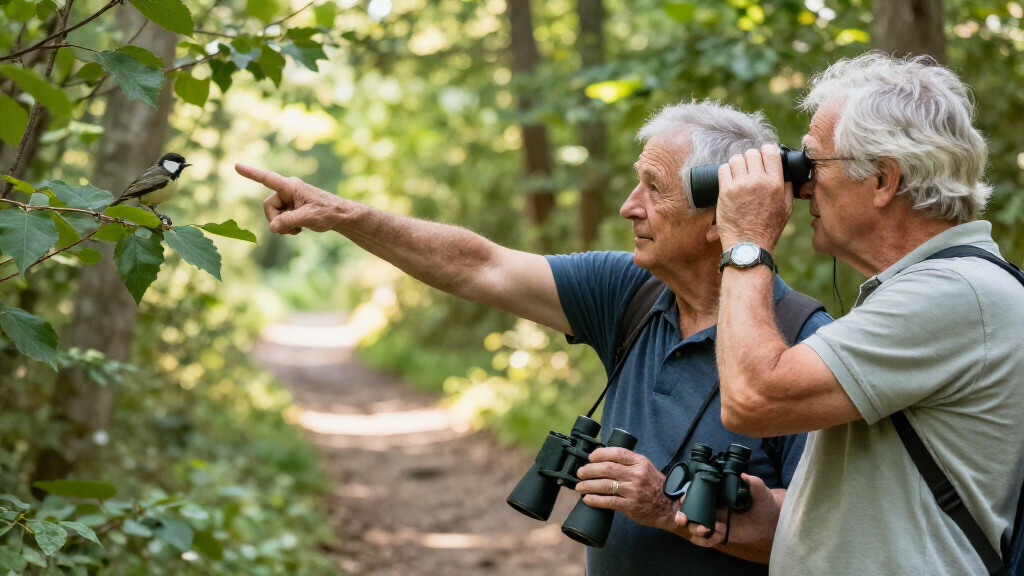
The report also describes a weekly birdwatching group at Forge Mill Lake in England’s West Midlands, run by the charity Age UK. A community dementia adviser said one participant with dementia became more engaged during an outing. That account illustrates an individual experience, not a clinical measure of treatment effectiveness. Birdwatching groups and access to birds from windows are also described in care settings in the UK, Germany and the United States.
“a “kind of preservation of organisation””
— Erik Wing, neuroscientist at Baycrest Academy for Research and Education
What the Studies Cannot Yet Show
The central uncertainty is cause and effect: the brain-scan comparison cannot tell whether birdwatching changed the experts’ brains, whether pre-existing differences helped them develop expertise, or whether other factors contributed. The report also does not establish that the observed brain-network measures predict slower decline in daily memory or thinking.
For the care-home project, the report describes positive changes after bird feeders were installed but does not supply the full study methods, effect sizes, comparison group details or duration of follow-up. It is therefore unclear how much of the change can be attributed specifically to birdwatching, how long it lasted, or whether it applies to people with different health and care needs. No evidence in the report shows that birdwatching prevents dementia or reverses it.
Further Research on Long-Term Effects
Researchers will need to test whether birdwatching itself leads to lasting brain changes and whether those changes are associated with meaningful differences in cognition over time. That would require studies that follow participants over longer periods and distinguish the effects of birding from age, education, health, social contact and prior interests. The BBC report does not identify a specific date or next milestone for Wing’s research.
For care-home use, further work could clarify whether providing access to birds produces sustained benefits and which residents find the activity useful. Until stronger evidence is available, birdwatching is best described as an accessible leisure and social activity with reported wellbeing benefits—not as a proven intervention to slow cognitive decline.
Key Questions
Does birdwatching prevent dementia?
No such effect has been established. The research described in the BBC report links birding expertise with brain-network differences, but it does not show that birdwatching prevents dementia or slows its progression.
What did the brain-scan research find?
Experienced birdwatchers showed different activity in brain regions involved in attention, visual perception and recognition. Some regions also had higher measures of organisation than those in novices of similar ages. The study cannot determine whether birdwatching caused the differences.
Do people need to be expert birders to benefit?
The report’s account of a Polish study suggests that enthusiasm and personal interest were more closely associated with psychological restoration than high skill alone. That finding concerns reported wellbeing, not proof of protection from cognitive decline.
What did the nursing-home project report?
Researchers installed bird feeders outside 65 nursing homes, allowing residents to watch from indoor common areas. The report says researchers saw improvements in cognition and wellbeing after a few weeks, but it does not provide enough detail to assess the size or duration of the changes.
Source: bbc.com