

Engaging in mental puzzles and games like Sudoku, crosswords, and logic challenges keeps your brain sharp by strengthening neural connections, boosting memory, and sharpening problem-solving skills. Regular activity challenges your mind, improving focus, processing speed, and mental resilience. Incorporating a variety of puzzles into your daily routine can help delay cognitive decline and enhance overall mental agility. Keep exploring different games—you’ll discover more ways to maintain a healthy, active mind.

Turn quiet afternoons into listening time
- Thousands of audiobooks, podcasts and originals
- Listen on your phone, tablet or Echo — also offline
- Cancel anytime
Key Takeaways
- Regular engagement in mental puzzles like Sudoku and crosswords stimulates neural connections, enhancing memory and critical thinking.
- Strategy games and logic puzzles improve problem-solving skills and mental agility, supporting cognitive resilience.
- Incorporating daily brain exercises helps maintain cognitive health and delays age-related decline through neuroplasticity.
- Variety in mental challenges boosts overall mental flexibility, focus, and information processing speed.
- Consistent practice with puzzle apps and games promotes mental stamina and sharpness for real-world problem-solving.
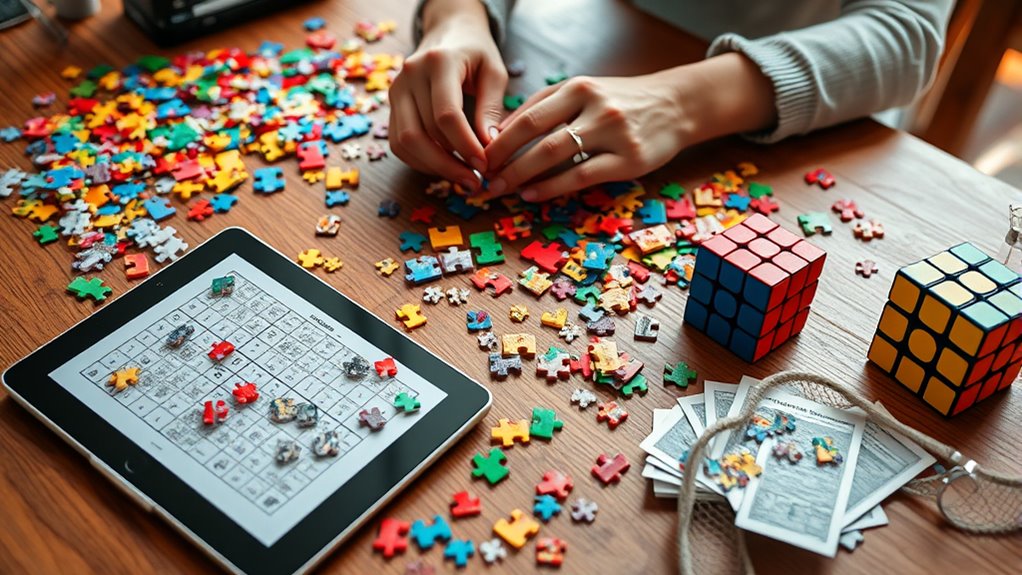
Have you ever wondered how mental puzzles and games can sharpen your mind and boost your problem-solving skills? The answer lies in the power of brain training and cognitive exercises. These activities are designed to challenge your brain, encouraging neural connections to strengthen and grow. When you engage regularly with puzzles like Sudoku, crosswords, or logic games, you’re not just passing time—you’re actively stimulating your brain’s capacity for critical thinking, memory, and attention. Cognitive exercises help keep your mind agile, making it easier to adapt to new situations and solve problems more effectively.
By incorporating brain training into your routine, you create a mental workout that enhances your cognitive functions. These exercises improve your ability to focus, process information quickly, and recall details more efficiently. For example, memory games, pattern recognition tasks, or strategy-based puzzles push your brain to work harder, which can lead to increased mental resilience over time. Think of your brain like a muscle—regular exercise helps it stay strong and flexible. Just as lifting weights improves physical strength, cognitive exercises boost mental stamina. The more you challenge yourself with complex puzzles, the better your brain becomes at handling real-world problems, from managing daily tasks to making important decisions.
Regular brain exercises boost focus, memory, and mental resilience over time.
Mental puzzles and games also promote neuroplasticity, the brain’s ability to reorganize itself by forming new neural connections. This adaptability is essential for maintaining cognitive health as you age. When you consistently engage in brain training activities, you help preserve your mental acuity and delay cognitive decline. Additionally, these activities can reduce stress and improve your mood, as they often involve a sense of achievement and satisfaction when you solve a difficult puzzle or beat a game. This positive reinforcement encourages you to keep practicing, creating a cycle of ongoing mental growth. Regular mental challenges can also enhance your problem-solving abilities, making you more adept at handling complex situations in everyday life.
Incorporating a variety of cognitive exercises into your daily routine is simple and enjoyable. You can set aside a few minutes each day for brain training, whether it’s solving a crossword, playing a strategic game like chess, or working on a puzzle app. Over time, you’ll notice improvements not only in your ability to solve puzzles but also in your overall mental clarity and problem-solving skills. The key is consistency—regular engagement with mental puzzles and games builds mental agility, helping you stay sharp, focused, and ready to tackle whatever challenges come your way.
Frequently Asked Questions
How Often Should I Do Mental Puzzles to See Benefits?
You should aim to do mental puzzles at least 3-4 times a week to see benefits. This frequency provides consistent stimulation without burnout. The ideal timing varies, but doing puzzles during breaks or in the morning can boost mental agility. Regular practice helps improve memory, problem-solving, and focus over time. Stick to a schedule, and you’ll notice positive changes in your brain’s sharpness and overall cognitive health.
Are Digital Brain Games as Effective as Traditional Puzzles?
Digital brain games can be just as effective as traditional puzzles if they’re well-designed, but beware of flashy distractions that dilute their purpose. You’ll find that good game design focuses on challenge and engagement, whether online or on paper. Don’t let the digital allure fool you—both methods sharpen your mind equally, so choose what excites you most. Consistent play, no matter the format, fuels your mental sharpness.
Can Mental Puzzles Help Prevent Cognitive Decline?
Yes, mental puzzles can help prevent cognitive decline by boosting brain training benefits. Regularly challenging yourself with puzzles at various difficulty levels keeps your mind active and engaged. As you progress, you improve your problem-solving skills and mental flexibility. This consistent mental exercise supports memory and cognitive health, making it an effective way to maintain sharpness over time. So, make puzzles part of your daily routine for long-term brain health.
What Age Is Best to Start Engaging in Brain Games?
You can start engaging in brain games as early as childhood, supporting child development and building a strong foundation for lifelong learning. Introducing puzzles and games during these formative years helps develop critical thinking, memory, and problem-solving skills. The sooner you make brain games a habit, the better you prepare your mind for future challenges, ensuring ongoing mental agility and resilience throughout your life.
Do Mental Puzzles Improve Memory or Just Problem-Solving Skills?
Mental puzzles do more than sharpen problem-solving skills; they also foster memory enhancement. When you tackle puzzles, you activate neural pathways that strengthen your ability to recall information and improve mental flexibility. As you engage regularly, you create a mental landscape where both memory and problem-solving skills flourish. So, by embracing puzzles, you’re nurturing your mind’s capacity to remember and think critically, enriching your overall cognitive health.
Conclusion
By regularly engaging in mental puzzles and games, you keep your brain sharp and agile. Imagine Sarah, who started doing daily crosswords and saw her memory improve over just a few months. These activities challenge your mind, boost problem-solving skills, and can even delay cognitive decline. So, make time for puzzles like Sudoku or brain teasers—you’ll enjoy the mental workout and reap long-term benefits. Keep your mind active, and you’ll stay sharp for years to come.
Fall Picks
fall essentials
As an affiliate, we earn on qualifying purchases.