
Neuroplasticity is your brain’s amazing ability to rewire itself by forming new neural connections throughout your life. This means you can learn new skills, recover from injuries, and improve mental functions through experiences and activities. When you challenge your brain with new tasks or focus, you help strengthen existing circuits and create fresh pathways. Staying mentally active supports ongoing growth and resilience. Keep exploring, and you’ll discover how versatile and adaptable your brain truly is.
Key Takeaways
- Neuroplasticity is the brain’s ability to reorganize by forming new neural connections throughout life.
- Engaging in new activities and learning promotes neural rewiring and growth.
- The brain adapts by strengthening existing pathways and creating new ones in response to experiences.
- Brain injury recovery involves rerouting functions through neural reorganization and rehabilitation efforts.
- Continuous mental stimulation and lifelong learning support ongoing brain growth and cognitive resilience.
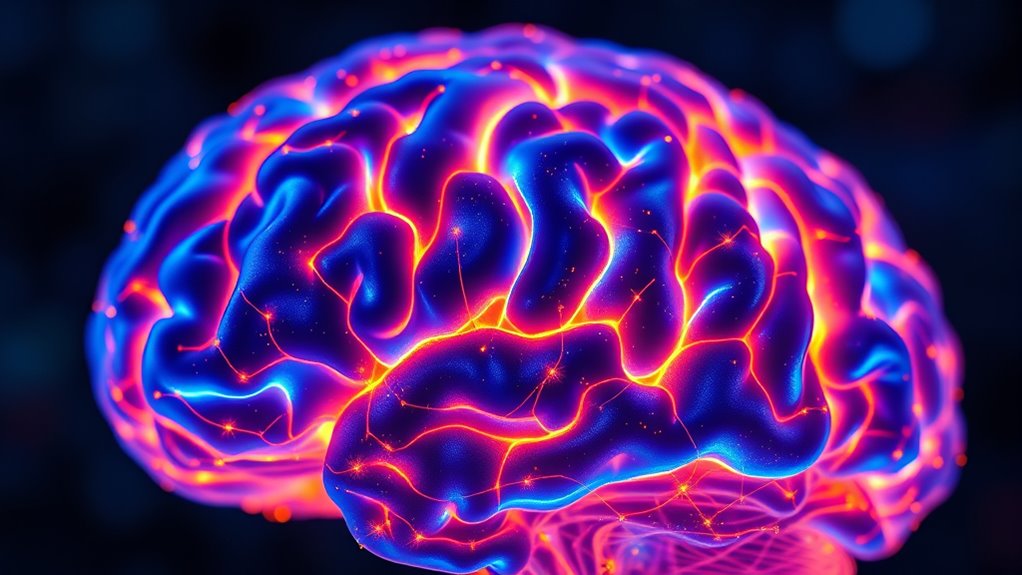
Neuroplasticity is the brain’s remarkable ability to reorganize itself by forming new neural connections throughout your life. This means your brain isn’t fixed; it’s constantly adapting, learning, and rewiring itself based on your experiences. When you engage in activities like brain training, you’re actively encouraging this neural rewiring process. Whether you’re learning a new language, picking up a musical instrument, or practicing meditation, you’re helping your brain forge new pathways and strengthen existing ones. This capacity for change is what makes neuroplasticity so powerful, especially when it comes to recovery from injury or overcoming challenges like mental health issues.
Neuroplasticity enables lifelong brain adaptation through forming and strengthening neural connections.
By deliberately stimulating your brain through targeted exercises, you can enhance specific skills or functions. For example, if you’re trying to improve your memory, practicing memory games or mnemonic techniques can promote neural rewiring in areas associated with recall. Similarly, if you want to boost your focus, activities that require sustained attention can help reinforce neural circuits responsible for concentration. The key is consistency—regular practice encourages your brain to adapt more efficiently, creating stronger connections and making new ones more accessible over time. This is the essence of brain training: systematically challenging your mind to foster neural growth and resilience.
Neuroplasticity also plays a crucial role in recovery from brain injury or stroke. When one part of your brain is damaged, other areas can sometimes take over functions through neural rewiring. This process depends heavily on your engagement and effort in rehab exercises, which stimulate the brain to form new pathways. It’s a testament to the resilience of your neural networks and the importance of active participation in your recovery process. The more you challenge your brain, the more it can reorganize itself, even in adulthood. Additionally, understanding the underlying mechanisms of brain connectivity can help optimize rehabilitation strategies and maximize recovery outcomes.
Understanding neuroplasticity underscores the importance of lifelong learning and mental stimulation. Your brain is not static; it responds dynamically to what you do and think. By continuously engaging in new experiences, practicing skills, and maintaining an active mental lifestyle, you support ongoing neural rewiring. This ongoing adaptation helps you stay sharp, recover from setbacks, and develop new capabilities at any age. Embracing brain training and recognizing the brain’s capacity for change empowers you to take control of your mental health and cognitive growth, no matter where you are in life.
Frequently Asked Questions
Can Neuroplasticity Occur at Any Age?
Yes, neuroplasticity can occur at any age. Your brain remains adaptable despite brain aging and developmental stages. While younger brains are more flexible, adults and seniors still experience neuroplasticity by learning new skills or forming new connections. You can continue to grow and change your brain throughout life, making efforts like practicing new activities or challenging your mind essential for maintaining cognitive health at any age.
How Long Does It Take to See Neuroplasticity Changes?
Think of your brain like a vintage radio being tuned—neural adaptation and brain rewiring can happen in days or weeks. You might notice changes within a few weeks of consistent practice, but significant rewiring takes longer, often several months. The key is regular effort and new experiences, which accelerate neural adaptation. Stay committed, and you’ll see your brain’s remarkable ability to change unfold faster than you expect.
Are There Activities That Enhance Neuroplasticity?
Yes, activities like mindfulness meditation and crossword puzzles can enhance neuroplasticity. When you practice mindfulness meditation, you strengthen neural connections related to focus and emotional regulation. Solving crossword puzzles challenges your brain, promoting new neural pathways. Engaging in these activities regularly encourages your brain to adapt and grow, improving your cognitive abilities over time. Consistent practice is key to maximizing neuroplasticity benefits and keeping your brain flexible.
Can Neuroplasticity Help Recover From Brain Injury?
Think of your brain as a resilient city rebuilding itself after a storm. Neuroplasticity fuels brain reorganization, helping you regain lost functions. This process enables your brain to form new pathways, supporting functional recovery. By engaging in targeted therapies and exercises, you actively participate in this rebuilding effort. Yes, neuroplasticity can markedly aid in recovering from brain injuries, turning setbacks into opportunities for growth and renewal.
Is Neuroplasticity Involved in Learning New Skills?
Yes, neuroplasticity is involved in learning new skills by enabling your brain rewiring through experience and practice. When you focus on skill acquisition, your brain creates new neural connections and strengthens existing ones. This process makes it easier to perform tasks more efficiently over time. By actively engaging in learning, you harness neuroplasticity to adapt your brain, making skill development faster and more effective.
Conclusion
Your brain is a garden, constantly reshaping itself like a flowing river carving new paths. Every thought, experience, and effort plants seeds for growth, allowing your mind to adapt and flourish. Remember, you hold the watering can—your choices nurture resilience and change. Embrace neuroplasticity as the sun shining on your potential, illuminating new horizons. With each step, you cultivate a mind capable of endless transformation, proof that your brain’s greatest power lies in its ability to grow and evolve.