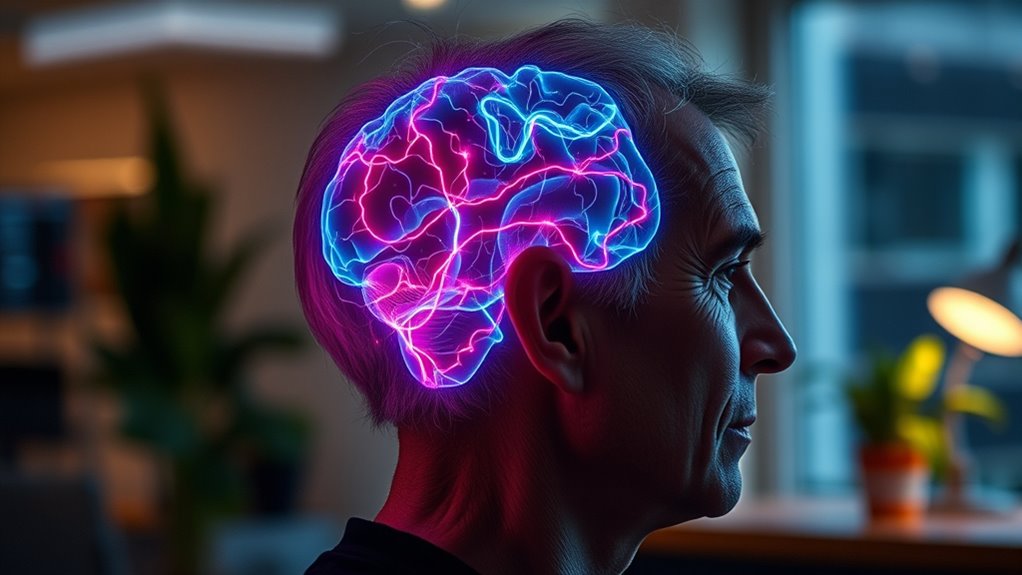

After 40, you can boost your brain power by actively engaging in activities that promote neuroplasticity. Learning new skills, hobbies, or languages rewires your neural pathways and keeps your brain sharp. Regular exercise increases blood flow and sparks new neurons, while mindfulness reduces stress and improves focus. Staying mentally active encourages ongoing growth and resilience. Keep exploring ways to challenge your mind, and you’ll discover more about how your brain can continue to thrive at any age.

Turn quiet afternoons into listening time
- Thousands of audiobooks, podcasts and originals
- Listen on your phone, tablet or Echo — also offline
- Cancel anytime
Key Takeaways
- Engage in continuous learning of new skills or languages to promote neural growth and brain remodeling after 40.
- Incorporate regular physical activity to enhance blood flow and stimulate neurogenesis, supporting brain health.
- Practice mindfulness and meditation to reduce stress and improve cognitive flexibility and focus.
- Challenge your brain with mental exercises and puzzles to strengthen neural pathways and boost mental agility.
- Maintain an active, stimulating lifestyle that encourages diverse experiences, fostering ongoing neuroplasticity and resilience.

Have you ever wondered how your brain can adapt and change throughout your life? The answer lies in neuroplasticity, the incredible ability your brain has to reorganize itself by forming new neural connections. This process, known as brain remodeling, isn’t limited to childhood; it continues well into adulthood and even after 40. When you understand how neuroplasticity works, you realize that your brain isn’t a static organ but a dynamic one capable of growth, learning, and recovery at any age. This adaptability is especially important as you age, because it helps you maintain mental sharpness and resilience against cognitive decline.
One of the key aspects of neuroplasticity is cognitive flexibility. This trait allows you to switch between different ways of thinking, adapt to new information, and solve problems more effectively. As you get older, some might think that your mental abilities are set in stone, but that’s far from true. When you challenge your brain with new experiences, learn new skills, or even change your routines, you promote brain remodeling. These activities stimulate your neural pathways, encouraging the growth of new connections and strengthening existing ones. Cognitive flexibility becomes sharper as your brain rewires itself in response to these efforts, making it easier for you to adapt to life’s changing circumstances.
Enhance your cognitive flexibility by challenging your brain with new experiences and routines to promote brain remodeling and adaptability.
You can boost your brain remodeling by engaging in activities that push your boundaries. For example, picking up a new language, playing a musical instrument, or even trying a different hobby can create new neural pathways. Regular physical exercise also plays a crucial role, as it increases blood flow to the brain and fosters the growth of new neurons. Additionally, mindfulness practices like meditation can improve cognitive flexibility by reducing stress and enhancing your ability to switch focus and process information effectively. The more you challenge your brain, the more it responds by rewiring itself, making you mentally agile and resilient. Incorporating new learning tools such as educational toys can stimulate your neural networks and support ongoing brain remodeling. Practicing mental exercises can also help maintain and further develop your cognitive skills as you age. Moreover, understanding and harnessing the power of neuroplasticity can motivate you to stay committed to mental stimulation throughout your life.
It’s important to remember that neuroplasticity is not just about acquiring new skills; it’s also about maintaining your mental health and preventing age-related decline. The more you actively engage in stimulating activities, the better your brain becomes at remodeling itself. This process supports your overall cognitive well-being, helping you stay sharp, adaptable, and capable of facing new challenges. In fact, ongoing learning and mental stimulation have been shown to promote brain resilience, which is crucial for long-term mental health. So, regardless of your age, your brain remains a lifelong work in progress. By fostering cognitive flexibility and encouraging brain remodeling, you can truly maximize your mental potential well beyond 40.
Frequently Asked Questions
Can Neuroplasticity Reverse Age-Related Cognitive Decline?
You might wonder if neuroplasticity benefits can reverse age-related cognitive decline. The good news is, yes, it can promote age-related improvements in brain function. By engaging in activities like learning new skills, exercising, or challenging your mind, you stimulate neuroplasticity, helping your brain adapt and strengthen. This ongoing process can slow down or even partly reverse some effects of aging on cognition, supporting better memory, focus, and mental agility.
How Quickly Can Brain Improvements Be Seen After Training?
Research shows that noticeable brain change can occur within just a few weeks of training. You might start seeing improvements in memory, focus, or problem-solving in as little as 3-4 weeks. The training speed varies based on your consistency and effort, but regular mental exercises accelerate brain change. Stay committed, and you’ll likely observe positive shifts sooner than you expect, reinforcing the idea that your brain remains adaptable at any age.
Are Certain Activities More Effective for Neuroplasticity After 40?
Certain activities are more effective for neuroplasticity after 40. You’ll find meditative practices help improve focus and reduce stress, promoting brain adaptability. Musical training boosts memory and coordination, making it a powerful tool for brain health. Engaging in these activities regularly encourages neural growth and strengthens connections, so you can see noticeable improvements over time. Incorporate meditative practices and musical training into your routine to maximize neuroplasticity benefits after 40.
Does Neuroplasticity Decline Significantly After Menopause?
Imagine your brain as a resilient garden, thriving despite seasonal changes. You might wonder if neuroplasticity declines profoundly after menopause due to hormonal changes. While hormonal shifts can influence brain resilience, they don’t halt neuroplasticity. Your brain continues to adapt and grow, especially when you stay mentally active and healthy. So, with effort, you can maintain and even enhance your brain’s flexibility beyond menopause.
Can Neuroplasticity Help Recover From Neurological Injuries Later in Life?
Yes, neuroplasticity can help you recover from neurological injuries later in life. When you experience a brain injury, your brain’s ability for neural regeneration allows you to form new connections and pathways. By engaging in targeted therapies and mental exercises, you can boost your neuroplasticity, promoting recovery and improving functions. This adaptability remains present throughout life, offering hope for rehabilitation regardless of age.
Conclusion
As you embrace the power of neuroplasticity, imagine your mind as a vibrant garden, constantly reshaping itself with each passing day. Even after 40, you hold the tools to nurture new pathways, illuminating your brain like a dawn breaking through clouds. With intention and effort, you can cultivate a resilient, agile mind that blossoms with fresh ideas and sharpens your focus. Your brain’s potential is a horizon forever expanding—ready for you to explore anew.
Fall Picks
fall essentials
As an affiliate, we earn on qualifying purchases.