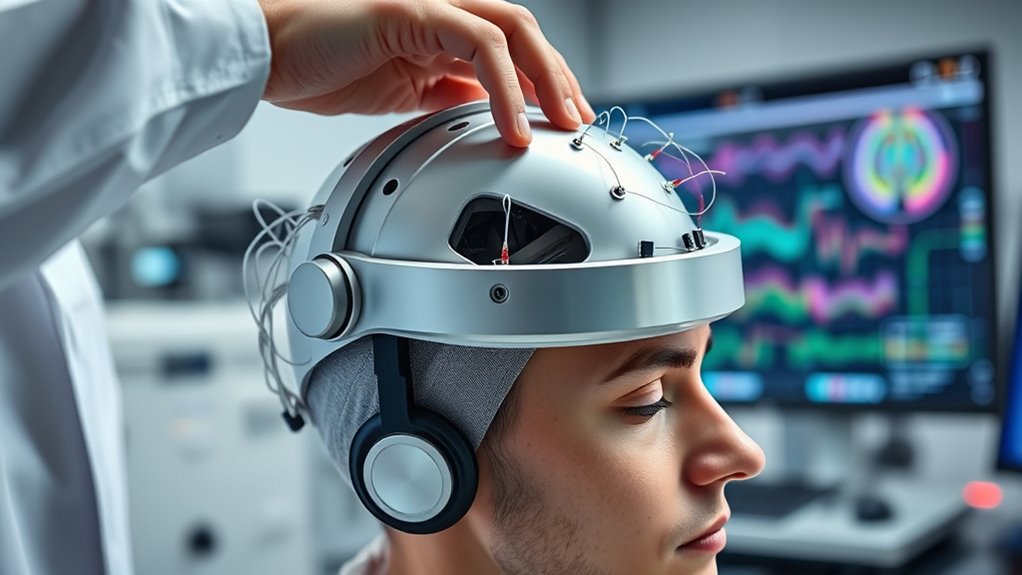
Non-invasive brain stimulation techniques like TMS and tDCS are emerging tools that can boost your memory by promoting neuroplasticity and rewiring neural pathways in key brain regions. These methods deliver magnetic or electrical pulses to enhance the efficiency of synaptic connections involved in learning and memory. When combined with cognitive exercises, they create a powerful synergy that accelerates recovery and cognitive improvements. To discover how these innovations can transform your approach to brain health, keep exploring further.

Turn quiet afternoons into listening time
- Thousands of audiobooks, podcasts and originals
- Listen on your phone, tablet or Echo — also offline
- Cancel anytime
Key Takeaways
- NIBS techniques like TMS and tDCS stimulate brain regions involved in memory and learning to enhance neuroplasticity.
- These methods promote durable neural rewiring, supporting recovery of memory functions after injury or decline.
- Combining NIBS with cognitive training amplifies memory improvements by reinforcing new neural pathways.
- NIBS facilitates synaptic strengthening, leading to improved memory encoding and retrieval processes.
- Emerging NIBS applications target memory enhancement in neurological conditions such as stroke and traumatic brain injury.
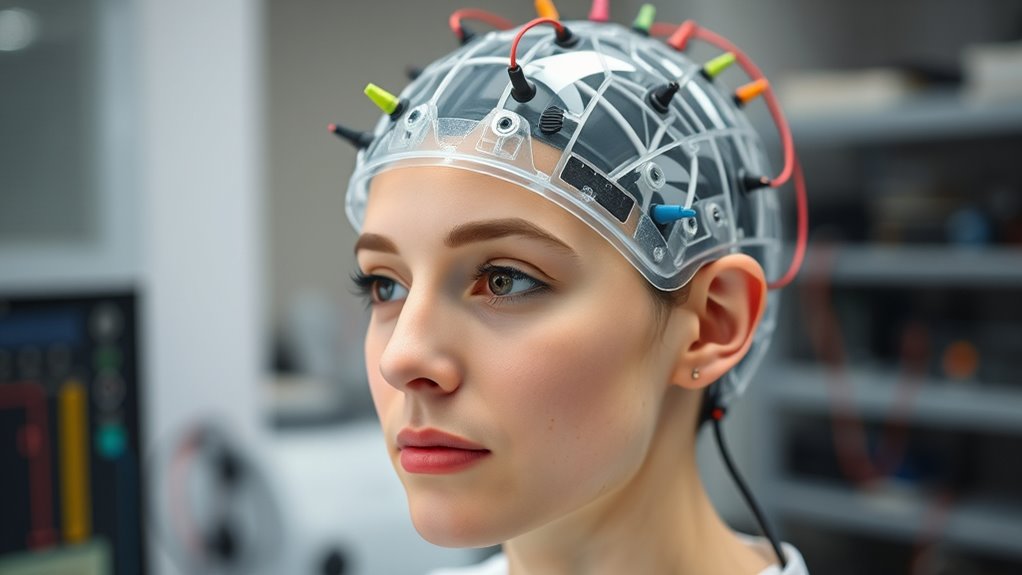
Non-invasive brain stimulation (NIBS) is a set of techniques that modulate brain activity without surgery or implants. These methods hold promise for enhancing memory and cognitive functions by directly influencing neural circuits. When you undergo NIBS, you’re essentially encouraging your brain to reorganize itself, a process known as neuroplasticity enhancement. This ability of your brain to adapt and form new connections is fundamental for recovering lost functions and improving cognitive performance. As a tool for cognitive rehabilitation, NIBS can help retrain the brain after injury or decline, making it an exciting development in neuroscience.
One of the key advantages of NIBS is that it targets specific brain regions involved in memory and learning. Techniques like transcranial magnetic stimulation (TMS) and transcranial direct current stimulation (tDCS) deliver targeted magnetic or electrical pulses to stimulate neural activity. By doing so, they can boost the efficiency of synaptic connections, which play an indispensable role in learning and memory processes. When you participate in NIBS sessions, you’re facilitating the strengthening of these connections, which can lead to improved memory performance over time.
Moreover, NIBS isn’t just about temporary boosts; it actively promotes neuroplasticity, making lasting changes in brain function. This potential is particularly valuable in cognitive rehabilitation, where the goal is to help individuals recover cognitive abilities after trauma or neurological conditions. For example, if you’re recovering from a stroke or traumatic brain injury, NIBS can be integrated into your therapy plan to accelerate neural rewiring and functional recovery. By enhancing neuroplasticity, it supports the formation of new pathways that compensate for damaged areas, helping you regain memory and other cognitive skills.
Research indicates that combining NIBS with traditional cognitive training yields even better results. When you engage in targeted mental exercises alongside stimulation, your brain becomes more receptive to change. This synergy amplifies neuroplasticity enhancement, making your rehabilitation efforts more effective. The stimulation primes your brain to learn and adapt, while the exercises reinforce these new neural pathways.
transcranial magnetic stimulation device
As an affiliate, we earn on qualifying purchases.
As an affiliate, we earn on qualifying purchases.
Frequently Asked Questions
Are Non-Invasive Brain Stimulation Methods Suitable for Children?
You should be cautious with non-invasive brain stimulation methods for children, as pediatric safety and developmental considerations are vital. These techniques are still being researched, and their effects on a child’s developing brain aren’t fully understood yet. It’s necessary to consult healthcare professionals who specialize in pediatric neurology before considering such treatments, ensuring safety and effectiveness tailored to a child’s specific developmental needs.
How Long Do the Effects of Stimulation Typically Last?
The effects of stimulation usually last from minutes to a few hours, but it varies due to duration variability and individual differences. You might notice improvements in memory temporarily, but some people experience longer-lasting results, while others see only brief effects. Factors like age, brain plasticity, and specific stimulation techniques influence how long benefits persist. Keep in mind, ongoing research aims to better understand these variations for more consistent outcomes.
Are There Any Long-Term Risks Associated With These Techniques?
You should be aware that long-term risks of non-invasive brain stimulation are still being studied. Potential side effects might include headaches, discomfort, or unintended mood changes. Ethical considerations also come into play, especially regarding consent and long-term impact on brain function. While most effects are temporary, it’s important to stay informed and consult professionals to weigh these risks carefully before undergoing any stimulation technique.
Can These Techniques Be Combined With Other Therapies?
Yes, you can combine these techniques with other therapies. Many practitioners integrate non-invasive brain stimulation with pharmacotherapy to enhance memory improvement. Additionally, it can be effectively combined with cognitive training to reinforce neural changes. This combination approach maximizes benefits, addressing different aspects of memory issues. Always consult your healthcare provider to tailor the integration to your specific needs and guarantee safety during combined treatment plans.
How Accessible Are These Treatments for the General Public?
You might find these treatments are still out of reach for most, as cost barriers and limited insurance coverage keep them under lock and key. While some clinics offer non-invasive brain stimulation, it’s not yet widely accessible or affordable for the general public. As with many cutting-edge therapies, you’ll need to weigh the benefits against the expenses, and keep an eye out for advancements that could make them more within reach.
As an affiliate, we earn on qualifying purchases.
Conclusion
Think of non-invasive brain stimulation as a gentle whisper to your mind, guiding memory pathways like a skilled conductor leading an orchestra. These emerging techniques hold the promise to enhance memory without surgery, opening new doors for those with cognitive challenges. As research advances, you’ll find yourself at the forefront of a revolution where your brain’s potential is unveiled with the delicate touch of science, turning the mind’s maze into a well-lit pathway.
memory enhancement neurostimulation
As an affiliate, we earn on qualifying purchases.
As an affiliate, we earn on qualifying purchases.
cognitive training with brain stimulation
As an affiliate, we earn on qualifying purchases.
As an affiliate, we earn on qualifying purchases.
Fall Picks
fall essentials
As an affiliate, we earn on qualifying purchases.