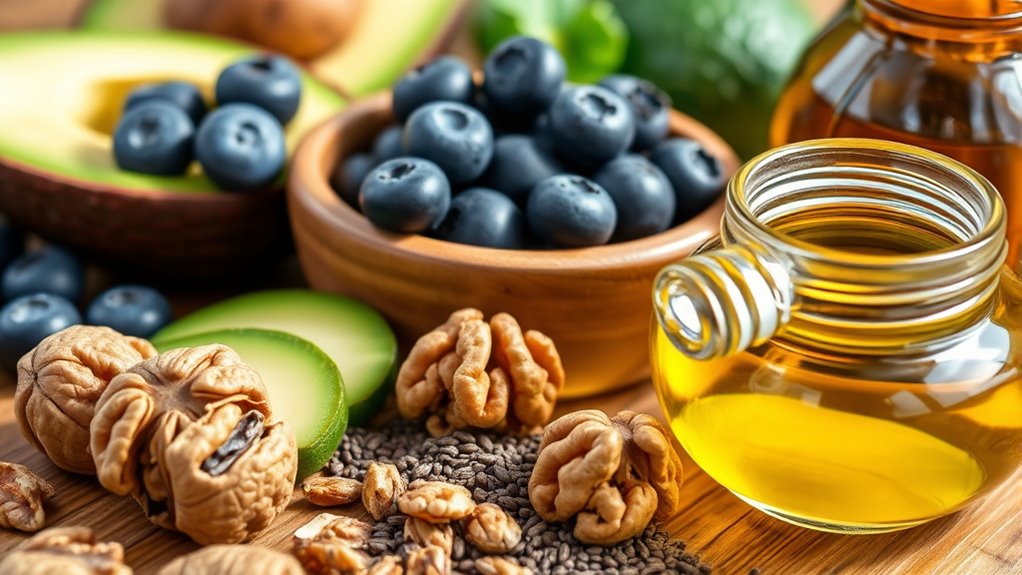

After 40, you should prioritize nutrients like omega-3 fatty acids, B vitamins, vitamin E, and magnesium to keep your brain sharp. Omega-3s, found in fatty fish and walnuts, support cell structure, while B vitamins help with nerve function and energy levels. Vitamin E fights oxidative stress, and magnesium aids in nerve signaling. Incorporating these nutrients into your diet can boost cognition and protect against age-related decline—keep exploring to learn how to easily include them daily.

Turn quiet afternoons into listening time
- Thousands of audiobooks, podcasts and originals
- Listen on your phone, tablet or Echo — also offline
- Cancel anytime
Key Takeaways
- B-complex vitamins, especially B6, B12, and folate, support neurotransmitter production and reduce cognitive decline.
- Vitamin E acts as an antioxidant, protecting brain cells from oxidative stress and age-related damage.
- Omega-3 fatty acids, found in fatty fish and walnuts, maintain cell membrane integrity and reduce inflammation.
- Magnesium helps improve memory, learning, and supports neural plasticity in adults over 40.
- Lutein and vitamin K, abundant in leafy greens, promote brain cell health and cognitive function.
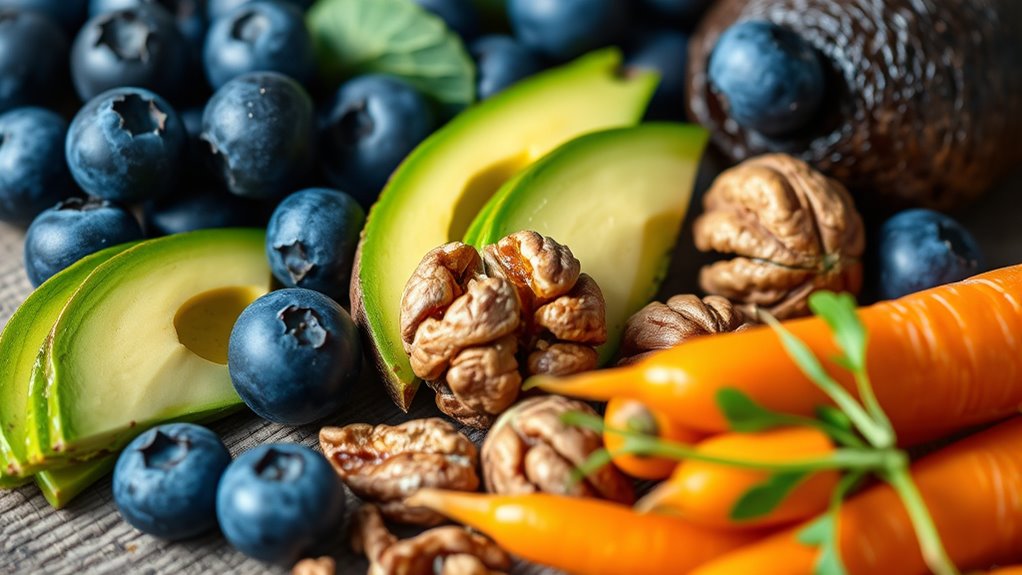
As you age beyond 40, maintaining brain health becomes increasingly important, and the nutrients you consume play a pivotal role in supporting cognitive function. Your brain needs specific nutrients to stay sharp, focused, and resilient against age-related decline. Incorporating brain boosting foods into your diet can markedly enhance your mental clarity and memory. These foods are rich in antioxidants, healthy fats, vitamins, and minerals that fuel your brain and protect it from oxidative stress. Think of berries, especially blueberries, which contain flavonoids that improve memory and neural communication. Nuts like walnuts provide omega-3 fatty acids that help maintain the fluidity of cell membranes, supporting efficient nerve signaling. Leafy greens such as spinach and kale are packed with vitamin K, lutein, and folate, all linked to better cognitive performance. Fatty fish like salmon and mackerel are excellent sources of omega-3s, essential for reducing inflammation and supporting brain cell structure. Adding these brain boosting foods to your meals can make a noticeable difference in your mental agility.
But good nutrition isn’t enough on its own. To truly support your cognitive health after 40, you should also engage in cognitive function exercises regularly. These exercises challenge your brain, helping to strengthen neural connections and promote neuroplasticity. Simple activities like puzzles, crosswords, or Sudoku can keep your mind active and improve problem-solving skills. Learning a new language or musical instrument provides complex mental stimulation that encourages new neural pathways. Even regular reading or engaging in strategic games like chess can sharpen your thinking and memory. Incorporating brain training exercises into your routine can significantly enhance neuroplasticity and cognitive resilience. Combining these cognitive exercises with a diet rich in brain-boosting foods creates a powerful approach to maintaining mental sharpness. It’s important to make these activities a consistent part of your routine, as they help delay cognitive decline and boost your overall mental resilience.
In addition, including a variety of nutrients in your diet, such as vitamin E, B vitamins, and magnesium, supports brain health at a cellular level. These nutrients aid in reducing inflammation, improving blood flow, and supporting neurotransmitter function. A balanced diet complemented by physical activity, quality sleep, and stress management further enhances your brain’s vitality. Remember, it’s never too late to start caring for your cognitive well-being. Small changes, like swapping processed snacks for nuts or berries and dedicating time to brain training exercises, can yield impressive benefits over time. Prioritizing your brain health after 40 isn’t just about preventing decline; it’s about actively enriching your mental life and maintaining independence well into the future.
Omega-3 fish oil supplement for brain health
As an affiliate, we earn on qualifying purchases.
As an affiliate, we earn on qualifying purchases.
Frequently Asked Questions
Can Supplements Replace a Balanced Diet for Brain Health?
Supplements can’t fully replace a balanced diet for brain health because they have limitations. While supplements can help fill nutritional gaps, they lack the variety of nutrients and benefits found in whole foods. You should focus on maintaining dietary balance, including fruits, vegetables, whole grains, and healthy fats, to support brain function. Relying solely on supplements might overlook other important dietary components that contribute to long-term brain health.
Are There Specific Foods to Avoid for Brain Aging?
You might notice that processed foods and excess sugar often seem harmless, but they can accelerate brain aging. Avoid these foods because they contribute to inflammation and cognitive decline, especially after 40. When you consume too much sugar, your brain’s blood vessels suffer, impairing memory and focus. To protect your mind, steer clear of processed snacks and sugary drinks, and instead, choose nutrient-rich options that support healthy aging.
How Does Hydration Impact Brain Function After 40?
Hydration levels directly impact your brain function after 40. When you stay well-hydrated, your cognitive performance improves because your brain cells operate efficiently. Dehydration can lead to fatigue, poor concentration, and memory lapses. Drinking enough water throughout the day helps maintain maximum hydration, supports focus, and enhances mental clarity. So, making hydration a priority is essential for preserving your cognitive health and keeping your mind sharp as you age.
Do Brain-Boosting Nutrients Differ for Men and Women?
You might wonder if brain-boosting nutrients differ for men and women. Gender differences and hormonal influences play a role in how your body processes these nutrients. For example, estrogen in women supports brain health, so they may benefit from nutrients like omega-3s and antioxidants differently. Men’s hormonal profiles also impact nutrient needs. Understanding these differences helps you tailor your diet to optimize your brain function after 40.
What Lifestyle Changes Support Nutrient Absorption for Brain Health?
You can support nutrient absorption for brain health by focusing on gut health and your exercise routines. Prioritize a balanced diet rich in fiber, probiotics, and fermented foods to keep your gut functioning well. Regular exercise boosts blood flow and helps your body absorb nutrients more effectively. Staying active and maintaining good gut health work together to optimize nutrient absorption, ensuring your brain stays sharp and healthy after 40.
B vitamin complex supplement for cognitive support
As an affiliate, we earn on qualifying purchases.
As an affiliate, we earn on qualifying purchases.
Conclusion
Just as a wise old oak needs strong roots to stand tall, your brain thrives on essential nutrients to stay sharp after 40. Remember, nourishing your mind today plants the seeds for a vibrant tomorrow. By choosing nutrient-rich foods now, you’re shaping your future self—resilient and alert, like a timeless lighthouse guiding ships through stormy seas. Prioritize your brain health, and watch your brightest days unfold ahead.
As an affiliate, we earn on qualifying purchases.
Magnesium citrate supplement for memory
As an affiliate, we earn on qualifying purchases.
As an affiliate, we earn on qualifying purchases.
Fall Picks
fall essentials
As an affiliate, we earn on qualifying purchases.