
Next-gen smartphones are transforming how you stay connected with foldable screens and satellite links. You can enjoy larger displays that fold away easily and stay portable, making multitasking more seamless. Satellite connectivity means you’ll stay connected even in remote areas with no cellular service, perfect for travel or emergencies. These innovations focus on practicality and convenience, helping you get more from your device daily. Keep exploring to discover even more exciting features that could soon be yours.
Key Takeaways
- Future smartphones will feature foldable screens for increased versatility and portability.
- Satellite connectivity will enable communication in remote, off-grid locations.
- Foldable displays support seamless transitioning between phone and tablet modes.
- Satellite links will enhance device reliability during emergencies or outdoor activities.
- Advancements focus on user-centric features like durability, battery life, and connectivity.
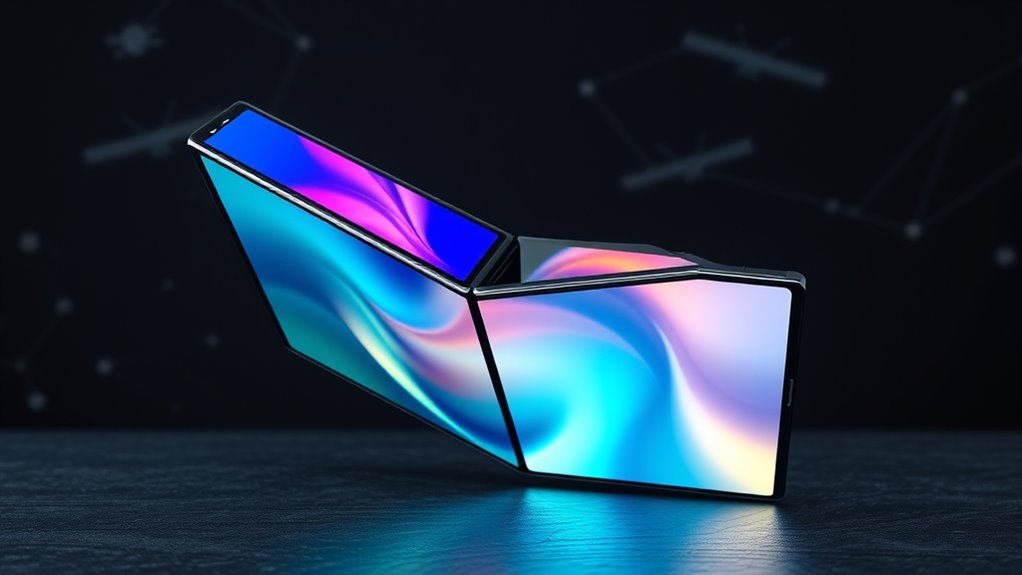
Have you ever wondered what the future of smartphones looks like? It’s exciting to think about how these devices will evolve, especially with innovations like folding screens and satellite connectivity. But beyond flashy features, what really matters to you are improvements that make your everyday life easier. For instance, battery life remains a top concern. Manufacturers are racing to develop more efficient batteries that last longer, so you won’t have to worry about your phone dying in the middle of the day. Fast-charging technologies are also advancing, meaning you can get a full charge in minutes rather than hours. These improvements make it possible for your device to handle more intensive tasks, like streaming, gaming, or video calls, without constantly needing a recharge. As these devices become more sophisticated, battery technology is a critical factor in ensuring reliable performance throughout the day. Camera technology is another game-changer in next-gen smartphones. The cameras are becoming more sophisticated, offering capabilities that mimic professional photography. Expect to see higher-resolution sensors, better low-light performance, and advanced stabilization features. These enhancements allow you to capture sharper, clearer photos even in challenging conditions. Computational photography is also taking a leap forward, enabling features like real-time editing, 3D mapping, and enhanced zoom capabilities. Whether you’re snapping quick selfies or trying to document a scenic adventure, your phone’s camera will deliver professional-quality results. These improvements mean you won’t have to carry an extra camera or worry about missing out on capturing precious moments. Foldable screens are set to redefine how you interact with your device. They make phones more versatile by allowing a compact form factor that transforms into a larger, tablet-like display when needed. This flexibility means you can have a device that’s easy to carry in your pocket but also provides ample screen space for work, entertainment, or creative projects. The durability of foldable screens is improving too, with new materials making them more resistant to scratches and creases. Imagine unfolding your phone to read a lengthy article or watch a movie, then folding it back up for easy portability. This innovation bridges the gap between smartphones and tablets, giving you a device that adapts to your needs seamlessly. Satellite connectivity is another breakthrough, especially for those who venture off the grid. Future smartphones will be able to connect to satellites directly, ensuring you stay connected even in remote areas where cellular networks don’t reach. This feature is invaluable for travelers, outdoor enthusiasts, or emergency situations. It means no more panic when you’re in a remote location and lose signal; you can still send messages or access critical information. Overall, these advancements promise a more powerful, versatile, and reliable smartphone experience, transforming how you communicate, capture memories, and stay productive wherever you are.
Frequently Asked Questions
How Durable Are Folding Screens Over Extended Use?
Folding screens are becoming quite durable thanks to extensive durability testing and material innovations. You’ll find that modern screens can withstand thousands of folds without significant wear, thanks to flexible glass and reinforced hinges. While they’re designed for extended use, it’s still wise to handle them carefully. As technology advances, these screens will only improve, making them more reliable for everyday use and reducing concerns about long-term durability.
What Are the Battery Life Implications of Satellite Connectivity?
Think of satellite connectivity as a constant whisper in your device’s ear, which can significantly drain your battery. You’ll notice increased battery drain because your phone needs to work harder to maintain that link. To counter this, effective power management becomes essential—limiting satellite use when unnecessary helps preserve your battery life. So, embracing smart power management is key to keeping your device running smoothly with satellite features active.
Will Folding Smartphones Be More Expensive Than Traditional Models?
Folding smartphones are likely to be more expensive than traditional models due to higher manufacturing challenges and the need for advanced materials. You’ll probably see a higher cost comparison because the technology involves complex hinges and flexible screens, which drive up production costs. While prices might decrease over time, initial models will definitely be pricier, reflecting the innovative design and engineering efforts involved in creating durable, foldable devices.
How Secure Is Satellite Communication on Smartphones?
Satellite communication on smartphones is quite secure thanks to strong encryption protocols that protect your data. Signal integrity is also maintained to guarantee your messages and calls aren’t tampered with or intercepted. While no system is completely invulnerable, these security measures considerably reduce risks, making satellite communication a reliable option for secure conversations, especially in remote areas where traditional networks might fail.
When Will These Next-Gen Features Become Mainstream?
You’ll likely see these features become mainstream within the next 3-5 years. Remarkably, by 2026, over 50% of smartphones are expected to have foldable screens, transforming user interface experiences. As augmented reality and innovative designs become more integrated, manufacturers will prioritize seamless user interactions. So, get ready — these advanced features will soon be standard, making your smartphone more versatile and immersive than ever before.
Conclusion
As you embrace the future of smartphones, you’ll experience innovation that transforms how you connect, communicate, and create. With folding screens that expand your view, satellite connectivity that keeps you online anywhere, and advanced features that redefine possibilities, you’re stepping into a new era. It’s about versatility, connectivity, and endless potential. It’s about breaking boundaries, surpassing limits, and inspiring your every move. The next generation isn’t just coming — it’s here, ready for you to explore and enjoy.