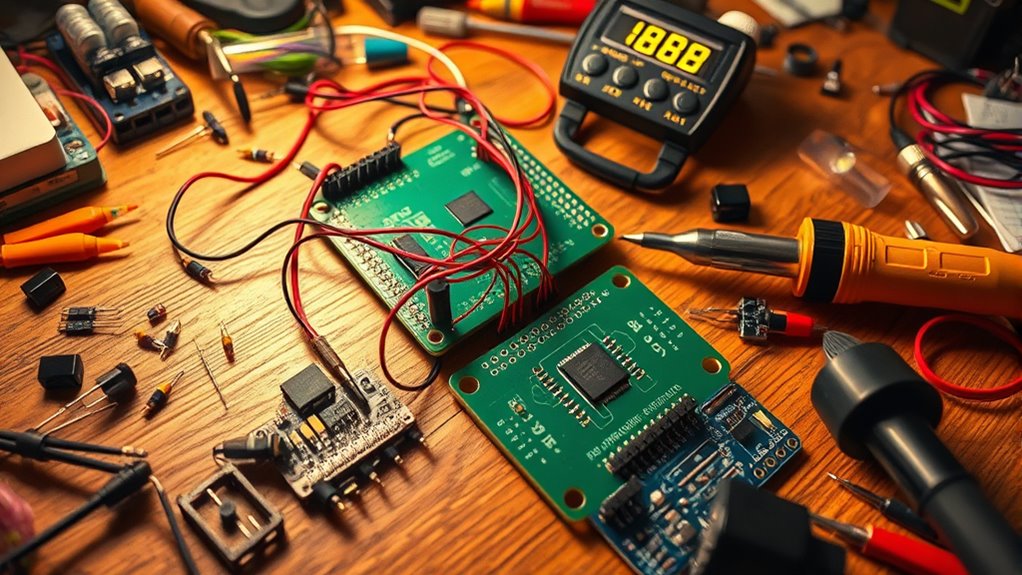

Building and coding your own gadgets in DIY electronics can be exciting and rewarding. You’ll start by understanding core principles like sensor integration, power management, and circuit design. Choosing suitable sensors and optimizing power use helps create reliable, energy-efficient devices. Troubleshooting and scaling projects improve your skills in coding and component integration. Keep exploring these fundamentals, and you’ll discover how to develop innovative gadgets tailored to your needs—plus, there’s much more to learn as you progress.

Turn quiet afternoons into listening time
- Thousands of audiobooks, podcasts and originals
- Listen on your phone, tablet or Echo — also offline
- Cancel anytime
Key Takeaways
- Start with understanding basic sensors and their wiring to ensure accurate environmental data collection.
- Select compatible components with appropriate voltage and signal requirements for reliable circuit design.
- Implement effective power management strategies, including energy-efficient components and sleep modes, for device longevity.
- Incorporate power regulation and activate sensors only when needed to optimize energy use and extend battery life.
- Develop skills in circuit design, coding, and troubleshooting to create scalable, reliable, and innovative gadgets.
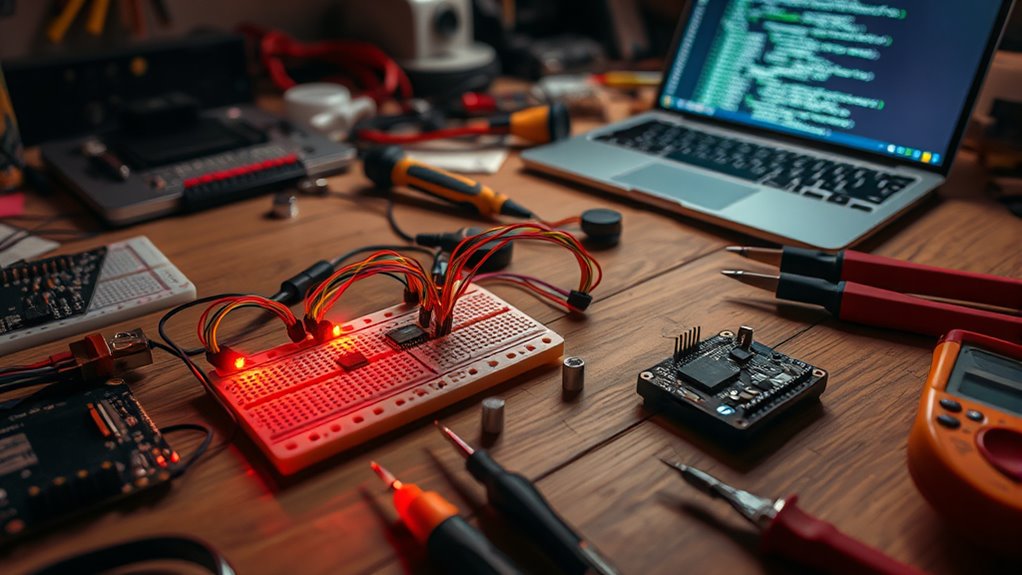
Have you ever wanted to create your own electronic devices from scratch? If so, diving into DIY electronics can be incredibly rewarding. Whether you’re designing a simple sensor-based alarm or a complex smart gadget, understanding the core principles is essential. One of the first steps is mastering sensor integration. Sensors are the eyes and ears of your project, enabling it to perceive the environment. You might start with basic sensors like temperature, light, or motion detectors. Connecting these sensors correctly guarantees your device can accurately gather data. Proper sensor integration involves selecting compatible components, understanding their voltage and signal requirements, and wiring them carefully to your microcontroller or development board. As you work, you’ll learn how to interpret sensor outputs and process that data effectively. This step is critical because accurate sensor readings directly impact your device’s performance. Alongside sensor integration, power management plays a fundamental role. Your gadgets need a reliable power source, especially if you want them to run continuously or in remote locations. Learning how to optimize power consumption involves choosing energy-efficient components, managing power modes, and designing circuits that minimize energy waste. For example, you might incorporate sleep modes in your microcontroller to conserve energy when your device is idle. Using rechargeable batteries or low-power power supplies can extend your project’s operational lifespan. Good power management not only prolongs battery life but also prevents overheating and other issues that could damage your device. As your projects grow more sophisticated, you’ll find that balancing sensor integration and power management is key to creating functional, durable gadgets. You might consider adding features like power regulators or voltage converters to guarantee stable operation across different components. Incorporating sensors that only activate when needed can also greatly reduce power draw. Additionally, understanding juice extraction from power sources helps optimize your device’s efficiency and longevity. Throughout this process, you’ll develop skills in circuit design, coding, and troubleshooting. It’s a continuous learning experience—each project teaches you more about selecting the right sensors, managing power efficiently, and integrating everything seamlessly. By mastering these fundamentals, you’ll be able to build gadgets that are both smart and energy-efficient. Plus, understanding these principles makes it easier to troubleshoot issues down the line or scale your projects into more complex systems. Whether you’re aiming to create a wearable device, a home automation controller, or an environmental monitor, sensor integration and power management are foundational skills that will serve you well. The more you experiment and refine your techniques, the more confident you’ll become in turning ideas into functioning, reliable electronics. Ultimately, the satisfaction of seeing your own device work flawlessly makes all the effort worthwhile, encouraging you to keep innovating and exploring new possibilities in DIY electronics.
Arduino sensor kit for beginners
As an affiliate, we earn on qualifying purchases.
As an affiliate, we earn on qualifying purchases.
Frequently Asked Questions
What Are the Essential Tools for Beginner Electronics Projects?
For beginner electronics projects, you’ll need essential tools like a soldering iron and solder for soldering techniques, ensuring solid connections. A breadboard is perfect for breadboard wiring, allowing you to prototype circuits without soldering. You’ll also want wire cutters, pliers, and a multimeter to test and troubleshoot. These tools make building and understanding your gadgets easier, helping you learn fundamental concepts while keeping the process manageable and fun.
How Do I Troubleshoot Common Coding Errors in Microcontroller Projects?
Ever notice how a simple typo or misplaced wire can halt your project? When troubleshooting common coding errors, you need sharp debugging techniques and clear error identification. Start by reviewing your code for syntax errors, use serial monitors to track variables, and isolate sections to pinpoint issues. Double-check connections and logic flow, then test incrementally. This approach helps you catch mistakes early and keeps your microcontroller project running smoothly.
Can I Use Recycled Components for My DIY Gadgets?
Yes, you can definitely use recycled components for your DIY gadgets. Recycling components promotes sustainable electronics, reduces waste, and saves money. Just verify the recycled parts are functional and compatible with your project. Check for any damage or corrosion, and test them thoroughly before integrating. Using recycled components not only helps the environment but also adds a unique touch to your gadgets, making your projects more eco-friendly and innovative.
What Safety Precautions Should I Follow When Building Electronics?
Did you know over 2,000 electrical hazards occur in hobbyist projects annually? When building electronics, you should always wear safety gear like goggles and gloves to protect against sparks or accidental shorts. Keep your workspace dry, unplug devices before working on them, and avoid working with high voltages unless you’re experienced. These precautions help prevent injuries and make sure your DIY projects are both fun and safe.
How Do I Choose the Right Microcontroller for My Project?
To choose the right microcontroller, consider your project requirements like processing power, number of I/O pins, and communication protocols. Look for microcontroller features that match your needs, such as ADCs for sensors or Bluetooth for connectivity. You should also evaluate factors like power consumption, size, and available development resources. Picking one that balances your project’s complexity and your skill level guarantees smoother development and better performance.
energy-efficient microcontroller boards
As an affiliate, we earn on qualifying purchases.
As an affiliate, we earn on qualifying purchases.
Conclusion
Building and coding your own gadgets can be incredibly rewarding, turning ideas into reality. Did you know that over 60% of DIY electronics enthusiasts report improved problem-solving skills? This shows that diving into DIY projects not only results in cool gadgets but also boosts your creativity and technical abilities. So, keep experimenting, learning, and building—your next innovative project is just a circuit away. Embrace the challenge and enjoy the journey of turning ideas into functional electronics!
power management modules for electronics
As an affiliate, we earn on qualifying purchases.
As an affiliate, we earn on qualifying purchases.
sensor wiring and connection kits
As an affiliate, we earn on qualifying purchases.
As an affiliate, we earn on qualifying purchases.
Fall Picks
fall essentials
As an affiliate, we earn on qualifying purchases.