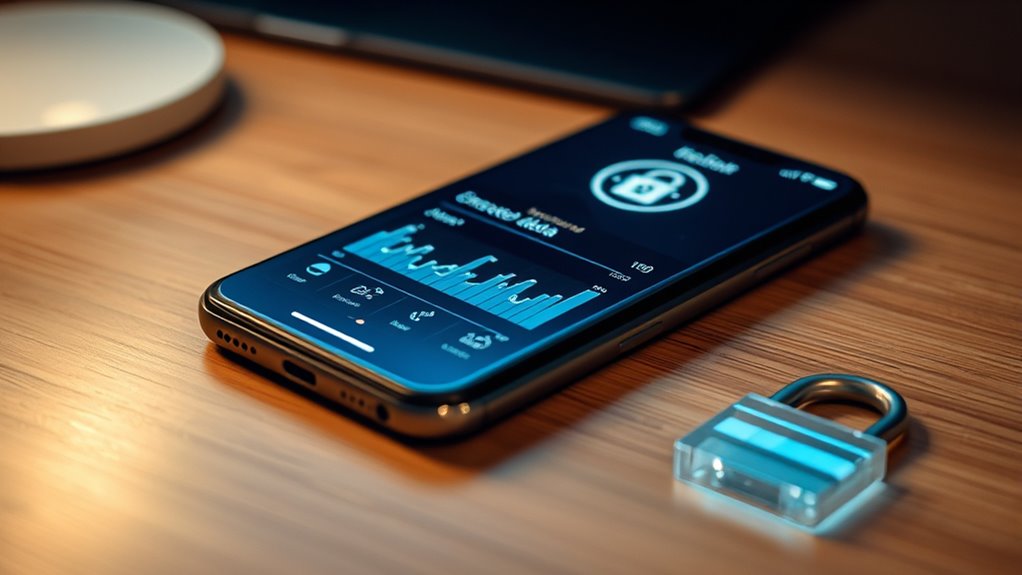

To protect your personal health information on devices, you should use strong encryption to keep data secure during storage and transmission. Always give clear and informed consent before sharing any health data, so you stay in control. Familiarize yourself with regulations like HIPAA or GDPR, which set security standards. Combining encryption with transparent privacy practices helps guarantee your data remains private. Keep exploring to learn more about safeguarding your health information effectively.

Turn quiet afternoons into listening time
- Thousands of audiobooks, podcasts and originals
- Listen on your phone, tablet or Echo — also offline
- Cancel anytime
Key Takeaways
- Use device encryption features to secure health data stored locally on smartphones or tablets.
- Obtain clear, informed user consent before collecting, sharing, or processing health information.
- Keep device software and health apps updated to ensure the latest security patches are in place.
- Enable strong, unique passwords and two-factor authentication to prevent unauthorized device access.
- Comply with relevant regulations like HIPAA or GDPR to ensure proper handling and privacy of health data.
Have you ever wondered how your personal health information stays protected in today’s digital world? It’s a valid curiosity, especially as more health data is stored and shared electronically. The key to safeguarding your sensitive information lies in a combination of technologies and policies, with data encryption and user consent playing essential roles. When your health data is protected, it guarantees that only authorized individuals can access it, maintaining your privacy and trust.
Data encryption is one of the most effective tools used to secure your health information. Think of encryption as a digital lock that transforms your data into a coded format, making it unreadable to anyone without the proper key. When your health data is encrypted, even if someone manages to intercept it during transmission or gain unauthorized access, they won’t be able to decipher its contents. This process acts as a fundamental barrier, preventing unauthorized viewing or theft of your private health details. Healthcare providers and app developers frequently use encryption to secure everything from electronic health records to fitness tracker data, ensuring your information remains confidential.
Encryption transforms health data into a secure code, protecting it from unauthorized access during transmission and storage.
However, technology alone isn’t enough. Your active participation through understanding and exercising your rights plays a significant role. This is where user consent becomes essential. When you give your consent, you’re essentially authorizing specific entities to access, process, or share your health data. Good privacy practices require that providers clearly explain what data they collect, why they need it, and how it will be used. By giving informed consent, you retain control over your information, deciding what can be shared and with whom. This transparency helps build trust and guarantees that your health data isn’t used in ways you’re uncomfortable with.
Moreover, regulations like HIPAA in the United States or GDPR in Europe set guidelines around data encryption and user consent, reinforcing your rights. These policies require healthcare providers and app developers to implement strong security measures and to obtain explicit consent before accessing or sharing your health data. They also give you the right to revoke your consent at any time, giving you ongoing control over your personal information.
In fundamental, protecting your health data involves a combination of advanced security technologies and clear, informed consent processes. Data encryption ensures that even if data is intercepted, it remains secure and unreadable. Meanwhile, user consent guarantees that you’re aware of and agree to how your data is used. Together, these measures create a safer environment for your personal health information, empowering you to maintain your privacy in a digital age.
Frequently Asked Questions
How Can I Identify if My Health App Shares Data With Third Parties?
You can identify if your health app shares data with third parties by checking its privacy settings and data sharing policies. Look for sections labeled “Data Sharing” or “Third-Party Access,” and review what permissions you’ve granted. If you’re unsure, visit the app’s privacy policy, which should detail how your data is used. Adjust privacy settings to limit sharing and protect your personal health information effectively.
What Are the Best Practices for Securing Health Data on Wearable Devices?
Oh, sure, keep your health data unprotected—who needs privacy, right? But if you want to actually secure it, use data encryption to scramble your info and access controls to limit who can see it. Always update your device’s software, enable two-factor authentication, and avoid public Wi-Fi. These simple steps make it harder for hackers and keep your sensitive info safe from prying eyes.
How Do Healthcare Providers Ensure Privacy During Telemedicine Consultations?
During telemedicine consultations, you guarantee privacy by using strong encryption protocols to protect data transmission and a secure login system that verifies your identity. Healthcare providers also implement multi-factor authentication and regularly update their security measures. By following these steps, they prevent unauthorized access and keep your personal health information confidential, allowing you to trust that your sensitive data remains protected throughout your virtual healthcare experience.
Are There Legal Penalties for Companies Mishandling Health Information?
Yes, there are legal consequences if companies mishandle health information. You could face hefty fines, lawsuits, or penalties for failing to follow data compliance regulations like HIPAA. When companies ignore proper data protocols, they risk legal penalties that can damage their reputation and finances. It’s essential for organizations to prioritize data compliance and safeguard personal health information to avoid these serious legal consequences and protect patient privacy.
Can I Delete My Health Data From Apps or Devices?
Ever wondered if you can delete your health data from apps or devices? You definitely can! Check the app’s privacy settings for options like Data deletion or removing personal info. Many platforms also give you control over your data, letting you delete specific health info or even your entire profile. Isn’t it reassuring to know you hold the power over your personal health information? Take charge and review those settings today!
Conclusion
Protecting your health data isn’t just about security—it’s about safeguarding your trust and peace of mind. You might think, “It’s just one app,” but that tiny breach can expose your deepest secrets. Don’t let fear stop you from taking control; your personal information deserves respect and protection. By staying vigilant, you not only defend your privacy but also empower yourself to use health tech confidently, knowing your rights are firmly in your hands.
Fall Picks
fall essentials
As an affiliate, we earn on qualifying purchases.